How many Pitt players have NIL contracts with Nike? Zero-point-zero.How dominant is pitt with nike?
The wisdominess of PK's move from Nike to Adidas is working wonders:
- Thread starter PSUFTG
- Start date
You are using an out of date browser. It may not display this or other websites correctly.
You should upgrade or use an alternative browser.
You should upgrade or use an alternative browser.


You hate to see it.
Nike will rue the day that they lost Penn State. Actually, they’re already rueing.
You hate to see it.
Adidas is doing so much better. Its stock is only 55% off of its high.
adidas takes a pass on Miami.
Interesting on the money Nike is paying. I live in south Florida and my step daughter just graduated from Miami Law school. You barely see anybody UM gear down here. They don't have a strong student body following either for their sports teams. I guess Nike did their homework on this but it's a little bit of head scratcher for me paying that much money. Maybe alumni and current students buy a lot of gear, but I certainly don't see it. PSU had a much stronger fan base buy PSU gear IMHO but maybe I am wrong.

Oh, for goodness sakes it's a freaking patch. AND, the current patch pays PS more than the previous patch. Is the current patch ugly? Yes! That's all it is.Nike announces NIL signing with some of the nation's top high school football players – Nuuz.Net
Nike helped Kirby Smart amplify his NIL pitch to a larger audience
Gee, who could have predicted this?
To - on purpose - move away from the absolute dominant force in its market, to go with Adidas - was just stunning.
To do so - moving away from the entity that lays orders of magnitude more potential on the table, just as we are entering the "NIL"-driven era of college football - is just amazing.
Whatever benefits PSU ballplayers get from Adidas will likely be "sofa cushion" money compared to the potential of Nike. How is that going to work out?
Oh, but fan(atics) were supposed to buy the tales coming from PSU Athletics - tales about a "$300 Million deal". Laugh or cry?
Do they? Why would you assume that?the current patch pays PS more than the previous patch.
adidas takes a pass on Miami.
I wouldn't put a nickel's worth of weighting on the specific numbers listed there by [checks the "byline"] Barry Jackson (whoever that is).
Though I expect that Miami cannot be as obfuscating and secretive and disingenuous as PSU (no one could be) - so they are probably closer to some level of reality than what the public got/gets from PSU.
What I will say - as it relates to that twitter post - is that anyone who thinks Big Brand schools (like Miami and PSU) are regularly going to be getting some "better overall deal" from Adidas than they could from Nike are living in an unreasoned fantasy.
I question all of the reporting on those deals unless I know much more detail, and not from a Twitter post. (Kind of the same thing as the NIL deals that get "reported") Why? Because I do KNOW enough of those deals, and what was reported on them, to know that many times what is reported is not even in the ballpark of reality.Miami's deal supposedly pays $13M/year in cash + $7M/year of value in apparel and marketing.
That said:
If that is an accurate depiction of Miami's deal - then, relatively speaking, Miami's deal is a nice tender filet, and PSU's is a convenience store rotisserie hot dog.
That is something that I would be hesitant to believe. I certainly would not be surprised if PSU did significantly worse than Miami - given who was in charge - but shocked if it were THAT much worse.
So I will reserve full-faith judgement on the Miami deal (not saying it isn't accurate, and not questioning the legitimacy of the guy who is reporting it as such - just that I would need more tangible evidence and more specificity to feel completely comfortable that it is accurate. Maybe it is - in which case, OUCH!).
Barry Jackson, who broke the news with that tweet, has been writing for the Miami Herald for 35+ years. More details are spelled out in the M-H article.I question all of the reporting on those deals unless I know much more detail, and not from a Twitter post. (Kind of the same thing as the NIL deals that get "reported") Why? Because I do KNOW enough of those deals, and what was reported on them, to know that many times what is reported is not even in the ballpark of reality.
That said:
If that is an accurate depiction of Miami's deal - then, relatively speaking, Miami's deal is a nice tender filet, and PSU's is a convenience store rotisserie hot dog.
That is something that I would be hesitant to believe. I certainly would not be surprised if PSU did significantly worse than Miami - given who was in charge - but shocked if it were THAT much worse.
So I will reserve full-faith judgement on the Miami deal (not saying it isn't accurate, and not questioning the legitimacy of the guy who is reporting it as such - just that I would need more tangible evidence and more specificity to feel completely comfortable that it is accurate. Maybe it is - in which case, OUCH!).
What is your understanding of Penn State's deal with adidas?

Seriously do you think they would have taken less?Do they? Why would you assume that?
Seriously? Of course they did. By "multiples" less.Seriously do you think they would have taken less?
Reported terms of the Miami deal with Nike:
Here's the article in the Miami-Herald:
Swoosh! Canes agree to historic megadeal with Nike after 11 years with Adidas
By Barry Jackson
September 16, 2026
Eleven years after ending its association with Nike, the University of Miami is once again going into business with the world’s highest-grossing sportswear and apparel giant. According to multiple sources, UM and Nike have agreed to a 10-year contract that is worth more than $200 million, or slightly more than $20 million annually.
It’s one of the largest apparel deals in the history of college sports. About two-thirds of the $20 million-plus annual outlay from Nike to UM will be in cash; the remainder will be in apparel.
Adidas had the contractual right to match Nike’s offer by a Tuesday deadline. Adidas presented a compelling counteroffer, but did not fully match the terms.
A few factors contributed to UM landing this lucrative deal:
- The Hurricanes’ robust national brand, which has been further strengthened by the recent resurgence of the football program and the basketball program’s recent success.
- A proactive approach by UM’s high-level administrators, including Board of Trustees chairman Manny Kadre, who vigorously explored a potential return to Nike, according to multiple sources.
- The willingness of apparel companies to pay more for affiliations with the nation’s most successful athletic programs.
The richest current sports apparel deals reportedly belong to Penn State (which reportedly signed a 10-year, $300 million agreement with Adidas on July 1, though those terms have been disputed by industry insiders) and Ohio State, whose 15-year, $252 million contract with Nike runs through 2033. Oregon and Texas also have lucrative Nike deals. The $20 million-plus annual allocation to UM (in cash and apparel) is believed to be the largest Nike yearly outlay to any university.
UM would have been fine with Adidas matching Nike’s offer — “they’ve been a great partner,” a source said — but UM is excited about Nike. One source said there were creative provisions in the Nike contract that were challenging for Adidas to match. UM will use the extra revenue toward athletic department costs, NIL allocation and potentially toward an on-campus football office building that is still in the early stages of development. And so beginning with the 2027 football season, UM and Nike will renew their historic 27-year partnership that spanned from 1987 until 2015, a period in which the Hurricanes’ football team won four of its five national championships. When UM and Nike struck a deal in 1987, the Hurricanes became the first university to sign an all-sports contract with any brand. But UM switched to Adidas in 2015 primarily because Adidas offered considerably more money (close to $80 million over 12 years) than what Nike was paying Miami, or willing to pay in a new agreement. Under Armour also made a large bid at the time, but the university opted for Adidas. The Adidas deal also appealed to UM at that time because Adidas told Miami that the Canes would be one of the company’s flagship properties at a time when UM’s football program was going through a down cycle while competing for attention with flagship Nike programs Oregon, Ohio State and others.
The Adidas deal included three components: Annual base compensation paid directly to the athletic department; free athletic gear, footwear, and apparel (worth millions of dollars) to outfit all of UM’s teams; and co-financing of marketing campaigns to promote the Adidas and the “U” brands in unison. When Adidas offered UM an extension earlier this year, then-athletic director Dan Radakovich took the deal to school president Joe Echevarria and recommended the Canes accept it, a source said. But Echevarria wasn’t convinced, according to a source in contact with him, and called his good friend and confidante, Kadre, to discuss it. Kadre, a South Florida power broker who was a key player in UM’s successful pursuit of football coach Mario Cristobal and basketball coach Jai Lucas, then began to explore a deal with Nike, according to a source who interacts with both men. Kadre arranged a meeting with Nike CEO Elliott Hill and Ann Miller, Nike’s executive vice president of global sports marketing. That surprised some people inside UM because of Kadre’s friendship with John Miller, the president of Adidas North America.
But Kadre — a local business leader who has been a member of UM’s Board of Trustees since 2004 and also serves as vice chair of UM’s Heath System (UHealth) — always has done what he believes is best for the university since assuming a more prominent role in recent years. According to the source, Kadre negotiated a deal with Nike that Echevarria signed off on. Adidas recently was informed of UM’s agreement with Nike, triggering a short right-to-match period. The deal with Nike comes at a time when Adidas has increased its footprint not only with individual Hurricanes athletes, but the South Florida community overall. In August 2025, Adidas struck a five-year, $13.5 million deal to become the exclusive apparel provider for all public schools in Miami-Dade County. Two weeks ago, UM star receiver Malachi Toney signed a Name, Image and Likeness (NIL) deal with Adidas. If Toney’s deal with Adidas extends into next season, he can wear Adidas apparel when he’s off campus but must wear Nike apparel during games. Last year, Adidas’ signature UM athlete was Rueben Bain Jr, who now plays for the Tampa Bay Buccaneers.
Universities switching between apparel companies is not uncommon. During the past year, South Carolina left Under Armour after 19 years to sign a 10-year, $70 million contract with Nike. Meanwhile, Tennessee and Penn State left Nike to sign with Adidas earlier this summer. Nike generated approximately $46.4 billion in fiscal 2026, the most of any sportswear and apparel brand. Nike reportedly holds 27% of the global athletic footwear and apparel market, compared to 13% for Adidas. Footwear makes up about 65% of total sales, bringing in roughly $30 billion. Negotiations with Nike have dovetailed UM’s ongoing search for an athletic director to replace Radakovich, who left the Hurricanes in June. Three candidates, whose identities are not known, recently interviewed with Kadre and Rudy Fernandez, UM’s executive vice president of university operations. Alison Mincey, UM’s chief human resources officer, also is heavily involved in the process. A source said there are five serious candidates, and none is currently working in college sports. All five are currently employed and all have held jobs in pro sports. UM has been seeking an outside-the-box hire, a skilled fund-raiser who can shepherd the university through the changing new world of intercollegiate athletics. The finalists likely will interview with Echevarria.

Nike is so yesterday.
Real Madrid striker Kylian Mbappe has quit his long-term relationship with Nike to become the face of Swiss company On’s first expansion into football boots.
This is what we’re up against.
Agreed.....Nike has been passed by by so many other brands. On is just one of them.Nike is so yesterday.
Real Madrid striker Kylian Mbappe has quit his long-term relationship with Nike to become the face of Swiss company On’s first expansion into football boots.
An aside. Please don't tell me they call soccer cleats or shoes boots. Kit and pitch are bad enough

Agreed.....Nike has been passed by by so many other brands.
Just Don’t.
Which "brand" has greater revenue than Nike?Agreed.....Nike has been passed by by so many other brands. On is just one of them.
An aside. Please don't tell me they call soccer cleats or shoes boots. Kit and pitch are bad enough
Let's start a thread to bash Pat Kraft yet we operating from an area of absolutely no facts or inside information just emotional disdain for the guy. Nice.
Please, (Q) List all the Championships HIS hires have won?
(A) None.
Championships?Please, (Q) List all the Championships HIS hires have won?
(A) None.
Assuming PSU football has a 500+ record in Big Ten play this year:
Campbell will become the FIRST Kraft hire to have a 500 or better record in the Big Ten in any year ever.
FWIW:
Kraft had two jobs before being hired at PSU - Temple and Boston College.
His "big sport" hires there:
At Temple (2015-2020):
Football:
His two FB hires had a total record of 18-21 in the AMERICAN conference (one of them lasted 2 years, he fired him, replaced him with another, who lasted 3 and was fired shortly after Kraft left Temple).
When Kraft came in to Temple, Temple was in their best stretch in FB in quite some time (under Rhule) before Kraft took over. Temple was 14-3 in the 2 years under Rhule, before he left and Kraft had to make his first "big" hire.
Men's BB:
Kraft replaced long-time Temple coach Fran Dunphy with Aaron McKie. Dunphy had completed his last season going 13-5 in the AMERICAN,
Krafty's hire - McKie - went 6-12 in his first year, went 30-37 over four years (never making a tourney) before he was fired.
.
Boston College (2020-2022):
Football:
Kraft never hired a FB coach at BC
Kraft inherited Jeff Hafley as the coach (he was hired a couple months before Kraft took over at BC). They went 9-17 in his three years in the ACC while Kraft was there - and Hafley was fired the year after Kraft left.
.
Men's BB:
Kraft inherited Jeff Christian as BB coach, and fired him his first year there.
He replaced him with Earl Grant (whom he later tried to hire at PSU
 ) . Grant went 15-25 in the ACC the two years they were together, 31-57 in his tenure before being fired at BC this spring.
.
Penn State (2022 to date):
Football:
Obviously
Kraft inherited Franklin.PSU went 22-5 in the Big Ten from 2022-24, then imploded with a 3-6 mark last year (including firing the HC mid-season - largely due to "differences" between Kraft and Franklin).
Kraft's long and winding road terminated with the hiring of Campbell, of course. And the jury is going to be out for a while (like Lindsey Clancy's)
Men's BB:
Kraft inherited Schrewsberry at PSU. In Kraft's first year, Shrewsberry took PSU to the 2nd round of the NCAAs. then left in a rush (largely due to issues w ICA leadership)
Kraft then tried to replace him with Grant (from BC) who turned the job down, before hiring Rhoades.
Since then, the team has gotten worse every year, and a total Big Ten record of 18-42 under Kraft/Rhoades (3-17 last year)
Latest
-
01
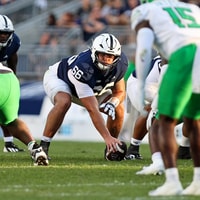 BWI Football
Who are the top Penn State and Buffalo players fans should be watching during Saturday's matchup?
BWI Football
Who are the top Penn State and Buffalo players fans should be watching during Saturday's matchup?
-
02
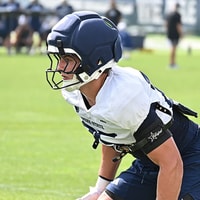 BWI Football
Buzzworthy: Penn State’s first adversity test reveals some encouraging answers
BWI Football
Buzzworthy: Penn State’s first adversity test reveals some encouraging answers
-
03
 BWI Recruiting
Penn State-Buffalo recruiting list continues to grow with several new additions
BWI Recruiting
Penn State-Buffalo recruiting list continues to grow with several new additions
-
04
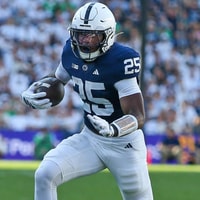 BWI Football
Fitz: Friday thoughts as Penn State prepares to host Buffalo
BWI Football
Fitz: Friday thoughts as Penn State prepares to host Buffalo
-
05
 BWI Football
5 bold predictions for Penn State-Buffalo: Is a Week 3 special teams touchdown on tap?
BWI Football
5 bold predictions for Penn State-Buffalo: Is a Week 3 special teams touchdown on tap?