On the other hand ............
There are no free lunches ************.
There are only lunches that are paid for in some obvious, direct way .... or .... lunches that are paid for in some hidden way ..... perhaps by other people.
There is a cost to processing the exchange of money when you buy something ..... regardless of how you do that.
The questions are ..........
a) What are these costs ? What might be the most efficient way to pay for something ?
b) Who bears this cost ? And remember the concept of 'tax incidence' -- who appears to pay a 'tax' or other cost may be different from who is actually bearing the economic burden of paying that cost.
So - for instance - if the merchant charges an explicit credit card surcharge, it might look like the customers are paying this cost. But to the extent this apparently additional cost drives away business from the merchant .. (ie., reduces Demand) -- the merchant's income will decline.
1) If'n the merchant "eats" the cost associated with credit card fees -- those costs are just buried in the price of the goods and services you buy from the merchant. So you're still paying these costs in some way. You just don't see it explicitly. Though we should also note that it's likely a portion of this cost may come out of the profit earned by the merchant.
2) If you pay by cash -- I would suspect that's a far less efficient -- a more costly way for both the customer and the merchant and a bank -- to transact a payment.
Customers (all of us) would have to constantly go through the hassle of getting the cash. (Time is money.)
And then the merchant and the bank have deal with processing and accounting for, etc. all this cash. That would have to be a much less efficient process than computers magically crediting and debiting credit card accounts.
3) Ditto, if you pay by check -- then somebody has to process all these checks. That's not free.
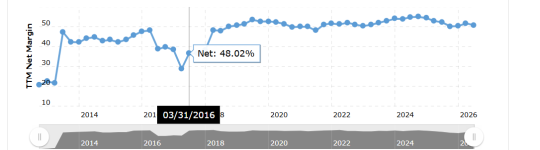
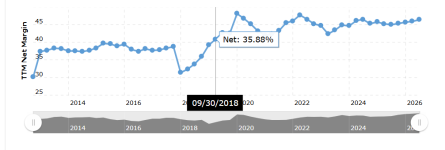
Remember -- one of the reasons merchants are willing to accept credit cards is that -- profits of VISA and Mastercard notwithstanding -- it's still a relatively efficient way for customers to pay for stuff and it facilitates greater spending. Customers don't need to carry all this cash all the time and / or they don't have to have the money to pay for everything sitting in their checking account all the time.
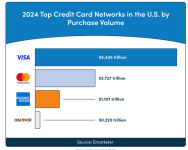
If'n we could somehow break up the oligopoly we see in the credit card industry perhaps more competition would lower credit card fees. Offhand, I'm not sure how we would do that. And I'm not positive fragmenting that business would make it more efficient or exactly how that would work ...... ie., would every merchant now have to deal with 10 different credit card processors ????
******** Except for the Grace of God ....... consumer surplus ...... producer surplus ..... and .... arguably, diversification of investment portfolios.