The Memphis Debrief
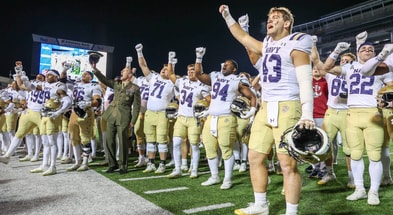
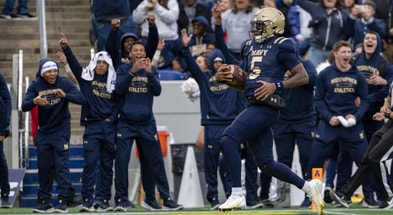
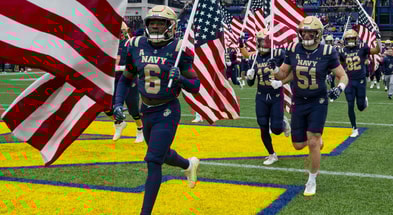
I got a little emotional after Navy’s win over Memphis on Thanksgiving night. Not because I didn’t expect the Mids to win; I actually thought they matched up pretty well. I think it was a variety of things. Part of it was just the circumstances: with the game in prime time and the only college game on Thanksgiving, there was more of a spotlight on the team than usual. It was satisfying to see the team win on a bigger-than-normal stage.
But I think the biggest reason why I was so amped up after the game was the affirmation of Navy’s place in the conference, and by extension, all of college football. All season long, while Navy kept chugging along and winning games, all we heard in the media was talk of Memphis, Tulane, and USF in the American. When it came to Navy, there was a lot of “yeah, but.” Yeah, but their schedule is weak. Yeah, but once Navy hits November, 7-0 will turn into 7-4. Yeah, they’re a nice story, but they aren’t on the same level as the real big boys of the conference.
For the most part, I tune that stuff out, since the only thing the team can control is what happens on the field. But I’d be lying if I said I wasn’t annoyed by how Navy’s success feels like it’s regarded as a fluke in the media. Navy won 10 games a year ago but was passed over in the final top-25 polls in favor of an Army team they ran all over and a Memphis team they dropped 50 on. Week after week this season, even as Navy kept winning, they were treated as an afterthought in the conference race. Even computer models like SP+ cater to a specific style of play, so they undervalue teams with an offense like Navy’s. But back-to-back wins over USF and Memphis made Navy’s place in the conference undeniable. This program deserves to be recognized as one of the powerhouses in the American, and they proved it on the field.
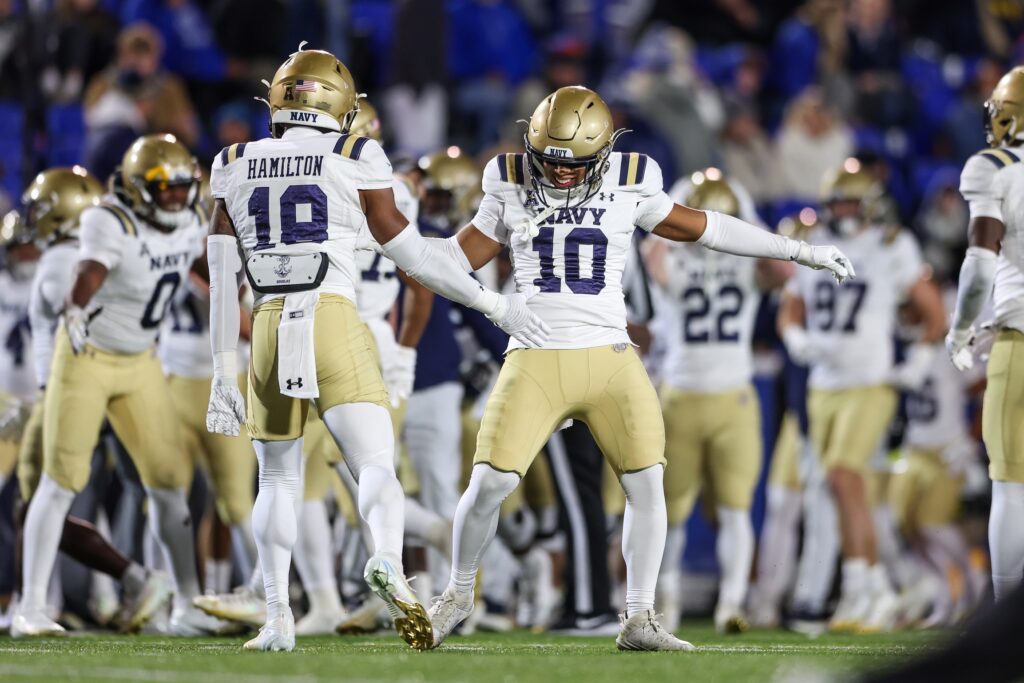
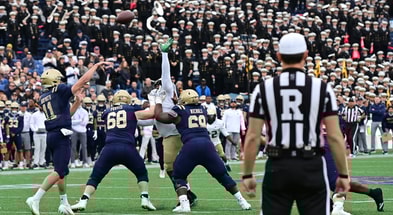
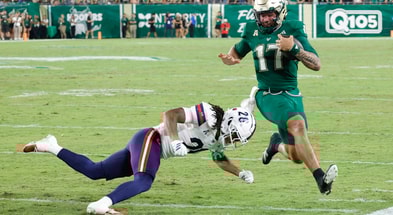
How they played against Memphis reinforced that status. Last year, the Mids seemed to catch the Tigers off guard, winning a shootout at the beginning of the season against a defense that looked unsure of what it was facing. This year, there were no surprises. Memphis knew exactly what to expect, and indeed, they had a very good game plan. In the first half, both teams struggled to move the football. Whatever offense there was came from great players making exceptional plays. But in the second half, Navy’s offense got physical, turning it into a phone booth game. Meanwhile, the defense matched up with the Memphis offense man-for-man, limiting them to 288 yards and 4-12 on third down while recording five sacks.
This wasn’t a fluke win or a scrappy underdog somehow finding a way. This was two conference powers slugging it out, with the better team coming out on top.
You could tell that this game was going to be different from the first snap. Memphis elected to receive after winning the toss, which, in retrospect, signaled their intent. In the past, Navy was so concerned with giving up long pass plays against Memphis that it changed the character of their defense. And sure enough, on the Tigers’ first play, they took a shot downfield. Two plays later, they tried it again. They couldn’t connect on either one. Instead of Memphis making a statement on their opening possession, it was the Navy defense. This year, the Mids weren’t going to play bend-but-don’t-break. They were going to attack the run, attack the quarterback, and trust their secondary to handle their assignments.
The clearest sign of this was the play of Navy’s safeties. P.J. Volker didn’t hesitate to bring them to the line of scrimmage, whether in run support or on a blitz.
It wasn’t just the safeties, either. The cornerbacks had their best game of the season, both in coverage and at the line of scrimmage. Because Navy played a lot of man coverage, Memphis tried to use a two-for-one block to get numbers on the perimeter and run the ball outside. You can see Justin Ross here not following the receiver to the safety and making a play on the ballcarrier.
Nick Bell made a similar play on this swing pass in the red zone, making a TFL after not following the receivers who double-teamed Kush’i Abraham.
That play came on third and seven, and it was supposed to be a blitz buster. While the Mids did rush five, the fifth rusher was the safety on the other side. Coleman Cauley originally lined up at the line of scrimmage, but he dropped into coverage. That changed the numbers on the perimeter, leaving the H-back who motioned outside with two defenders to deal with.
The reason why Memphis called that play was that Navy had already shown that they were more than happy to bring seven pass rushers.
Navy’s willingness to be aggressive forced Memphis to anticipate, which made the Mids more effective even when they were more conservative.
Statistically, there were several standouts. Giuseppi Sessi and MarcAnthony Parker had eight tackles apiece. Luke Pirris and Coleman Cauley each had seven, with Pirris adding two sacks. Landon Robinson was his usual dominant self, with four tackles, a sack, and a QBH. But there were also performances that don’t show up in the stats. Griffen Wills was a monster in this game against zone blocking. Here you can see him forcing Memphis to maintain their double-team on him, preventing either lineman from getting to the second level, leaving the running back hanging. Parker went untouched into the running lane.
But if Memphis didn’t double Willis, he’d blow past his man and straight into the backfield.
Memphis did make a few plays; that’s what great players do. But as a whole, Navy’s defense was outstanding from start to finish. The Tigers came into the game on a 51-game streak of scoring at least 20 points, the longest such streak in the country. Navy ended that in what was probably their best performance of the season, considering the quality of the opposition.
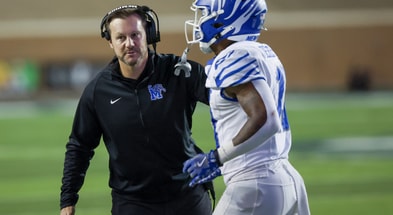
Of course, the Navy offense did its part to make that happen, too. They dominated possession in the second half, 23:22-6:38, thanks to an 18-play drive that consumed most of the third quarter and a 13-play drive that ate more than eight minutes in the fourth. At one point, Navy had run 36 plays to only 8 for Memphis. Ironically, their head coach, Ryan Silverfield, had complimented the Navy offense in his press conference earlier in the week, saying he missed the “old Navy days” because the Mids are so much more dynamic now. But it was a dose of the old school that allowed Navy to seize control and strangle the life out of the Tigers.
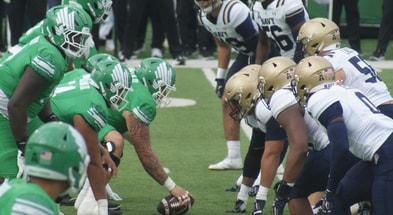
Adding to the irony is that Silverfield’s squad actually had a great game plan for “new Navy.” In the preview, we looked back at how Memphis defended Rice. I had speculated that they wouldn’t want to replicate too much from that game, but as it turns out, they did. They used the same alignment, alternating between a 3-4 and a 3-3-5 with three safeties in the middle of the field. Their goal was to get as many defenders running downhill to the perimeter as possible. For the most part, it worked:
The tradeoff is that they often had a light box, which would theoretically leave them vulnerable to runs up the middle. But the defensive line kept the Mids from taking advantage of it. Navy had a difficult time dealing with the line’s twisting:
When they weren’t twisting, Memphis was slanting:
Either way, they were getting into the Navy backfield, particularly on slower-developing plays with pulling linemen.
Navy’s answer to this in the second half was essentially to play faster. They needed plays that hit so quickly that defensive line movement becomes a liability, not an asset. And hitting quickly is exactly what fullback runs are designed to do.
Once Navy sped up the tempo of the run game and became more north-south, Memphis’ slants stopped creating penetration and started opening seams. This was most evident when the Mids ran inside zone. On an inside zone play, the fullback reads the first down lineman over or inside the B gap. If the defender goes one way, the fullback goes the other way. It’s simple, but it’s fast. The job of the offensive line is to make that defender move laterally in either direction, providing that read. But against a line that’s twisting and slanting, the OL’s job gets a lot easier, since that read will be moving laterally at the snap on his own. As long as your fullback can make the read, you can get 3-4 yards (or more) all day.
Alex Tecza made it every time.
The Mids had similar success running the fullback belly play. The belly play is especially effective when run in the opposite direction to a slanting line. The down blocks for the playside linemen essentially take care of themselves; all that needs to happen is for the guard on the kick-out block to get to his man in time.
The coaches made it even easier for the guard by changing the pre-snap motion. The edge defender didn’t respond to motion coming across the formation, but when the player in front of him moved outside, the defender shifted in response. That added a little more breathing room for the kick-out block.
If the play was run in the same direction as the slant, you just had a power running play with a chance to find a cutback seam.
Navy also sprinkled in some midline option, which is another play they traditionally call against a slanting or stunting line. Now it’s the quarterback reading a down lineman, and like the inside zone, the read becomes easier when the lineman is moving laterally on the snap.
Even when the defensive line succeeded in getting into the backfield, the ball was already hitting the line of scrimmage at that point.
Navy didn’t completely abandon pulling a lineman. They still ran power, just not power read. They took the option element out of it in favor of an extra blocker at the point of attack rather than at the second level.
That success up the middle eventually opened things up on the perimeter, but Navy only went outside sparingly for maximum effect.
Maybe the most important part of playing in this style is that you can’t make mistakes. If you’re counting on staying on schedule, you can’t have any penalties moving you backwards. This has been an issue for the offense all season, but the Mids executed at a high level here. They did have to recover a fumble on their last touchdown drive, but another piece of improvisation from Blake Horvath and Nathan Kent led to a pass interference call on third and 8 to keep the drive alive.
Navy may not be playing for a conference championship this weekend, but its place among the league’s elite cannot be questioned. This was an affirming victory, especially coming off the heels of the classic against USF. Anyone left doubting this team can take their argument up with the scoreboard.