Hard to believe that the Pearl Harbor attack was 84 years ago.
Dec 7th (84 Years)
- Thread starter WVilleLion23
- Start date
You are using an out of date browser. It may not display this or other websites correctly.
You should upgrade or use an alternative browser.
You should upgrade or use an alternative browser.



Hard to believe it’s been so long and many don’t even react to the day anymore. 2,403 Americans killed. 1,178 wounded.
From Wiki-
From Wiki-
| Units involved | |
|---|---|
| Strength | |
| Casualties and losses | |
|
|
|
|
| Civilian casualties |


Top leadership in Hawaii was not on the same page at all.
Admiral Kimmel thought the Army was there to protect the fleet in port and General Short thought the fleet was there to protect from invasion. Short was worried about sabotage and had his planes clustered together which made them sitting ducks.
Hindsight is easy, but having nearly the whole fleet in port wasn't smart.
Admiral Kimmel thought the Army was there to protect the fleet in port and General Short thought the fleet was there to protect from invasion. Short was worried about sabotage and had his planes clustered together which made them sitting ducks.
Hindsight is easy, but having nearly the whole fleet in port wasn't smart.

Hard to believe it’s been so long and many don’t even react to the day anymore. 2,403 Americans killed. 1,178 wounded.
From Wiki-
Casualties and losses Strength Units involved
- 8 battleships
- 8 cruisers
- 30 destroyers
- 4 submarines
- 73 other ships[1][nb 1]
- 390 aircraft
- 6 aircraft carriers
- 2 battleships
- 2 heavy cruisers
- 1 light cruiser
- 9 destroyers
- 8 tankers
- 23 fleet submarines
- 5 midget submarines
- 414 aircraft (353 took part in the raid)
- 4 battleships sunk
- 4 battleships damaged
- 1 ex-battleship sunk
- 1 harbor tug sunk
- 3 light cruisersdamaged[nb 2]
- 3 destroyers damaged
- 3 other ships damaged
- 188 aircraft destroyed
- 159 aircraft damaged
- 2,008 sailors killed
- 109 Marines killed
- 218 soldiers killed[5]
- 68 civilians killed[6][5]
- 2,403 total killed[6][5]
- 1,178 military and civilians wounded[5]
- 4 midget submarinessunk
- 1 midget submarine grounded
- 29 aircraft destroyed
- 74 aircraft damaged
- 129 killed[7][8]
- 1 sailor captured[9]
Civilian casualties
 ......
My father was in the Army Air Corps stationed at Schofield Base on Oahu and sent to the Philippian Islands prior to the Japanese attack on Peral. At Clark Airfield they were attacked December 8th & Nicholas Airfield on December 9th.
On the night of 24–25 December, MacArthur moved his Headquarters and the Philippine government to Corregidor. The hasty withdrawal forced the retreating units to leave most of their supplies and equipment behind. The awful consequences of the shifts in defense plans became clear. To support MacArthur’s plan for a defense of the entire island chain, supplies had been dispersed from their original depots in Bataan and Corregidor to support the units of the North and South Luzon Forces. Now with trucks in short supply, roads congested, and time short, resupply of the Bataan and Corregidor strongholds was impossible. The resulting lack of food, ammunition, weapons, and medical supplies. My father was later captured on the Bataan, survived the Death March, survived Cabanatuan Prison Camp then sent by Hell ships to Japan prison camps to work the coal mines.
Last edited:
My father was in the Army Air Corps stationed at Schofield Base on Oahu and sent to the Philippian Islands prior to the Japanese attack on Peral. At Clark Airfield they were attacked December 8th & Nicholas Airfield on December 9th.
On the night of 24–25 December, MacArthur moved his Headquarters and the Philippine government to Corregidor. The hasty withdrawal forced the retreating units to leave most of their supplies and equipment behind. The awful consequences of the shifts in defense plans became clear. To support MacArthur’s plan for a defense of the entire island chain, supplies had been dispersed from their original depots in Bataan and Corregidor to support the units of the North and South Luzon Forces. Now with trucks in short supply, roads congested, and time short, resupply of the Bataan and Corregidor strongholds was impossible. The resulting lack of food, ammunition, weapons, and medical supplies. My father was later captured on the Bataan, survived the Death March, survived Cabanatuan Prison Camp then sent by Hell ships to Japan prison camps to work the coal mines.
 Wow. That’s some serious family history Step.
Thanks Psu00

The two places I felt there was a spiritual presence were Pearl Harbor and Ephesus . Seeing the Arizona was really touching .
As a retired USAF mbr, I salute your father's heroism.
My father was in the Army Air Corps stationed at Schofield Base on Oahu and sent to the Philippian Islands prior to the Japanese attack on Peral. At Clark Airfield they were attacked December 8th & Nicholas Airfield on December 9th.
On the night of 24–25 December, MacArthur moved his Headquarters and the Philippine government to Corregidor. The hasty withdrawal forced the retreating units to leave most of their supplies and equipment behind. The awful consequences of the shifts in defense plans became clear. To support MacArthur’s plan for a defense of the entire island chain, supplies had been dispersed from their original depots in Bataan and Corregidor to support the units of the North and South Luzon Forces. Now with trucks in short supply, roads congested, and time short, resupply of the Bataan and Corregidor strongholds was impossible. The resulting lack of food, ammunition, weapons, and medical supplies. My father was later captured on the Bataan, survived the Death March, survived Cabanatuan Prison Camp then sent by Hell ships to Japan prison camps to work the coal mines.
Thank you RicksterAs a retired USAF mbr, I salute your father's heroism.

On Christmas Day, 1941, Adm. Nimitz was given a boat tour of the destruction wrought on Pearl Harbor by the Japanese. Big sunken battleships and navy vessels cluttered the waters every where you looked. As the tour boat returned to dock, the young helmsman of the boat asked, "Well Admiral, what do you think after seeing all this destruction?" Admiral Nimitz's reply shocked everyone within the sound of his voice. Admiral Nimitz said, "The Japanese made three of the biggest mistakes an attack force could ever make or God was taking care of America. Which do you think it was?" Shocked and surprised, the young helmsman asked, "What do mean by saying the Japanese made the three biggest mistakes an attack force ever made?"
Nimitz explained.
Mistake number one: the Japanese attacked on Sunday morning. Nine out of every ten crewmen of those ships were ashore on leave. If those same ships had been lured to sea and been sunk--we would have lost 38,000 men instead of 3,800.
Mistake number two: when the Japanese saw all those battleships lined in a row, they got so carried away sinking those battleships, they never once bombed our dry docks opposite those ships. If they had destroyed our dry docks, we would have had to tow everyone of those ships to America to be repaired. As it is now, the ships are in shallow water and can be raised. One tug can pull them over to the dry docks, and we can have them repaired and at sea by the time we could have towed them to America. And I already have crews ashore anxious to man those ships.
Mistake number three: every drop of fuel in the Pacific theater of war is in top of the ground storage tanks five miles away over that hill. One attack plane could have strafed those tanks and destroyed our fuel supply. That's why I say the Japanese made three of the biggest mistakes an attack force could make or God was taking care of America.
Nimitz explained.
Mistake number one: the Japanese attacked on Sunday morning. Nine out of every ten crewmen of those ships were ashore on leave. If those same ships had been lured to sea and been sunk--we would have lost 38,000 men instead of 3,800.
Mistake number two: when the Japanese saw all those battleships lined in a row, they got so carried away sinking those battleships, they never once bombed our dry docks opposite those ships. If they had destroyed our dry docks, we would have had to tow everyone of those ships to America to be repaired. As it is now, the ships are in shallow water and can be raised. One tug can pull them over to the dry docks, and we can have them repaired and at sea by the time we could have towed them to America. And I already have crews ashore anxious to man those ships.
Mistake number three: every drop of fuel in the Pacific theater of war is in top of the ground storage tanks five miles away over that hill. One attack plane could have strafed those tanks and destroyed our fuel supply. That's why I say the Japanese made three of the biggest mistakes an attack force could make or God was taking care of America.
Mistake number four: 3 US aircraft carriers were out of port.On Christmas Day, 1941, Adm. Nimitz was given a boat tour of the destruction wrought on Pearl Harbor by the Japanese. Big sunken battleships and navy vessels cluttered the waters every where you looked. As the tour boat returned to dock, the young helmsman of the boat asked, "Well Admiral, what do you think after seeing all this destruction?" Admiral Nimitz's reply shocked everyone within the sound of his voice. Admiral Nimitz said, "The Japanese made three of the biggest mistakes an attack force could ever make or God was taking care of America. Which do you think it was?" Shocked and surprised, the young helmsman asked, "What do mean by saying the Japanese made the three biggest mistakes an attack force ever made?"
Nimitz explained.
Mistake number one: the Japanese attacked on Sunday morning. Nine out of every ten crewmen of those ships were ashore on leave. If those same ships had been lured to sea and been sunk--we would have lost 38,000 men instead of 3,800.
Mistake number two: when the Japanese saw all those battleships lined in a row, they got so carried away sinking those battleships, they never once bombed our dry docks opposite those ships. If they had destroyed our dry docks, we would have had to tow everyone of those ships to America to be repaired. As it is now, the ships are in shallow water and can be raised. One tug can pull them over to the dry docks, and we can have them repaired and at sea by the time we could have towed them to America. And I already have crews ashore anxious to man those ships.
Mistake number three: every drop of fuel in the Pacific theater of war is in top of the ground storage tanks five miles away over that hill. One attack plane could have strafed those tanks and destroyed our fuel supply. That's why I say the Japanese made three of the biggest mistakes an attack force could make or God was taking care of America.
Mistake number five: The Japanese underestimated the resolve of the US Government and the American people. They awoke a sleeping giant that eventually crushed and destroyed them, after the US dispatched of Nazi Germany in Europe and North Africa. Would the US have declared war on the Axis powers and unleashed US forces without this attack? Maybe eventually, but far too late, or at least late enough to make a victory over the Axis forces even more difficult and costly than it was.
Last edited:
I think that is what’s called strategic thinking.On Christmas Day, 1941, Adm. Nimitz was given a boat tour of the destruction wrought on Pearl Harbor by the Japanese. Big sunken battleships and navy vessels cluttered the waters every where you looked. As the tour boat returned to dock, the young helmsman of the boat asked, "Well Admiral, what do you think after seeing all this destruction?" Admiral Nimitz's reply shocked everyone within the sound of his voice. Admiral Nimitz said, "The Japanese made three of the biggest mistakes an attack force could ever make or God was taking care of America. Which do you think it was?" Shocked and surprised, the young helmsman asked, "What do mean by saying the Japanese made the three biggest mistakes an attack force ever made?"
Nimitz explained.
Mistake number one: the Japanese attacked on Sunday morning. Nine out of every ten crewmen of those ships were ashore on leave. If those same ships had been lured to sea and been sunk--we would have lost 38,000 men instead of 3,800.
Mistake number two: when the Japanese saw all those battleships lined in a row, they got so carried away sinking those battleships, they never once bombed our dry docks opposite those ships. If they had destroyed our dry docks, we would have had to tow everyone of those ships to America to be repaired. As it is now, the ships are in shallow water and can be raised. One tug can pull them over to the dry docks, and we can have them repaired and at sea by the time we could have towed them to America. And I already have crews ashore anxious to man those ships.
Mistake number three: every drop of fuel in the Pacific theater of war is in top of the ground storage tanks five miles away over that hill. One attack plane could have strafed those tanks and destroyed our fuel supply. That's why I say the Japanese made three of the biggest mistakes an attack force could make or God was taking care of America.


Adm Kimmel was relieved of command on Dec 17, 1941.
Gen Short was relieved of his command the same day.
Gen Short was relieved of his command the same day.
Did Pat Kraft announce their replacements yet?Adm Kimmel was relieved of command on Dec 17, 1941.
Gen Short was relieved of his command the same day.
A couple of thoughts:
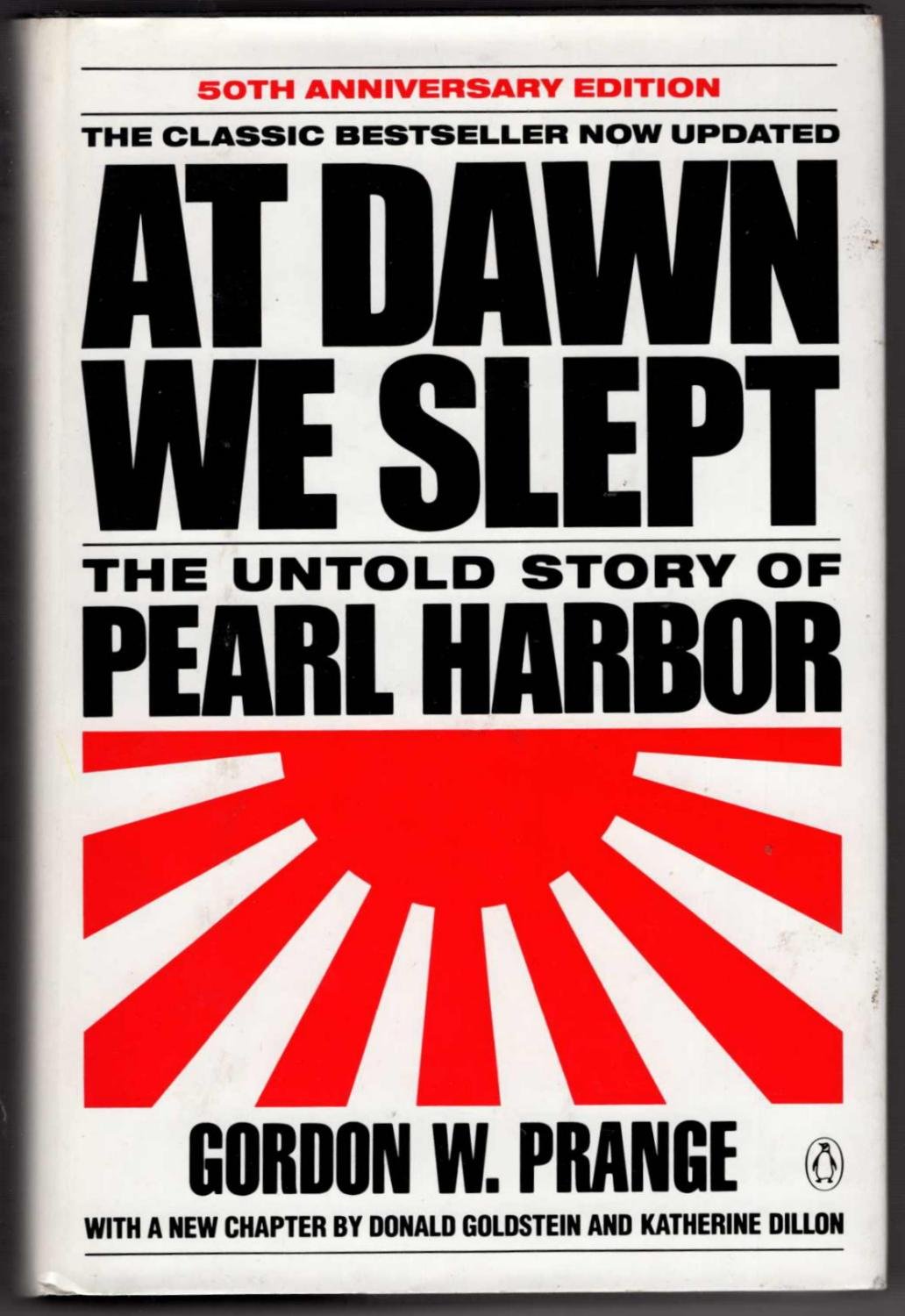
Gordon Prange author of "At Dawn we Slept" was a professor at Pitt.
All but 2 of the Battleships sunk or damaged on 7 Dec. were back in the fight by 1944.
This attack presented a major problem to FDR. On 8 Dec he asked and got Congress to declare war on Japan, but we were not at war with Germany. This was a major problem due to our Germany First strategy. Hitler got FDR out of this problem by having Germany declare war on the US on 10 Dec.
Gordon Prange author of "At Dawn we Slept" was a professor at Pitt.
All but 2 of the Battleships sunk or damaged on 7 Dec. were back in the fight by 1944.
This attack presented a major problem to FDR. On 8 Dec he asked and got Congress to declare war on Japan, but we were not at war with Germany. This was a major problem due to our Germany First strategy. Hitler got FDR out of this problem by having Germany declare war on the US on 10 Dec.
For the first time, none of the living survivors will be there. All are a hundred years or older now.
My Dad was 14 he's now 98 and served in WWII and Korea. He can tell you all about it.

Coming up in the time of attack. Bold strike by Japan and why they split their forces for midway for a diversion is a mystery.
Last edited:
Both were scapegoats. Churchill was aware of what was brewing and informed FDR. BUT the only way he could get the USA into the war was to LET IT HAPPEN!!!!!Adm Kimmel was relieved of command on Dec 17, 1941.
Gen Short was relieved of his command the same day.

And yet within the lifetime of the Vets that fought in that war, American highways are littered with Japanese cars. How disrespectful to those who fought, suffered, and died. 
horse hockeyBoth were scapegoats. Churchill was aware of what was brewing and informed FDR. BUT the only way he could get the USA into the war was to LET IT HAPPEN!!!!!
Absolutely correct assessment of the strike on Pearl. Sending the strike force thousands of miles undetected and delivering a hammer blow was eye opening as to the capacity of the IJN.Coming up in the time of attack. Amazing strike by Japan and why they split their forces for midway for a diversion is a mystery.
However, the Aleutian's aspect of the plan was long thought a feint, but subsequent investigation and scholarship revealed it to be an effort to close the North Pacific gap access to the Japanese home islands. The Doolittle raid proved this vulnerability, and both the IJN and IJA wanted this opening closed. Ian Toll’s “Pacific Crucible,” the first of his trilogy on the Pacific war, is an outstanding read on the lead up to Pearl and the events leading up to and just after Midway. Highly recommended.
Just out of idle curiosity, did the Mercedes, BMWs, Volkswagens, Fiats, etc bother you as much?And yet within the lifetime of the Vets that fought in that war, American highways are littered with Japanese cars. How disrespectful to those who fought, suffered, and died.

Agree completely there were signs of course, but conventional wisdom at the time said....horse hockey
1. Pearl was too shallow for torpedo attack
2. It was beyond the logistical capabilities of the Japanese.
To say there are clues that were missed...fair.
To say FDR "allowed" it....no way
Thanks for the tip. I will look into that book.Absolutely correct assessment of the strike on Pearl. Sending the strike force thousands of miles undetected and delivering a hammer blow was eye opening as to the capacity of the IJN.
However, the Aleutian's aspect of the plan was long thought a feint, but subsequent investigation and scholarship revealed it to be an effort to close the North Pacific gap access to the Japanese home islands. The Doolittle raid proved this vulnerability, and both the IJN and IJA wanted this opening closed. Ian Toll’s “Pacific Crucible,” the first of his trilogy on the Pacific war, is an outstanding read on the lead up to Pearl and the events leading up to and just after Midway. Highly recommended.
What should have raised more concern about a torpedo attack was the British success in attacking the Italian fleet at Taranto in 1940. That fleet was also anchored in shallow water, and the Brits pretty much wiped it out. The Japanese studied it, we failed to.Agree completely there were signs of course, but conventional wisdom at the time said....
1. Pearl was too shallow for torpedo attack
2. It was beyond the logistical capabilities of the Japanese.
To say there are clues that were missed...fair.
To say FDR "allowed" it....no way
You know that about 75% of Japanese cars are technically built in the US & Canada.And yet within the lifetime of the Vets that fought in that war, American highways are littered with Japanese cars. How disrespectful to those who fought, suffered, and died.
The way the US helped rebuild Japan into a modern western ally is one of the most remarkable achievements in this country's history.
Both were scapegoats. Churchill was aware of what was brewing and informed FDR. BUT the only way he could get the USA into the war was to LET IT HAPPEN!!!!!
horse hockey
Did FDR Know the Attack on Pearl Harbor was Coming?
"The question of whether President Franklin D. Roosevelt was aware of the impending attack on Pearl Harbor has been a subject of debate and speculation. Some historians suggest that Roosevelt may have been aware of the Japanese military and spy network's focus on Hawaii, as indicated by a memo from the Office of Naval Intelligence on December 4, 1941. This memo warned that Japan was vigorously utilizing its resources to secure military and naval information, particularly in Hawaii. However, the consensus among historians is that Roosevelt's failure to act on these warnings suggests that he did not have complete foreknowledge of the attack."The debate continues, with some historians arguing that there were more pieces to the puzzle that the administration missed, while others believe that the signs were clear and that Roosevelt's decision to declare war on Japan was a strategic move to protect the United States. The historical record remains complex, and the exact circumstances of Roosevelt's knowledge of the attack remain a topic of interest and discussion among historians.
Robert Stinnett's Day Of Deceit.
According to Stinnett, the answers to the mysteries of Pearl Harbor can be found in the extraordinary number of documents he was able to attain through Freedom of Information Act requests. Cable after cable of decryptions, scores of military messages that America was intercepting, clearly showed that Japanese ships were preparing for war and heading straight for Hawaii. Stinnett, an author, journalist, and World War II veteran, spent sixteen years delving into the National Archives. He poured over more than 200,000 documents, and conducted dozens of interviews. This meticulous research led Stinnet to a firmly held conclusion: FDR knew.

You can find "sources" who will support any position you want to take. I've read a great deal on this, and on naval history in general- it's been a lifelong passion. The best work I've seen on the subject isn't Stinnett, it's Prange by a wide margin. I don't buy Stinnett's conclusions at all.Did FDR Know the Attack on Pearl Harbor was Coming?
"The question of whether President Franklin D. Roosevelt was aware of the impending attack on Pearl Harbor has been a subject of debate and speculation. Some historians suggest that Roosevelt may have been aware of the Japanese military and spy network's focus on Hawaii, as indicated by a memo from the Office of Naval Intelligence on December 4, 1941. This memo warned that Japan was vigorously utilizing its resources to secure military and naval information, particularly in Hawaii. However, the consensus among historians is that Roosevelt's failure to act on these warnings suggests that he did not have complete foreknowledge of the attack."
The debate continues, with some historians arguing that there were more pieces to the puzzle that the administration missed, while others believe that the signs were clear and that Roosevelt's decision to declare war on Japan was a strategic move to protect the United States. The historical record remains complex, and the exact circumstances of Roosevelt's knowledge of the attack remain a topic of interest and discussion among historians.
Robert Stinnett's Day Of Deceit.
According to Stinnett, the answers to the mysteries of Pearl Harbor can be found in the extraordinary number of documents he was able to attain through Freedom of Information Act requests. Cable after cable of decryptions, scores of military messages that America was intercepting, clearly showed that Japanese ships were preparing for war and heading straight for Hawaii. Stinnett, an author, journalist, and World War II veteran, spent sixteen years delving into the National Archives. He poured over more than 200,000 documents, and conducted dozens of interviews. This meticulous research led Stinnet to a firmly held conclusion: FDR knew.
Stupidity and American hubris made Pearl Harbor possible.
LINK:
US Prisoners of War and Civilian American Citizens Captured
The Issue of Compensation by Japan
"After the conclusion of WWII, Congress passed the War Claims Act of 1948, which created a War Claims Commission (WCC) to adjudicate claims and pay out small lump-sum compensation payments from a War Claims Fund consisting of seized Japanese, German, and other Axis assets. Payments to POWs held by either Germany or Japan were at the rate of $1 to $2.50 per day of imprisonment. The WCC also paid civilian internees of Japan $60 for each month of internment, and civilians were also eligible for compensation for disability or death. The War Claims Act of 1948 did not authorize compensation for civilian internees held by Germany.
Since payments were already being made to U.S. POWs out of Japanese assets via the War Claims Act, POWs of other Allied countries were given first claim on payments from Japanese assets situated in neutral countries or countries with which the Allied Powers were at war, as specified in the Multilateral Peace Treaty with Japan of 1951. In the decades since this initial compensation, POW and internee groups have tried several routes to obtain more compensation for their internment by Japan. Groups have tried and failed to get legislation passed, to have the U.S. Court of Claims hear their claims, to get Japan to pay reparations of about $20,000 to each legitimate claimant, or to have the United States compensate them.
In 1995 POW and civilian internee groups from several countries filed suits in the Japanese court system, seeking a net payment of $20,000 for each POW/internee. However, Japanese courts ruled out compensation, pointing to Article 14 of the Multilateral Peace Treaty, in which the United States waived any further claims by U.S. citizens against Japan. In late 1999, in a new tactic, POWs/internees who claim to have been used as forced laborers filed suit in California courts against several major Japanese companies seeking reparations: so far all suits have been dismissed. On June 28, 2000, the senate Judiciary Committee held a hearing on POW survivors of the Bataan Death March and their claims against Japanese companies they allege used them as slave laborers. Although attempts to give POWs additional U.S. compensation failed in the 106th Congress, legislation was passed to find, declassify, and release any Japanese records that the United States might have relating to Japanese WWII war crimes. A sense of Congress resolution also passed that asked the Administration to facilitate discussions between POWs and Japanese companies over POW slave labor claims. In the 107th Congress, several pieces of legislation were introduced, including one to give a tax-free gratuity of $20,000 to Armed Forces personnel and civilian employees of the federal government who were forced to perform slave labor by Japan in WWII; none became law. As the number of living POWs and civilian internees dwindles, those that survive continue to press the issue. This report will be updated as events warrant."
US Prisoners of War and Civilian American Citizens Captured
The Issue of Compensation by Japan
"After the conclusion of WWII, Congress passed the War Claims Act of 1948, which created a War Claims Commission (WCC) to adjudicate claims and pay out small lump-sum compensation payments from a War Claims Fund consisting of seized Japanese, German, and other Axis assets. Payments to POWs held by either Germany or Japan were at the rate of $1 to $2.50 per day of imprisonment. The WCC also paid civilian internees of Japan $60 for each month of internment, and civilians were also eligible for compensation for disability or death. The War Claims Act of 1948 did not authorize compensation for civilian internees held by Germany.
Since payments were already being made to U.S. POWs out of Japanese assets via the War Claims Act, POWs of other Allied countries were given first claim on payments from Japanese assets situated in neutral countries or countries with which the Allied Powers were at war, as specified in the Multilateral Peace Treaty with Japan of 1951. In the decades since this initial compensation, POW and internee groups have tried several routes to obtain more compensation for their internment by Japan. Groups have tried and failed to get legislation passed, to have the U.S. Court of Claims hear their claims, to get Japan to pay reparations of about $20,000 to each legitimate claimant, or to have the United States compensate them.
In 1995 POW and civilian internee groups from several countries filed suits in the Japanese court system, seeking a net payment of $20,000 for each POW/internee. However, Japanese courts ruled out compensation, pointing to Article 14 of the Multilateral Peace Treaty, in which the United States waived any further claims by U.S. citizens against Japan. In late 1999, in a new tactic, POWs/internees who claim to have been used as forced laborers filed suit in California courts against several major Japanese companies seeking reparations: so far all suits have been dismissed. On June 28, 2000, the senate Judiciary Committee held a hearing on POW survivors of the Bataan Death March and their claims against Japanese companies they allege used them as slave laborers. Although attempts to give POWs additional U.S. compensation failed in the 106th Congress, legislation was passed to find, declassify, and release any Japanese records that the United States might have relating to Japanese WWII war crimes. A sense of Congress resolution also passed that asked the Administration to facilitate discussions between POWs and Japanese companies over POW slave labor claims. In the 107th Congress, several pieces of legislation were introduced, including one to give a tax-free gratuity of $20,000 to Armed Forces personnel and civilian employees of the federal government who were forced to perform slave labor by Japan in WWII; none became law. As the number of living POWs and civilian internees dwindles, those that survive continue to press the issue. This report will be updated as events warrant."
Yes.Just out of idle curiosity, did the Mercedes, BMWs, Volkswagens, Fiats, etc bother you as much?
My grandfather served aboard the USS Alaska at both Iwo Jima and Okinawa, two of the deadliest battles for the USN due to kamikazes.
my god father fought on Iowa Jima. He was shot in the chest near his heart ,BUT THE BULLET STOPPED AT THE PICTURE OF THE VERGIN MARY IN HIS BIBLE OVER HIS HEART!!!!!!!!My grandfather served aboard the USS Alaska at both Iwo Jima and Okinawa, two of the deadliest battles for the USN due to kamikazes.
While there were many indications of Japan preparing for war, most agencies believed the Philippines would be the target. As to how the IJN task group got close to Hawaii no big mystery. They sailed from northern Japan and stayed in the North Pacific (which had very little traffic and) south of any searches from Alaska. Even today this area sees little sea traffic.
Latest
-
01
 BWI Football
Matt Campbell on Penn State’s early-season shortcomings: ‘We have to be better’
BWI Football
Matt Campbell on Penn State’s early-season shortcomings: ‘We have to be better’
-
02
 BWI Football
Pre-Snap Read: Penn State's "Players, Formations, Plays" Philosophy Explains Quinton Martin's Role
BWI Football
Pre-Snap Read: Penn State's "Players, Formations, Plays" Philosophy Explains Quinton Martin's Role
-
03
 BWI Football
What are the top things I learned Tuesday before Penn State-Buffalo? On the team's health, a pass rusher, and more
BWI Football
What are the top things I learned Tuesday before Penn State-Buffalo? On the team's health, a pass rusher, and more
-
04
 BWI Recruiting
Multiple Power Four prospects added to Penn State-Buffalo visitor list
BWI Recruiting
Multiple Power Four prospects added to Penn State-Buffalo visitor list
-
05
 BWI Football
Penn State injury report: Lions expect to have two defenders back for Buffalo, but a third is questionable
BWI Football
Penn State injury report: Lions expect to have two defenders back for Buffalo, but a third is questionable