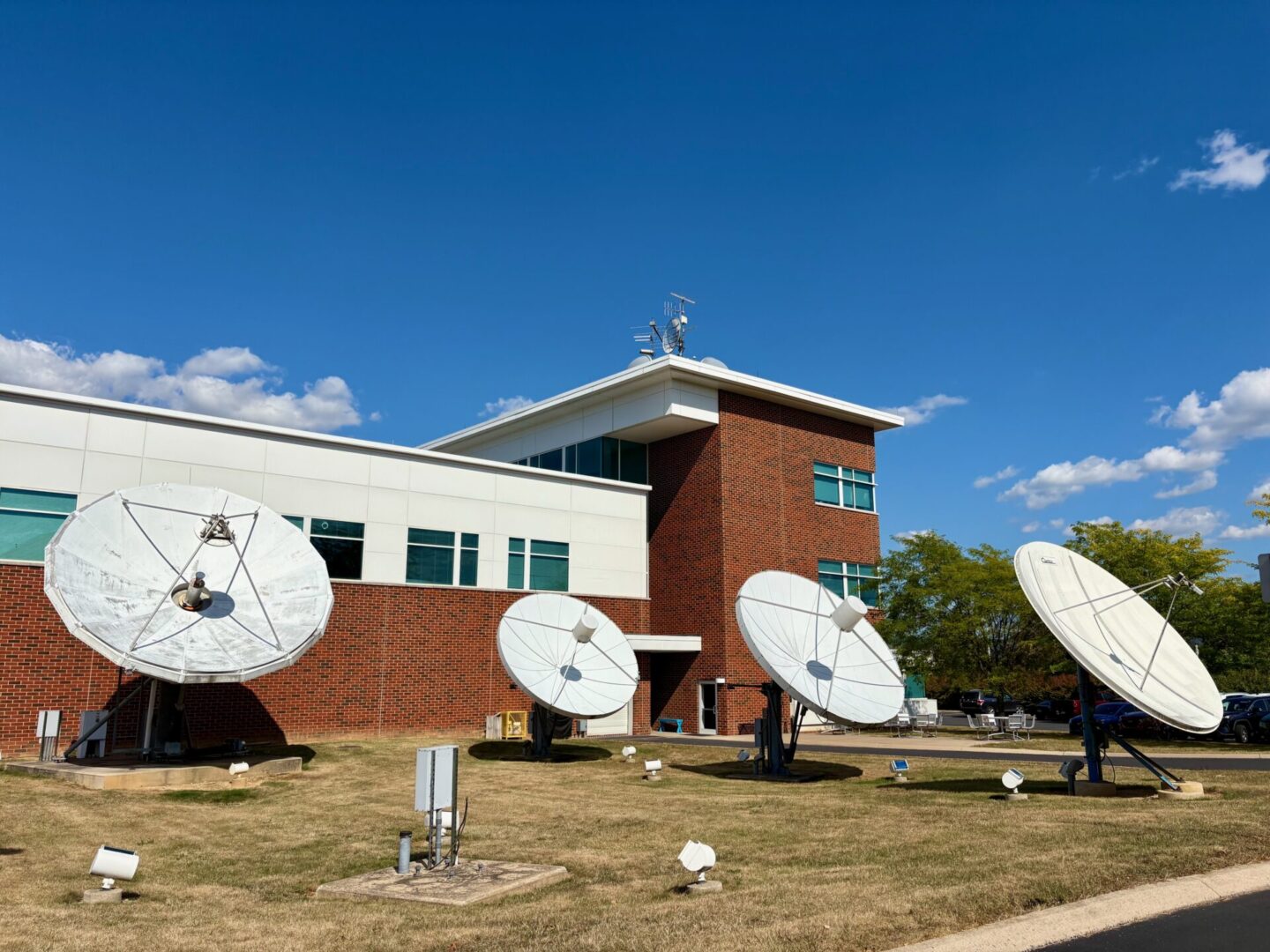
Supporters hold out hope after Penn State’s ‘short-sighted’ decision to close WPSU By Josh Moyer
September 13, 2025 9:47 AM
https://www.centredaily.com/news/local/community/article312087671.html
WPSU news director Emily Reddy offered a nervous laugh Friday when asked what the last 48 hours have been like.
Reddy and the WPSU newsroom discovered only Wednesday that Penn State was considering transferring assets/ownership of the university-operated PBS/NPR station to Philadelphia-based WHYY. And, on Thursday, after a committee on the university’s board of trustees unanimously rejected the deal, they learned Penn State’s plan was to simply shut down the station by next summer to cut costs.
“It’s been rough,” Reddy told the CDT. “I made my career here. I’ve been at WPSU for almost 17 years, and this has become my home and my community. And it’s hard to think of this not being my life and the thing that I do every day.” Reddy said WPSU has about 44 employees. Layoffs would be made before June 30, 2026.
Is there another solution to continue WPSU? WPSU has been a part of central and northern Pennsylvania for 60 years, with efforts first taking root in the early 1950s and the public television component added in 1965. Today, WPSU-TV reaches 515,000 households in 24 counties while WPSU-FM serves more than 450,000 listeners.
It’s not yet clear if NPR and PBS programming would even continue in the listening and viewing area when WPSU shuts down.
Earlier this summer, WPSU was hit with a $1 million funding loss — 20% of its overall budget — when Congress eliminated funding that was already committed to the Corporation for Public Broadcasting over the next two years. Those cuts put university-affiliated stations across the country on financially shaky ground, although Penn State’s is the first in the Big Ten to announce a closure.
“Here’s the problem: If you knew how WPSU came to be, it took years and years to create the station it has become,” said Patty Satalia, a retired WPSU employee who spent 30 years there as a host, producer and reporter. “If it goes away, it’s not coming back. So I think it’s absolutely critical that every effort be made to ensure its continuation — even if its continuation is in some reduced form.
“But to just let it go? I think it’s short-sighted and heartbreaking. I just can’t believe it’s not seen as the treasure that it really is.”
Satalia isn’t hopeless about the situation just yet. She emailed all of the university trustees on Friday morning, attended Friday’s full trustees meeting — and later received a response from one trustee. According to Satalia, the trustee assured her they hope there’s another avenue to save WPSU. That doesn’t mean one will come to fruition. But, to Satalia, that means it’s still possible. Reddy wondered aloud if WPSU could become a community licensee or operate with a lower level of support. Gregory Petersen, a member of the WPSU Board of Representatives, similarly believed other avenues were worth exploring. He also floated the idea of becoming a community licensee. That way, he said, the university would mainly just need to supply space and equipment for a public/private partnership. “I can appreciate the University’s position about funding, but to me, they have decided to give up on the service part of the land-grant mission after the failure of one plan,” Petersen told the CDT in an email. “To me it’s also failure of leadership.”
Questions remain as ‘wind down process’ begins A trustees committee rejected a deal that basically would’ve transferred ownership to WHYY for just $1, and would’ve had Penn State subsidize operations for $17 million over the next five years. That was called a “fair offer” by Sara Thorndike, Penn State’s senior vice president for finance and business/treasurer and chief financial officer. But trustees on the finance and investment committee felt that price was simply too steep for a university facing financial issues. “As much as I think that we certainly need to make a difficult decision, I don’t think the way this deal is structured maximizes value to this institution, and I think we need to do a little bit more exploratory work before I’m comfortable approving a deal like this,” trustee Anthony Lubrano said before voting against the measure Thursday with the rest of the committee members.
Student tuition helps subsidize WPSU to the tune of $3.4 million annually and, in exchange, WPSU has produced and aired programming with a focus on Penn State Outreach. “Weather World,” for example, helps farmers understand when to plant crops. Satalia said “Music Theatre Spotlight” once attracted the best theater students from across the state and beyond. Gardening programs championed Penn State research, sports shows placed an equal emphasis on women’s sports, and past Penn State presidents used the station to better acquaint themselves with the community. WPSU has also provided internship opportunities for students and learning opportunities for educators. It’s connected with the community by scheduling children’s events, hosting forums, providing resources to area schools, and more.
Thorndike said earlier Thursday, if the trustees voted down the transfer to WHYY, the university would “start the wind down process of WPSU.” The CDT reached out to both the university and the board of trustees for clarity on whether other avenues could still be explored — or if Thursday’s vote was seen as a last-ditch effort to preserve WPSU. The CDT received a response that noted “the most promising option” was rejected. “The University has been exploring a number of alternative funding models for WPSU for some time now, and the aim was to find a solution that would keep WPSU open and broadcasting,” read a written statement from the university. “As with any asset the university is reviewing, often exploratory conversations must be kept confidential. The most promising option involved the transfer of operating assets from WPSU to WHYY and a $17 million subsidy from the University, which was structured to decline over a five-year period and give WHYY an opportunity to help WPSU reach a financial break-even point.
“However, the Penn State Board of Trustees Finance & Investment Committee (on Thursday) voted against the proposed transaction. Penn State has budgeted funds for WPSU’s operations through the end of June 2026. Now, the University will develop a wind down plan ending, at the latest, on June 30, 2026. There are still many unknowns but the administration has noted they will share information as soon as it is available.”
In the meantime, WPSU supporters will continue to hold out hope the longtime station might still be saved. But, at this point, a lot of unknowns remain. “For those of us in the newsroom, we just want to keep reporting on central Pennsylvania and keep informing people, giving them the information they need to live their lives and make informed decisions,” Reddy said. “And we’re going to keep on doing that as long as we can — and we’re hoping something will happen that will let us keep doing that.”