The USF Preview
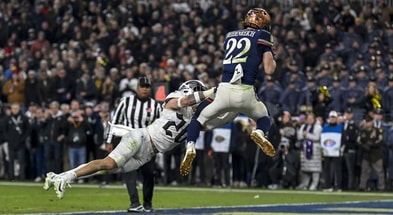
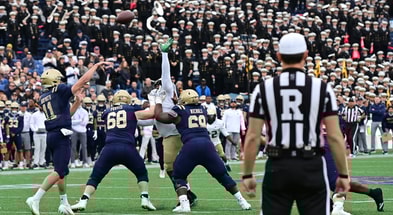
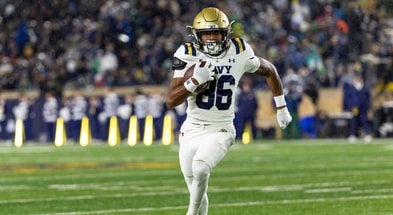
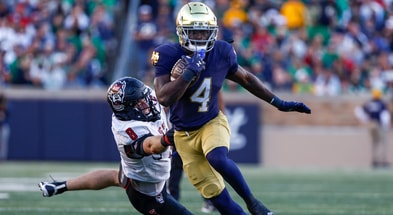
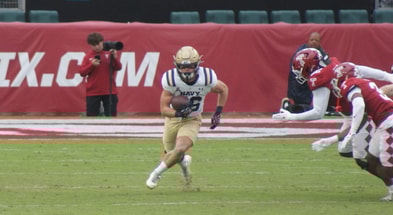
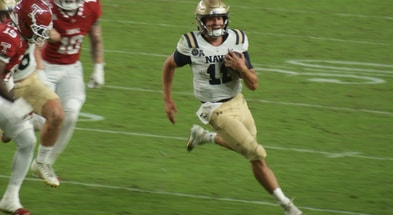
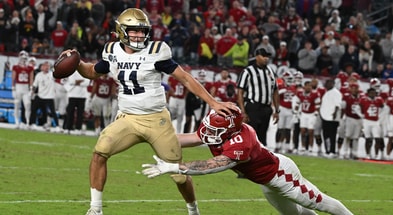
To the outside world, Navy football is reeling. The Mids are coming off a blowout loss at Notre Dame, their second of the season. Now, they have a ranked opponent headed to Annapolis for Senior Day in a game with enormous conference implications. Even if they manage to get past that game, the Mids still have to hit the road for the season finale and hope they get some help in the conference race.
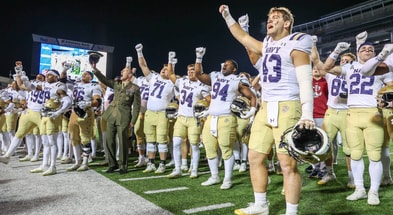
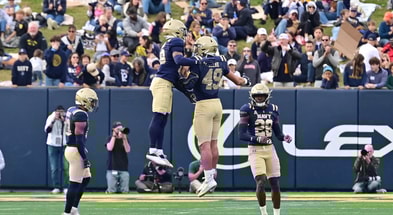
This, of course, is a reference to the 2019 season, and Navy beat #21 SMU in a thriller, 35-28. It was one of the most exciting games I have ever attended at Navy-Marine Corps Memorial Stadium, and it set the stage for the rest of the season. The Mids would go on to defeat Houston and Army to claim a spot in the Liberty Bowl, where they beat Kansas State to finish the season at 11-2. Running that gauntlet at the end of the year turned an uncertain situation into arguably the greatest Navy season of my lifetime.
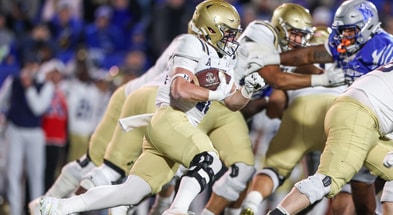
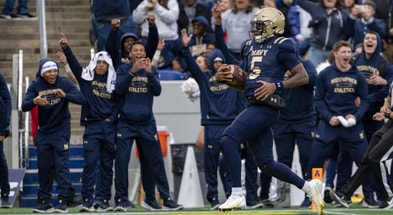
Today, the Mids find themselves in a remarkably similar scenario. This time, it’s a ranked USF squad coming to town playing for a spot in the American title game, and it will take Navy’s best effort of the season if they want any hope of history repeating itself.
This moment has been a long time coming for USF. In recent years, an optimist would have called them a “sleeping giant,” while a pessimist might prefer to describe them as “underachievers.” Either way, it’s remarkable that it’s taken the Bulls so long to reach the level they have this season. USF is a very good school, having become an AAU member in 2023. It’s located in an exciting city that’s surrounded by football talent, making it a hot transfer destination. There’s even a bit of BCS pedigree there, as the last program in the American that was part of the Big East since the 2005 realignment. But for whatever reason, consistent success has eluded the Bulls, with periodic flashes of greatness offset by longer stretches of futility.
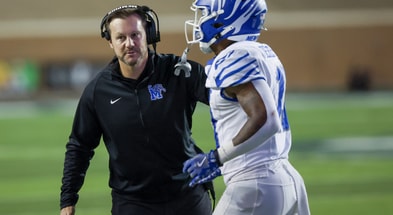
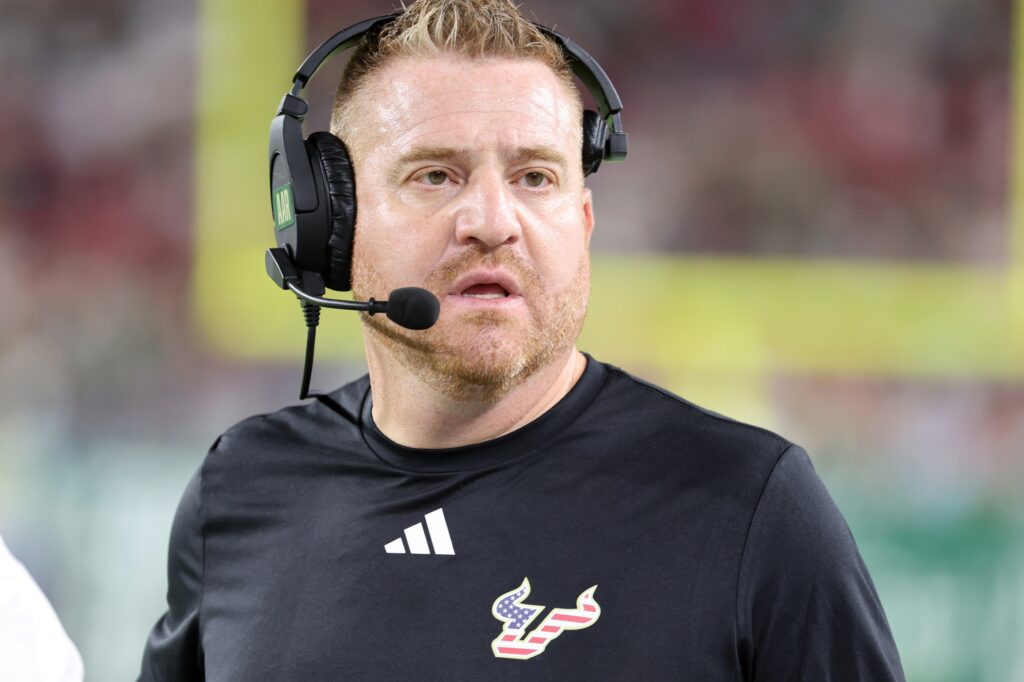
That era, however, appears to be coming to an end. Head coach Alex Golesh was already turning the program into a winner, having inherited a 1-11 team and leading it to two bowl wins in his first two seasons. USF is one of the three NIL powerhouses in the American, and the combination of local talent and ability to attract transfers made a quick turnaround possible. This year, they’re taking the next step. Today, the Bulls are 7-2, with wins over Boise State, Florida, and North Texas. Last week, they trounced a UTSA team that had just run Tulane out of their building. USF is #7 in total offense and #5 in scoring offense. They’ve made a complete transition from conference dark horse to conference powerhouse.
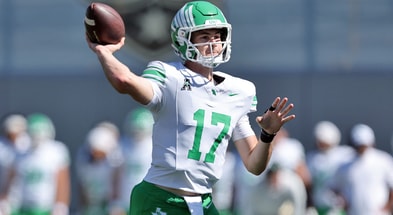
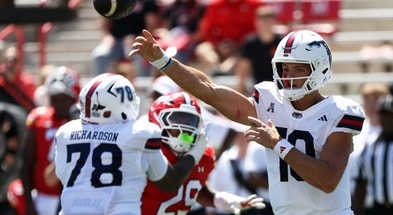
And it probably would have happened a year sooner if quarterback Byrum Brown had been healthy last season. Brown suffered a leg injury against Tulane last September, and while his return was teased every week, it never materialized. Without him, the Bulls were a one-dimensional offense. Granted, it was a good dimension; they ran for 425 yards against Charlotte, 308 against Tulsa, and 319 at FAU. But when you add Brown’s own running and downfield passing ability to what was already a high-level running game, that’s when you get the perfect storm of offense that you see today.
I saw a comment on Twitter today calling Brown “G5 Cam Newton,” and I think that’s the perfect comparison. He’s a great quarterback, but he’s also the perfect quarterback for what Golesh wants to do with the ball. Brown averages over 78 yards per game on the ground, which is fifth in the country among quarterbacks. But in conference play, he’s been even better, and he’ll enter Saturday’s matchup on a five-game stretch of at least 200+ passing yards, 80+ rushing yards, and one rushing touchdown in each. That’s the longest such streak in FBS in 30 years. Last week, he became the only player in the last 30 years to put up 200 yards passing, 100 yards rushing, and a 90 percent (14-15) completion percentage. Brown is the piece that completes the puzzle of Golesh’s offense.
And it’s an impressive offense. The first thing that stands out when watching USF is its pace of play. As with FAU and Tulsa, tempo is an essential component of what USF does. The Bulls’ 21.2 seconds per play is the second-fastest pace in the country. That tempo puts pressure on defenses, limiting their ability to make substitutions and making it difficult for them to adjust.
However, while the tempo captures most people’s attention, spreading the field is another critical element of the USF offense. Golesh uses spread formations to force defenses to cover the entire field, with wide receivers often lining up outside the numbers.
Both of these elements have the same goal: to simplify defenses. If a defense has to match the offense’s pace, it’s hard for them to disguise what they’re doing. Navy likes to mess with blocking assignments by using late stemming. That’s hard to do when you have to align yourself quickly. Lining up receivers from sideline to sideline limits the number of players you can put in the box against the run. That is especially problematic for Navy.
One of the reasons why Navy is effective against the run is that they use unusual run fits. Players don’t necessarily defend the gaps that they are lined up over. Instead, you might have exterior defenders covering the A gap or interior defenders stunting outside. That makes it hard for offensive linemen to know who to block. But if the secondary is spread thin, it limits who can contribute in run support. The farther away defenders are from the ball, the harder it is to give them a gap assignment. This simplifies run defenses, and USF is a run-first team, with its top three running backs combining for 1,021 yards and nine touchdowns. North Texas took advantage of a light box against Navy, and USF is even better equipped to do so.
This was the case last year as well, but without Brown, Navy was able to load up against the run. USF had opportunities downfield, but they weren’t able to capitalize on them. That won’t be the case this year, with Brown’s big-play arm and a talented group of receivers. Brown’s 8.5 yards per passing attempt is second only to Drew Mestemaker in the conference. The Bulls have five receivers with at least 19 receptions. Three of them average at least 17 yards per catch, led by junior Keshaun Singleton with 573 yards and 5 TDs. Between the tempo, creating space for runners, and the ability to throw downfield, it’s no wonder that USF is 10th in the country in plays of 20 or more yards per game (6.3).
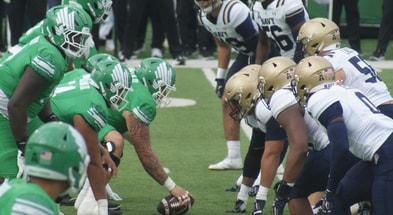
This is the second week in a row that Navy will be facing such a well-rounded offense, and I wouldn’t be surprised if the plan for the Mids is the same this week. Navy committed to stopping the run against Notre Dame, which left defensive backs in a lot of single coverage. It didn’t go especially well, although you sort of have to pick your poison here. Navy left a light box against North Texas, daring them to run all game. And they did. But USF is designed to run all game. So what do you fear more: the threat of a big play, or death by a thousand cuts? P.J. Volker‘s M.O. is to stop the run first, so that’s what I would expect here, although it’s not a choice any defensive coordinator wants to make.
It’ll be a different kind of chess match when Navy has the ball. There may not be a defensive coordinator who has made more of a singular impact on the last decade of Navy football than USF’s Todd Orlando. Orlando was the DC at Houston in 2015 when the Mids fell to the Cougars in what was a de facto division title game. He used the same game plan the following year when the Mids upset the sixth-ranked Cougars in one of the greatest games in Navy history. Almost every team Navy faced that season copied Orlando’s defense, and after spending the entire offseason preparing for it, the Mids torched them all. It led to a spot in the conference championship game, but it also masked some of the issues with the offense that were exposed over the next two years.
Earlier in his career, Orlando was 2-0 against Air Force when he was DC at Utah State. He was also the defensive coordinator for UConn in their 2006 meeting with Navy, a legendary game to in-the-know option football fans.
Orlando’s defenses have a reputation for prioritizing aggression and drive-killing plays over total yardage, and this year is no exception. The USF defense is a top-ten unit in both turnovers gained and tackles for loss. They’re ranked in the top 15 in sacks. Last year, we saw how that aggression carried over to his option game plan.
USF’s defense spent the majority of the game in an eight-man front. While that’s a fairly standard look against Navy — we saw it just last week — some of the things USF did with it were more unusual.
We saw the first part of the USF plan on Navy’s first play from scrimmage. The Mids ran a counter option out of the shotgun. USF was lined up in a 4-4. The outside linebacker, as the pitch key, ran into the backfield to get into the pitch lane. The inside linebackers rotated in the direction of the play. If the quarterback read the pitch key as a keep read, he’d cut inside and be met by a scraping ILB.
To adjust, the Mids first ran the triple option. The playside snipe blocked the scraping ILB. The wide receiver attempted a two-for-one block, running towards the safety and hoping the cornerback would follow him. The CB didn’t, but was lined up deep enough that the pitch man could still pick up a few yards.
Navy then ran a load option with the same blocking assignments, but using the fullback to block the cornerback. That did the trick.
The Mids tried the load option again on their next drive, but this time, the blockers had a hard time getting in front of the linebackers.
With the ILB scraping outside so aggressively, Navy tried to slow him down by running behind him with the fullback.
Navy then tested the waters by running the option outside again. This time, though, USF didn’t scrape the linebackers. Instead, they ran the EZ stunt, with the dive and pitch keys exchanging responsibilities. It worked out here, since the DE getting blocked prevented him from getting deep enough to step into the pitch lane. But the Mids were a little lucky that this was the case.
These plays illustrate the challenge faced by the offense. USF’s plan was to change between scraping the linebackers and running the EZ stunt. Neither one of them is an answer to the offense on its own, but by switching back and forth between them, the Bulls made it a guessing game for the Mids. The plays designed to work against one wouldn’t work against the other.
When the Mids guessed right, everything was fine.
When they guessed wrong, they didn’t go anywhere.
When this happens, Navy’s offense often turns to the power game, which is what they did in the second half. That can still be effective when paired with play action, but this was when Blake Horvath‘s rib injury was really nagging him. The Mids weren’t any better at throwing downfield than USF was. But they were able to put the game away with a 13-play, 87-yard drive that stretched between the third and fourth quarters and gave them a three-score lead.
Could a similar plan work on Saturday? I don’t know. For one, USF’s defense has some truly disruptive players. Linebacker Mac Harris makes plays all over the field and leads the team with 79 tackles. He’s been named the conference’s defensive player of the week three times already. Fellow linebacker Jhalyn Shuler is right behind him with 69 tackles and was the Walter Camp National FBS Defensive Player of the Week after recording 14 tackles and a fumble recovery against Boise State. The two have combined for five forced fumbles, 7.5 sacks, and 13 TFLs. Meanwhile, defensive back Jarvis Lee has shown incredible range, combining two interceptions with 10.5 TFLs and 3 sacks.
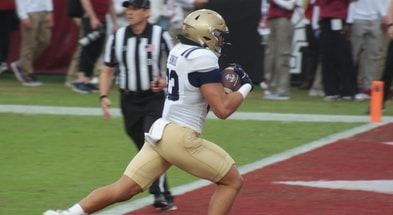
On top of that, Navy needs to put up points. Last year, the Mids had three three-and-outs and a lost fumble against the Bulls. That might have worked back then, but this USF team is a whole different animal. You have to accept that USF is going to score its fair share. The Mids need to do the same. If USF is going to line up with a single deep safety, this needs to be an Eli Heidenreich receiving kind of game. Explosive plays have been missing for the Mids the last two weeks, but to keep pace, they’ll need a return to form.
And yes, they are capable of it. For all of USF’s impressive numbers, on a per-play basis, Navy is actually better (7.14 yards vs. 6.92). The Mids can do it, but if USF’s aggression causes them to make mistakes, it will be a long afternoon. The offense can be Navy’s great equalizer when they play to their potential, but we haven’t seen it in a while. That needs to change.
The Mids have already had a good season. We know they’ll be in the postseason, and they’ll be playing for the CIC Trophy in a month. Having a good season up to this point is what has them playing meaningful games in November. Winning these games can turn a good season into a great season. We’ve seen them do it before, and I can’t wait to see them try it again.
See you Saturday.