Scott Frost: ‘College football is broken’ amid NIL, revshare abuse

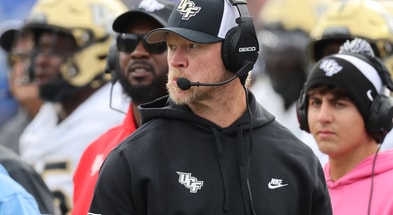
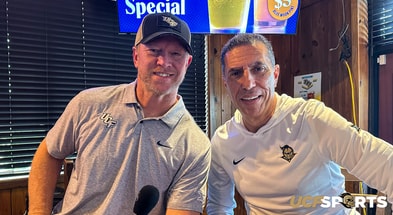
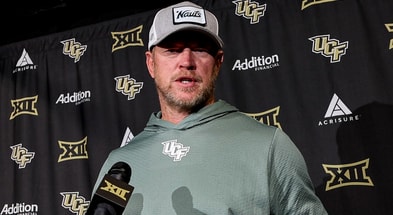
UCF head coach Scott Frost didn’t hold back when asked how much the recruiting landscape has changed in recent years.
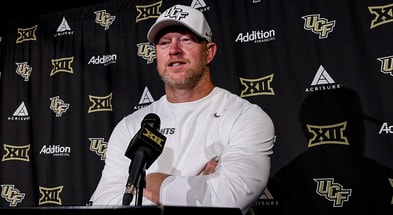
“It’s broken,” Frost said bluntly during his National Signing Day press conference on Wednesday. “College football’s broken. Yeah, I don’t know if you’ll get that honest answer from everyone, but everyone would agree if they were honest.”
That candid assessment came as Frost shared his frustration over the widening gap between schools that abide by emerging revshare frameworks—and those that appear determined to circumvent them through guaranteed NIL promises, even after signing the CSC (College Sports Commission) participation agreement meant to prevent it.
LSU’s widely publicized hire of Lane Kiffin, which included reports of $10 to $15 million in annual NIL guarantees in addition to revshare compensation, is one recent example. Another is BYU’s contract extension of Kalani Sitake, which similarly promised a stacked NIL war chest on top of base revenue share.

“That’s baffling to me,” Frost said. “We’re going to sign participation agreements saying we’re not going to do any of that, and then have newspaper articles come out about how much you’re guaranteed to spend over revshare.
“So, you know, there’s no bigger fan of the people trying to put guardrails around this than me and us. And honestly, mostly because it’s best for college football if this gets under control.”
CSC aims to formalize oversight—but will it stick?
Frost was referring to the College Sports Commission, a regulatory body created to bring order and consistency to the evolving NIL and revshare ecosystem. Schools that opt into CSC agree to subject themselves to formal oversight, allowing the organization to monitor and investigate NIL transactions, revenue-sharing audits, and compliance with emerging regulations. That would give CSC the authority to not only review and reject deals, but also impose penalties on schools that engage in blatant rule-breaking.
The CSC’s enforcement capabilities are designed to go well beyond toothless warnings. Under its charter, the group could levy fines, suspend NIL privileges, and take other disciplinary actions against members who violate the rules. The intent is to create a framework where all programs operate under the same standards, something that has largely been missing during the early years of NIL and player compensation.
In theory, participation in CSC would bring much-needed transparency to how schools structure NIL and revshare offers. But in practice, Frost and others remain concerned that enforcement is inconsistent, with some programs openly ignoring the terms of the agreement while continuing to benefit in recruiting. Without meaningful oversight, Frost fears the imbalance will only worsen.
“You know, any sport where whoever has the richest boosters wins—that’s not a good model for a sport,” Frost said. “So we’re rooting for it to get curtailed. In the meantime, we’ve got to try to do the best we can.”
UCF’s strategy: Culture, compliance, and a long game
Despite the inequities, Frost was quick to credit UCF Athletics Director Terry Mohajir and general manager Trent Mossbrucker for building a stable infrastructure that allows the Knights to compete with integrity.
“Terry and people here have done an unbelievable job getting us on a level playing field with everybody else from a revshare standpoint,” Frost said. “That gives us a great chance. We need to keep pushing forward and trying to do even more.”
Compared to this time last year, when Frost had barely met his players and was blindsided by immediate NIL demands, he believes UCF is in a much stronger position.
“I laugh about it now, but I did my press conference last year and had a couple players and their agents waiting outside my office five minutes after I did my press conference to start telling me how much money I needed to pay them, and I didn’t even know who the kids were,” he said.
“We’re going to know our team now. We’re going to know our strengths and weaknesses. I think we’re at a better financial position to approach this, and hopefully we’ll build around some people rather than try to build the whole thing from scratch.”
Impact on high school recruiting, development and loyalty
Frost also lamented the erosion of long-term player development and loyalty, two cornerstones of what used to define the college football experience.
“The days of going to a school and being loyal to the school and being able to go back to homecomings and support a school that you were at for four or five years… some kids will never have that because they’ve been at three or four schools,” Frost said.
“One of the things that I think a lot of coaches love about coaching is the mentoring side of it… That’s getting harder and harder to do. The time frame that you have to impact some guys can be a lot shorter now.”
Instead of a multi-year developmental arc, college football is now largely a year-to-year rebuild, with teams scrambling each offseason to reassemble a roster from the portal, recruiting classes, and returning players. Frost believes UCF is better suited for that challenge in Year 2, with stronger culture keepers in the locker room and a clearer understanding of roster needs.
“You’ve got to build a team and a team culture year by year now,” he said. “The good thing for us is we’re going to have a lot of guys that understand what we want and our standards. And when you have culture keepers in the locker room that hold everybody else to the standard, that’s a big piece.”
SIGN UP: Join the UCFSports.com Community for $1
Join the message board discussion with diehard UCF fans in The Dungeon