Under pressure from Kentucky, Indiana’s greatest offensive flaw returned

Ball pressure has a way of revealing the truth. On Saturday night at Rupp Arena, it revealed Indiana’s.
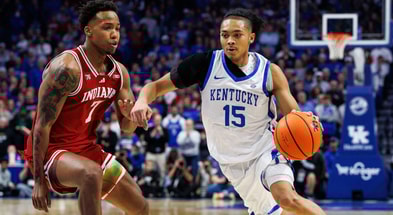
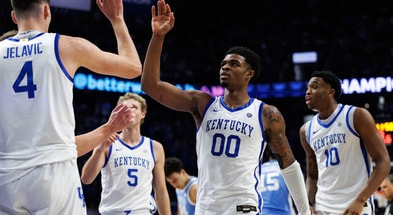
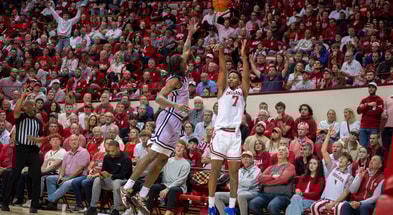
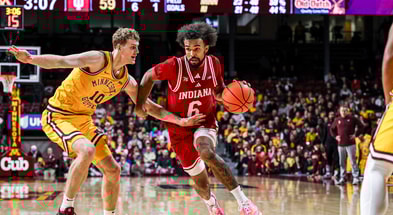
As Kentucky turned the game into a series of collisions and hurried decisions, the Hoosiers unraveled, undone once again by aggressive, physical defense in a 72-60 loss that followed a pattern Indiana has yet to break.
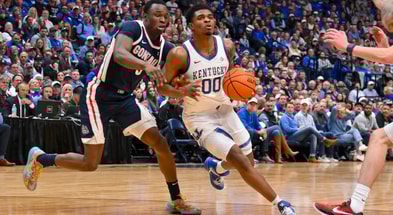
The Wildcats did not win with finesse. They won by forcing Indiana to play uncomfortable basketball. Passing lanes disappeared. Driving angles narrowed. Each possession demanded strength and decisiveness, and Indiana too often offered neither.
Kentucky raised the intensity after halftime, pressing the ball higher and crowding every catch. The result was a second half defined less by shot-making than by survival. Indiana committed 12 of its 18 turnovers after the break. For a team built on offensive rhythm, the pressure was suffocating.
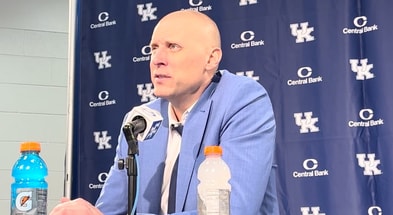
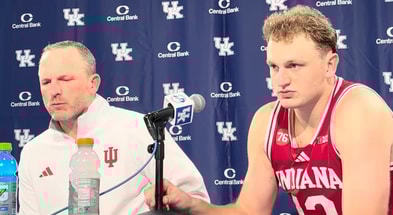
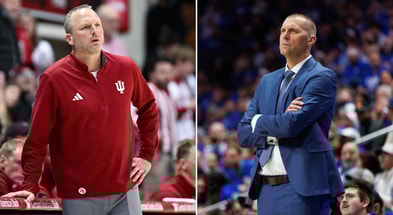
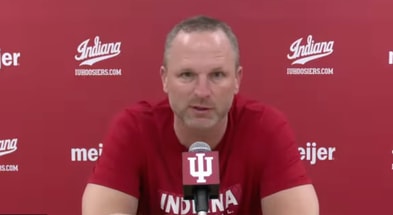
“I thought the second half, Kentucky certainly turned up the pressure and was able to get into us and we didn’t respond well enough and we turned the ball over too much,” Indiana head coach Darian DeVries said postgame.
Postgame Q&A: Darian, Tucker DeVries react to Indiana’s loss at Kentucky
Indiana’s struggles were structural as much as they were mental. Too many offensive actions began well beyond the arc, forcing ball handlers to initiate from compromised positions. Catches came drifting instead of set.
Kentucky overplayed the wings, collapsed driving lanes and trusted its physicality to win the margins. When the ball finally reached the paint, it often ended in a turnover rather than a quality look.
This was not new.
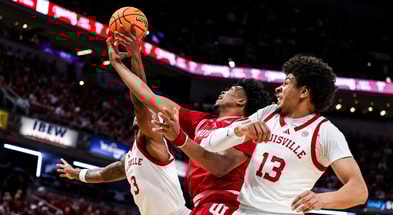
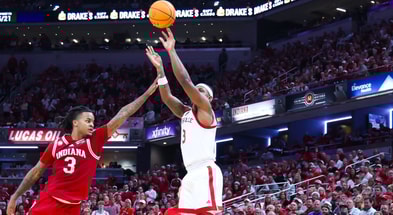
Louisville used a similar game plan earlier in the season, overwhelming Indiana with pressure and riding it to a win. Kentucky followed the same blueprint, particularly after halftime, and reached the same conclusion. When Indiana’s first option was taken away, the response rarely arrived with enough force or speed to relieve the pressure.
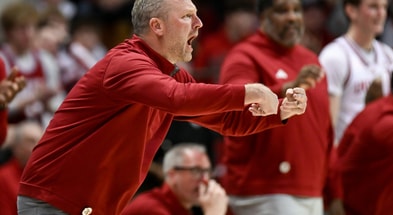
“The number one thing when you get at ball pressure is everything from an execution standpoint and a movement standpoint, it’s just got to be done with more force,” DeVries said. “You can’t continue just to get pushed out and everybody stands.
“You have to find ways to give yourself up with a back cut, give yourself up with a screen, set up those screens with more force and get some movement. It’s something we got to get better at, there’s no question.”
Top 10
- 1Breaking
Heisman Trophy
Best player in CFB crowned
- 2Trending
Heisman Voting
Final vote totals released
- 3
Michigan Athletic Dept.
Full investigation commissioned
- 4Hot
Kenny Dillingham
Nearing extension with ASU
- 5
Michigan Coach Search
Three names to watch
Get the Daily On3 Newsletter in your inbox every morning
By clicking "Subscribe to Newsletter", I agree to On3's Privacy Notice, Terms, and use of my personal information described therein.
Indiana briefly suggested it might withstand the onslaught. Early in the second half, the Hoosiers created separation on the scoreboard and quieted the crowd. With a seven-point cushion and momentum in hand, Indiana had an opening to dictate terms.
Instead, Kentucky ramped up the pressure. Indiana’s offense stalled and the moment passed.
Kentucky seized control without ever finding an offensive groove of its own. The Wildcats finished with their fewest points and worst shooting percentage in a win during the Mark Pope era, yet Indiana never forced them to pay. The Hoosiers’ shooting could not offset the steady erosion caused by turnovers.
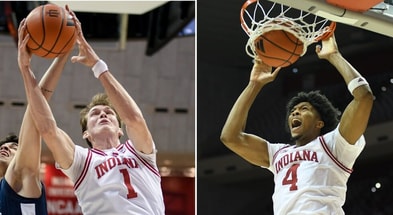
“As a group, I think when they pick up the pressure, I think we just need to really focus on our execution a little bit more on every possession,” forward Tucker DeVries said.
Instant Analysis: 3 takeaways from Indiana’s rivalry loss at Kentucky
Through the opening weeks of DeVries’ tenure, Indiana has shown two identities. On nights when opponents allow space and rhythm, the Hoosiers can look fluid and dangerous. Against teams willing to crowd the ball and apply constant pressure, Indiana has too often looked rigid and unsure.
This roster is built to operate with timing and structure. When those elements are disrupted, the margin for error evaporates. Opponents have taken notice. Pressure the ball, force Indiana away from its spots, and trust the mistakes will follow.
Saturday marked Indiana and Kentucky’s first regular-season meeting since 2011, a rivalry renewed amid expectation and opportunity. Indiana led at halftime and had chances to seize the night.
Kentucky never needed offensive answers. It needed pressure — and Indiana never solved it.
Until Indiana consistently answers that challenge, the flaw will remain exposed. And nights like this will continue to define the limits of what this team can be.
Not yet a member of TheHoosier? Join our community for Just $1 for your first week and get a complimentary year of The Athletic included with your membership. Join here!
Make sure to follow and subscribe to all TheHoosier social media platforms so you never miss any of our content including X, Facebook, YouTube, Spotify, Apple Podcasts, and Pocket Casts.