

Clarity from Mitch Barnhart is Imperative in the Revenue-Sharing Era

What’s done in the dark will always be brought to light. Sunlight is the best disinfectant. These cliches are commonplace because they can be applied in so many different situations. Pick your poison and choose which one you prefer in the revenue-sharing era of college athletics.
In the NIL era, the absence of information created a vacuum of BS. Nobody knew how much anybody was making, which led to rumored asking prices that were certainly worth more than what an individual athlete commands.
The revenue-sharing era kicked off on July 1, allowing schools to create rosters by directly paying student-athletes. The early returns have been positive.
“It excites me, because hopefully, it’ll level the playing field,” Mark Stoops said at SEC Media Days.
The Kentucky head football coach frequently complained about the fundraising role he handled throughout the 2024 season. Near the end of that 4-8 campaign, Stoops received assurances from Mitch Barnhart that Kentucky football would be on a level playing field in the revenue-sharing era of SEC football. Today’s revelation doesn’t make it seem that way.
Jaw-Dropping Reported Revenue-Sharing Figures
During the SEC Spring Meetings, coaches contemplated revenue-sharing caps for each sport. Ross Dellenger told Matt Jones, “Kentucky Basketball specifically was a pretty big voice in the room to make sure that those standards weren’t set as a policy.”
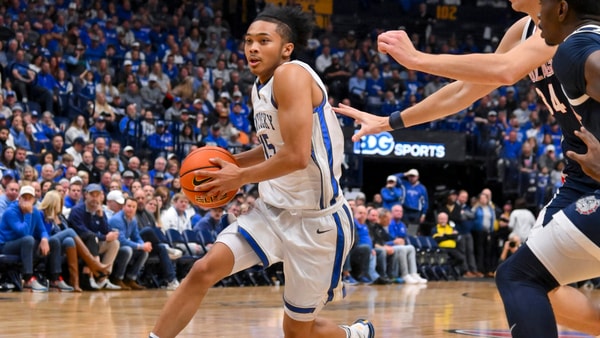
It’s Kentucky basketball. They’re going to command more dollars than most SEC basketball programs. How much more? According to Matt Norlander, it’s A LOT more.
The consternation stems from most SEC teams operating below $3 million in revenue sharing for the upcoming year, according to a variety of sources. One expected exception is basketball-crazed Kentucky, which is believed to be at a 45% rev share of its $20.5 million cap for 2025-26. There was talk of all SEC programs agreeing to an equal rev-share cap, but similar to the Big East situation, if Kentucky wants to put more emphasis on its basketball program (and sacrifice for less on the football side) than the likes of Alabama, Auburn or Tennessee, that’s Kentucky’s prerogative.
That reported number is three times the estimated 15% most schools will be using in revenue-sharing funds on men’s basketball. That cuts into whatever the football program will receive, which should be significantly less than what most programs around the SEC are commanding, 75% of the revenue-sharing budget. There’s a reason why it might make sense for the upcoming fiscal year.
Got thoughts? We have much more analysis on this very fluid situation over at KSR Plus.
Kentucky Football Used NIL Funds for its Roster
NIL deals in the revenue-sharing era are subject to scrutiny by NIL Go, the third-party program run by Deloitte and the College Sports Commission. NIL Go was not in place when Mark Stoops signed 26 transfers this offseason. The Kentucky football program used NIL dollars to build this season’s roster.
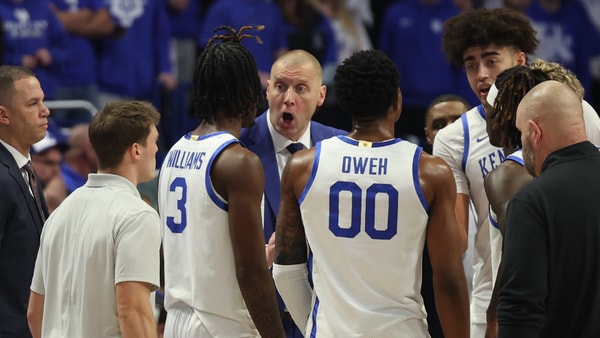
Most of Mark Pope’s 2025-26 roster will be financed by NIL dollars as well. In short, the revenue-sharing distribution isn’t as significant for this upcoming season as it is for future years. The percentage of the pie can be changed over time, but the question is, will it?
Fans Earn the Right to Know How Revenue Will be Distributed
Mitch Barnhart has not publicly spoken since revenue-sharing went into effect on July 1, but prior to that monumental changing of the guard, he refused to say exactly how Kentucky will share money between respective sports.
Top 10
- 1
Gonzaga 94, Kentucky 59
That was awful
- 2New
Stein in CFP
Will coach Oregon vs. James Madison
- 3Hot
Boos
Pope's reaction
- 4New
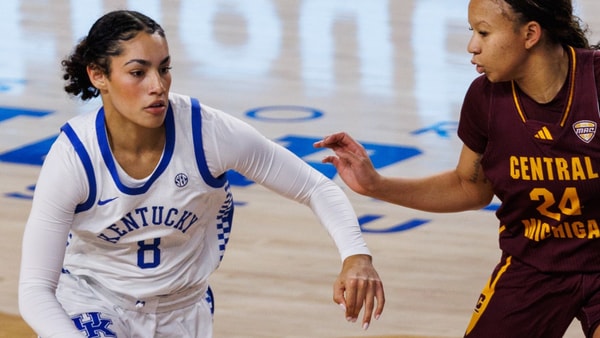
WBB moves to 10-1
Smacks Central Michigan 82-55
- 5
Heartless Mercenaries
NOT the Avengers.
Get the Daily On3 Newsletter in your inbox every morning
By clicking "Subscribe to Newsletter", I agree to On3's Privacy Notice, Terms, and use of my personal information described therein.
“We’re obviously going to participate in every way, shape, or form. We’re working our way through it,” Barnhart told Maggie Davis in mid-June.
Barnhart may take a similar approach to the one that is happening at Missouri, where athletic director Laird Veatch says it puts his program at a competitive disadvantage to publicly disclose how funds will be shared.
“I just candidly don’t see a competitive value or reason, a strategic incentive for us to disclose those specifics,” Veatch said in June.
That’s the same crutch coaches used for not sharing injuries. It may matter to an extent, but the consequences from hiding from your fanbase are much more dire.
In the wake of today’s news, speculation ran amok around Big Blue Nation. Barnhart is setting Mark Stoops up for failure. We will be bottom feeders of the SEC in football forever. Drop football; basketball is king in the Bluegrass.
In professional sports, roster decisions are easy for fans to contextualize. Bengals fans know why they haven’t paid Trey Hendrickson yet. That’s because much of the salary cap has already been dedicated to Joe Burrow, Ja’Marr Chase, and Tee Higgins. Why shouldn’t college sports fans be privy to similar information?
Much of the cost of doing business in the revenue-sharing era will be passed onto fans in the form of higher ticket prices and various new fees. If you’re asking more from fans, they have the right to know where their dollars are being spent.
Ambiguity is fuel for misinformation. This is a complicated issue that requires clarity. For UK Athletics to thrive in the revenue-sharing era, there needs to be alignment from the athletic director down to the season ticket holder.

Discuss This Article
Comments have moved.
Join the conversation and talk about this article and all things Kentucky Sports in the new KSR Message Board.
KSBoard