
2018 MSU baseball class...
- Thread starter 57stratdawg
- Start date
You are using an out of date browser. It may not display this or other websites correctly.
You should upgrade or use an alternative browser.
You should upgrade or use an alternative browser.

FIU doing work at number eight. I think we need to see their baseball coach's phone records.
Last edited:
80 points separate #2 and #20, and they are 80+ points ahead of #2.
It's really hard to believe the NCAA let's them play with a different set of rules.
It's really hard to believe the NCAA let's them play with a different set of rules.
Agree 100%. Any other team that signed 10 top 100 players would stand to lose ~8 or more of them. With Vandy paying ~$80K a year, guaranteed, they will get most in school
It's really hard to believe the NCAA let's them play with a different set of rules.
How so?
Not bad, IMO
[TWEET]900699324417544193[/TWEET]
Wait, what? No University of North West Mississippi? This can't be right.

Wait, what? No University of North West Mississippi? This can't be right.
There is not much left for them to spread around this year after last years #1 in the solar system recruiting ranking. I do love watching their catcher play, if he learns to hit, day-um....

Vandy will lose at least half of those top 10 guys and probably more. Their 2016 class lost 6 kids. The 2015 class lost 5. The 2017 class is probably #1 because they didn't have top 50 type guys, but were able to keep all of the kids in the 100-500 range, which is quite reasonable that you are talking about 5th round money, which is where the 100th ranked kids are drafted when you add in college and international players to the draft pool.
Here is how their finance work if anyone is interested. There is a myth of "unlimited scholarships" and free rides for everyone. The tuition model at Vandy is very different from the conventional state school model. It's that way for every student, not just athletes. The sticker price is somewhere around $45k (MSU is $25k out of state), but north of 80% of students don't pay that, and most don't pay anything close to that. The Expected Family Contribution is directly tied to the family income, not a set tuition rate. For a kid from a poor family, they are basically free. A kid from a middle class family making $150k may only pay $15k. Throw in lotto money for in state kids, a half baseball scholarship, and the room and board, and you are competitive with the out of pocket cost of most other SEC schools, but it's certainly not zero. Before the change in the tuition model, Vandy had virtually no shot. State schools could always offer discounts to in-state kids that the private schools couldn't. I have a HS senior looking at MSU, so we know the tuition is around $10k in-state, and $25k out-of - state. With half a baseball scholarship, MSU could get an in-state kid paying only $5k, while a kid from Nashville would pay $22k to go to Vandy. How is that fair? The changes leveled the playing field, and have given some advantage to recruiting nationally in some instances with lower-income families, but it isn't close to what the critics want to believe when they throw around numbers like $80k.
If you want to say that the perceived "value" a kid gets when he gets a huge discount from the $60k is attractive to some, you're right, but that goes for every student at Vanderbilt and not just the baseball players. The real measuring stick for a level playing field is the out of pocket cost for each player, not the amount of aid of the scholarship package.
If it was really about the value of the scholarship, why don't they do better in football or basketball? The bottom line is that Tim Corbin is putting kids in the first round of the MLB draft every year and competing for championships. The fact that he has a highly rated school in a great city backing him and targets kids with academic mindsets who value the college experience as part of their baseball development.
Here is how their finance work if anyone is interested. There is a myth of "unlimited scholarships" and free rides for everyone. The tuition model at Vandy is very different from the conventional state school model. It's that way for every student, not just athletes. The sticker price is somewhere around $45k (MSU is $25k out of state), but north of 80% of students don't pay that, and most don't pay anything close to that. The Expected Family Contribution is directly tied to the family income, not a set tuition rate. For a kid from a poor family, they are basically free. A kid from a middle class family making $150k may only pay $15k. Throw in lotto money for in state kids, a half baseball scholarship, and the room and board, and you are competitive with the out of pocket cost of most other SEC schools, but it's certainly not zero. Before the change in the tuition model, Vandy had virtually no shot. State schools could always offer discounts to in-state kids that the private schools couldn't. I have a HS senior looking at MSU, so we know the tuition is around $10k in-state, and $25k out-of - state. With half a baseball scholarship, MSU could get an in-state kid paying only $5k, while a kid from Nashville would pay $22k to go to Vandy. How is that fair? The changes leveled the playing field, and have given some advantage to recruiting nationally in some instances with lower-income families, but it isn't close to what the critics want to believe when they throw around numbers like $80k.
If you want to say that the perceived "value" a kid gets when he gets a huge discount from the $60k is attractive to some, you're right, but that goes for every student at Vanderbilt and not just the baseball players. The real measuring stick for a level playing field is the out of pocket cost for each player, not the amount of aid of the scholarship package.
If it was really about the value of the scholarship, why don't they do better in football or basketball? The bottom line is that Tim Corbin is putting kids in the first round of the MLB draft every year and competing for championships. The fact that he has a highly rated school in a great city backing him and targets kids with academic mindsets who value the college experience as part of their baseball development.
The reason they dont better in football and basketball is because they compete on a level playing field. Everyone is offering a full ride.
Corbin is great and i know him and his track record help
him as well. But vandy wouldnt have near the success if this were a full scholly sport
Corbin is great and i know him and his track record help
him as well. But vandy wouldnt have near the success if this were a full scholly sport
Last edited by a moderator:
Wait, what? No University of North West Mississippi? This can't be right.
Exactly what I was thinking!
You gotta Love It!!!
Recruiting classes like this are going to be the norm for us with Cann. With the guys we're putting into MLB and the new stadium- it's going to be a fun era of MSU baseball.
Vandy has three of the top four HS guys in the country. That's insane. That's even a step above UK and Duke hoops recruiting.

Vandy has three of the top four HS guys in the country. That's insane. That's even a step above UK and Duke hoops recruiting.
No chance any will make it to campus. Fact is these kids were scouted and committed as sophomores when they weren't top 5 prospects, and their status has blown up since then. Chalk that up to great scouting, but also understand that you won't ever get kids that rise that high. You want kids you are in on early to develop as a player as long as they don't reach the top.
Latest
-
01
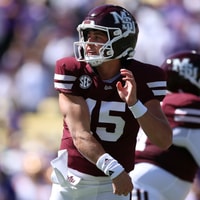 Maroon and White
Lebby, Mississippi State teammates back "Billy" Puckett after loss against LSU
Maroon and White
Lebby, Mississippi State teammates back "Billy" Puckett after loss against LSU
-
02
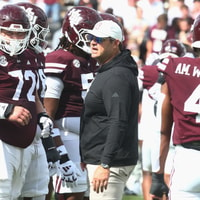 Maroon and White Football
Points of Focus: Mississippi State HC Jeff Lebby speaks on Oklahoma matchup
Maroon and White Football
Points of Focus: Mississippi State HC Jeff Lebby speaks on Oklahoma matchup
-
03
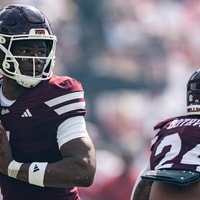 Maroon and White Football
Mississippi State QB Kamario Taylor still "Day to Day" with no clear return timeline
Maroon and White Football
Mississippi State QB Kamario Taylor still "Day to Day" with no clear return timeline
-
04
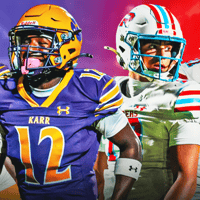 Rivals Football Recruiting
Edna Karr-Rummel Eye-Catchers: Georgia and Mississippi State commits shine, state's top offensive line and defense flex muscle, future stars emerge
Rivals Football Recruiting
Edna Karr-Rummel Eye-Catchers: Georgia and Mississippi State commits shine, state's top offensive line and defense flex muscle, future stars emerge
-
05
 Maroon and White
Sunday Notebook: LSU 31-0 Mississippi State
Maroon and White
Sunday Notebook: LSU 31-0 Mississippi State