This is an exercise for fun, unless the IHSA wants to put this onto their proposal ballot lol.
We’re pretending that I am in charge of the how the season will work.
We are going back to the traditional 256 teams making the playoffs.
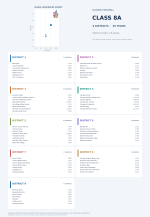
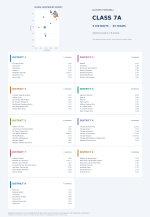
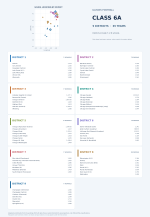
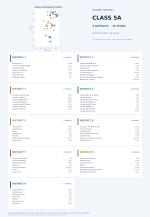
I took all the 11 man playing schools and broke them up into regional based districts on geography and enrollment. The multiplier was used for this exercise, but I did not use success factor.
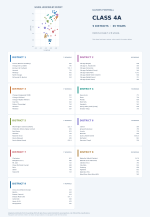
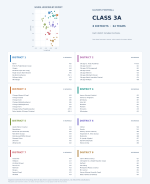
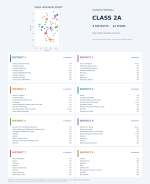
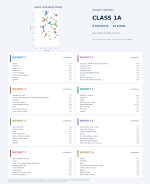
For Classes 1A-3A we have a perfect breakdown on 64 teams per classification with 8 districts of 8 teams. Each team in this classification will play 7 district games and 2 non-district games. The top four finishers from each district will advance to the playoffs. The district games will be what counts toward your playoff qualification, so if you go 0-2 in non-district, but 7-0 in district you’re in. This is to promote better non-district matchups.
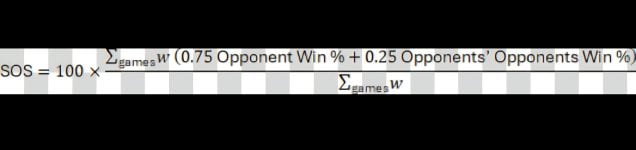
For Classes 4A-8A the classifications have 65 teams per classification with 9 districts make up of either 7 or 8 teams. The number of non-district games will depend on how many district opponents you need to play, so either 6 of 7 district games, then 2 or 3 non-district games. The top 3 finishers from each district will qualify (27 teams) with the final 5 qualifiers being at-large bids (using a SOS formula)
Use \(w=1.00\) for a district game and \(w=1.25\) for a non-district game. Calculate each opponent’s win percentage excluding its game against the team being rated. A score near 60 would indicate a stronger schedule than a score near 50.
This harkens back to scheduling tough opponents in non-district games! You should be rewarded by going out and scheduling quality teams.
For the playoffs we will use entire W-L record and playoff points to seed the playoff brackets 1-32
Hope you enjoyed this fun exercise!
We’re pretending that I am in charge of the how the season will work.
We are going back to the traditional 256 teams making the playoffs.
I took all the 11 man playing schools and broke them up into regional based districts on geography and enrollment. The multiplier was used for this exercise, but I did not use success factor.
For Classes 1A-3A we have a perfect breakdown on 64 teams per classification with 8 districts of 8 teams. Each team in this classification will play 7 district games and 2 non-district games. The top four finishers from each district will advance to the playoffs. The district games will be what counts toward your playoff qualification, so if you go 0-2 in non-district, but 7-0 in district you’re in. This is to promote better non-district matchups.
For Classes 4A-8A the classifications have 65 teams per classification with 9 districts make up of either 7 or 8 teams. The number of non-district games will depend on how many district opponents you need to play, so either 6 of 7 district games, then 2 or 3 non-district games. The top 3 finishers from each district will qualify (27 teams) with the final 5 qualifiers being at-large bids (using a SOS formula)
Use \(w=1.00\) for a district game and \(w=1.25\) for a non-district game. Calculate each opponent’s win percentage excluding its game against the team being rated. A score near 60 would indicate a stronger schedule than a score near 50.
This harkens back to scheduling tough opponents in non-district games! You should be rewarded by going out and scheduling quality teams.
For the playoffs we will use entire W-L record and playoff points to seed the playoff brackets 1-32
Hope you enjoyed this fun exercise!