
http://www.healthdata.org/covid it’s from the University of Washington, I think the Whitehouse is using their models. According to their model Mississippi could loosen restrictions on May 30, doubt we will wait that long.

http://www.healthdata.org/covid it’s from the University of Washington, I think the Whitehouse is using their models. According to their model Mississippi could loosen restrictions on May 30, doubt we will wait that long.

That looks like that would keep well over half the economy on lockdown for another month. That's a recipe for economic disaster.
For starters, at first glance 1 case per 1 million people is a ridiculously high standard. You'd be trying to reduce national daily deaths from this to single digits before opening everyone back up. That looks like that would keep well over half the economy on lockdown for another month. That's a recipe for economic disaster.
However, it's not clear what their standard for "easing social distancing" is.
Years to get the job market back to normal, let alone what it was early this year. Right now you have whole industries, like construction, going on what was ordered prior to the shutdowns. Those projects are starting to dry up with nothing in the pipeline to replace them as companies look to reduce expenditures everywhere they can. Then you have wholesale collapses like oil already happening and healthcare soon to come. There will come a point at which this will get worse than 2008.
Your first question requires a lot more definition. What is early, and how much are we reopening? If you're asking me if we can wait out the IHME dates for each and every state before reopening anything in them in return for avoiding another similar spike that would be avoided if we didn't do that... You'd have municipal and state bankruptcies coming out of your ears in addition to the private sector damage, so I think the short answer is no, because you'd be surpassing 2008-like impacts.
However, that's very black and white, and a similar wave is also unlikely from a number of angles.
The reality is:
1. We're already better prepared with medical facilities in urban areas than we were in March.
2. We're ramping up supply production and will have more available for any future issues.
3. We've now seen that the restrictions in place are too strict in some areas (like strangling hospitals outside of hot spots), and we could do a better job of targeting them in any second wave of shut-downs.
4. We're two months closer to treatments and vaccines and have already dramatically improved testing.
5. Every expectation is that we're entering the best time of year to let nature help us keep things under control.
6. We're now seeing a growing amount of evidence that this thing is more widespread and therefore isn't nearly as deadly as first reported, and that becomes even more true it you only consider certain demographics.
The whole goal originally of flattening the curve was to keep from overwhelming our healthcare system and drag things out long enough to get treatments/vaccines.
We actually tamped down things so hard, so fast in most of the country that we went too far (New York is where you can argue we didn't do it fast enough and maybe right on target in certain parts of California).
Because of that the conversation now has to shift to opening some things back up in some places as quickly as practical.
Can you link where you found that testing data?
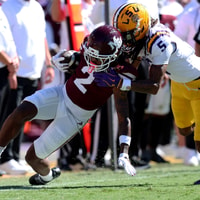 Maroon and White Football
Mississippi State PFF Grades from 31-0 loss at LSU
Maroon and White Football
Mississippi State PFF Grades from 31-0 loss at LSU
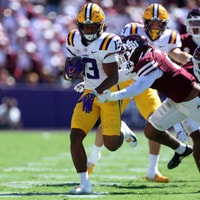 Maroon and White Football
"Nothing changes": Mississippi State's LJ Prudhomme and Marcus Williams discuss expectations with bruised team
Maroon and White Football
"Nothing changes": Mississippi State's LJ Prudhomme and Marcus Williams discuss expectations with bruised team
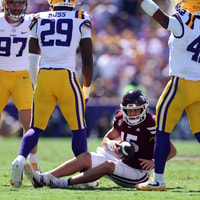 Maroon and White Football
Shuffled Mississippi State offense puts up yards, but no points in first shutout since 2020
Maroon and White Football
Shuffled Mississippi State offense puts up yards, but no points in first shutout since 2020
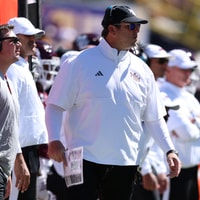 Maroon and White
Everything Mississippi State HC Jeff Lebby said after LSU loss
Maroon and White
Everything Mississippi State HC Jeff Lebby said after LSU loss
 Maroon and White
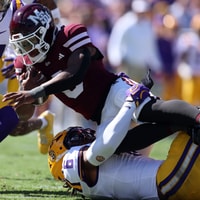
Rapid Recap: No. 22 LSU 31-0 No. 16 Mississippi State
Maroon and White
Rapid Recap: No. 22 LSU 31-0 No. 16 Mississippi State