Don't know why I'm so obsessed with this, but I'm unusually down about this game. I am so upset with our coaching staff I can't stand it....and so somehow all this bitching about the officiating is rubbing me the wrong way.
Let me be clear up front: I'm not saying Auburn did or did not earn a first down. I'm just saying it was a lot closer than most of you can admit. The call didn't go our way -- which sucks -- but its not some vast SEC conspiracy.
Also, let me just say that I think first down measurements are about the dumbest part of football officiating. It is an attempt to insert objectivity into an extremely subjective phase of the game. First you have the spot by the ref: I generally think the refs do a dang good job of judging right where the ball was when a player's knee touches, but its still just a judgment. Then you have the chains themselves: When a team gets a first down, they don't run the chains out to midfield and measure where the original line of scrimmage is; they just eyeball it from the sidelines. But when they're trying to determine if a ball carrier got to the other end of the chains, all of a sudden eyeballing from the sidelines isn't good enough, and they want it to appear all precise. Its pretty dumb, really.
Anway, let's start with the spot. I've seen a lot of complaining about how generous a spot Dyer got, and of course Dave Neal and Andre Ware thought the spot was extremely generous. Here is a screen shot of just before Dyer's knee touched -- the ball is being carried in his right elbow:
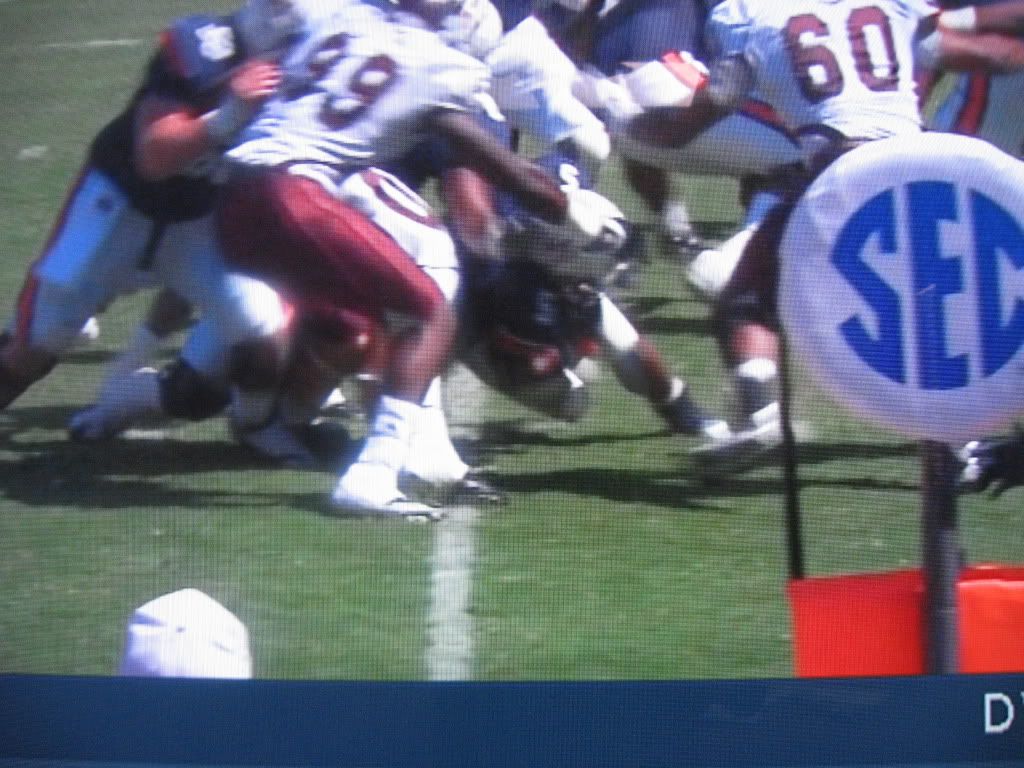
As you can see, his right elbow is maybe 6 inches, at most, from the 30 yardline. The spot wound up being even closer to the 30. When I first thought of typing this post, I thought I was going to prove the spot was accurate....I now think the spot was generous by a couple of inches. Not too egregious, really, but since the measurement was so close those inches were critical.
This next picture is a closeup of the stake as they are putting it in the ground. You can see here the ball is maybe a little closer to the 30 than it should be. But anyway, you can also see that the nose of the ball is even or perhaps a little ahead of the stake. This is without even considering that the camera is at an angle that would exaggerate the distance between the ball and the stake (and, yeah, it does look like the ref is tilting the ball forward):
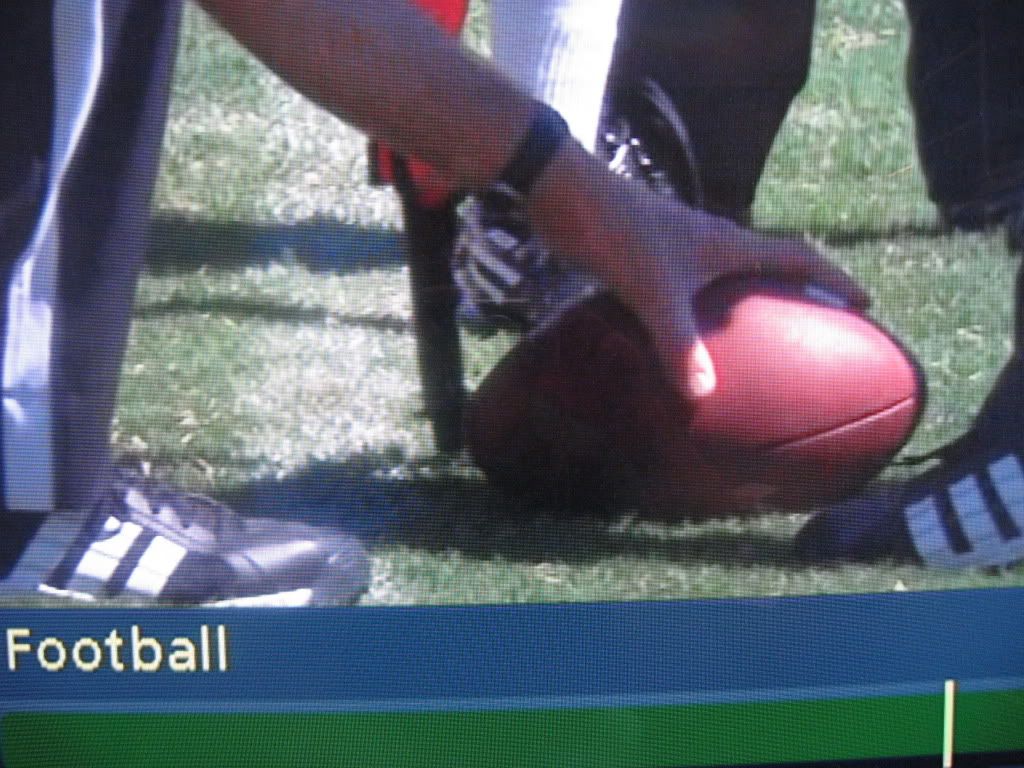
So, next is the picture most people have focused on, which is the gap between the ball and the stake once the stake is completely in the ground.

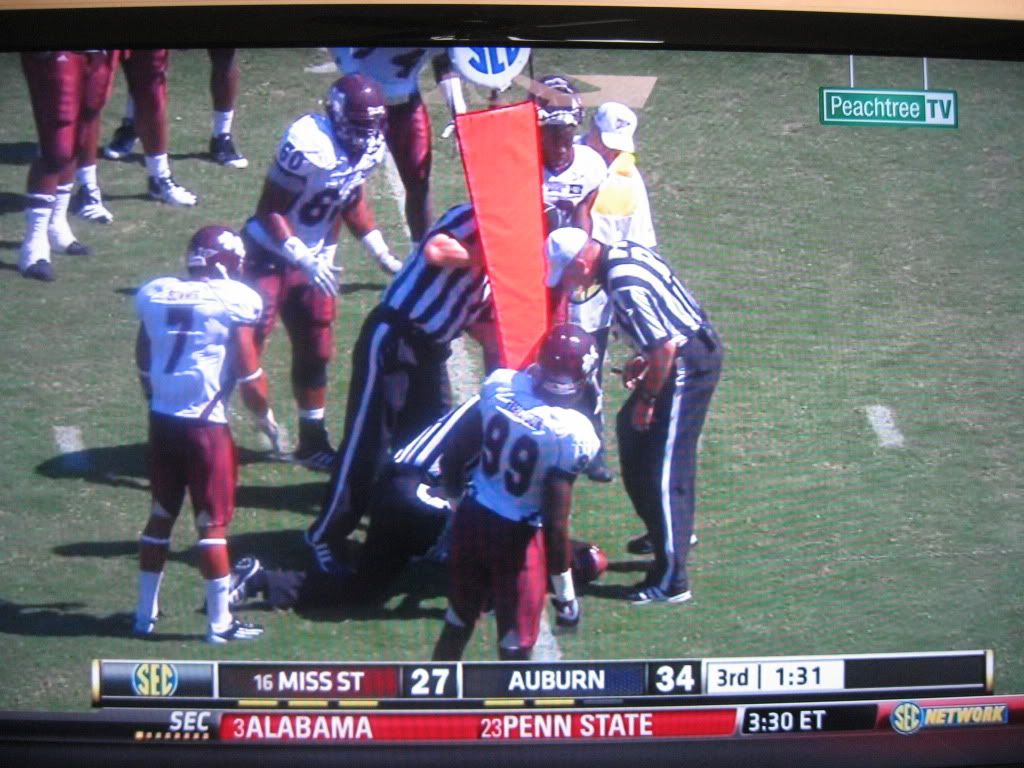
Why the discrepancy? That will be cleared up in the next photo. You see, the stake was leaning forward, away from the ball. AND, the refs had not yet made the call. After showing us this closeup that clearly looked like it was short, the network switched to a wide angle view which shows the pole leaning forward. The refs then continued to view things, straightened the poll, and only THEN did they make the call. So we actually didn't get to see the complete measurement:
So, there you have it. Again, I'm not saying Auburn necessarily earned a first down, but it was pretty dang close. I would much rather the call went the other way, but these things usually even out over the course of a season. Or two. Or three....
Let me be clear up front: I'm not saying Auburn did or did not earn a first down. I'm just saying it was a lot closer than most of you can admit. The call didn't go our way -- which sucks -- but its not some vast SEC conspiracy.
Also, let me just say that I think first down measurements are about the dumbest part of football officiating. It is an attempt to insert objectivity into an extremely subjective phase of the game. First you have the spot by the ref: I generally think the refs do a dang good job of judging right where the ball was when a player's knee touches, but its still just a judgment. Then you have the chains themselves: When a team gets a first down, they don't run the chains out to midfield and measure where the original line of scrimmage is; they just eyeball it from the sidelines. But when they're trying to determine if a ball carrier got to the other end of the chains, all of a sudden eyeballing from the sidelines isn't good enough, and they want it to appear all precise. Its pretty dumb, really.
Anway, let's start with the spot. I've seen a lot of complaining about how generous a spot Dyer got, and of course Dave Neal and Andre Ware thought the spot was extremely generous. Here is a screen shot of just before Dyer's knee touched -- the ball is being carried in his right elbow:
As you can see, his right elbow is maybe 6 inches, at most, from the 30 yardline. The spot wound up being even closer to the 30. When I first thought of typing this post, I thought I was going to prove the spot was accurate....I now think the spot was generous by a couple of inches. Not too egregious, really, but since the measurement was so close those inches were critical.
This next picture is a closeup of the stake as they are putting it in the ground. You can see here the ball is maybe a little closer to the 30 than it should be. But anyway, you can also see that the nose of the ball is even or perhaps a little ahead of the stake. This is without even considering that the camera is at an angle that would exaggerate the distance between the ball and the stake (and, yeah, it does look like the ref is tilting the ball forward):
So, next is the picture most people have focused on, which is the gap between the ball and the stake once the stake is completely in the ground.
Why the discrepancy? That will be cleared up in the next photo. You see, the stake was leaning forward, away from the ball. AND, the refs had not yet made the call. After showing us this closeup that clearly looked like it was short, the network switched to a wide angle view which shows the pole leaning forward. The refs then continued to view things, straightened the poll, and only THEN did they make the call. So we actually didn't get to see the complete measurement:
So, there you have it. Again, I'm not saying Auburn necessarily earned a first down, but it was pretty dang close. I would much rather the call went the other way, but these things usually even out over the course of a season. Or two. Or three....
