There are some entry level ones like the Orion Starseeker IV line... But I would either go very low end even manual or used higher end. The hardest thing about spending that much money is actually making sure you are able to find the time on the clear nights to use the telescope. You can't plan out much more than a week with cloud cover in the eastern US.
I bought a decent manual one a few years ago when I lived in Texas and the cloud cover/light pollution sucked every time we wanted to use it seemed. Then I packed it for a trip to Taos and it changed my mind completely. It's awesome when you have good skies, but manuals suck because it's nearly impossible to track stuff. I looked at going into a computerized in that $500 range myself until I discovered astrophotography. That's where its really at. But you are looking at $2-3k for that rig.
So I am working towards it. I bought a Pentax camera with a built in "astrotracer" that uses the stabilization sensor in the camera and gps to allow up to 5 minute exposures without any light trails on the stars. Took this one (unedited) from my driveway a few months ago on a clear night.
View attachment 22838
View attachment 22839
I like having just the camera able to track the stars because the mounts and telescopes are way to heavy to move very far from your vehicle. I want to take it backpacking next summer out into the dark sky preserve nearby and hopefully in a few years I can get a full mount and scope (Radian 61) to start shooting deep space stuff.
So all of this to say is much like any other hobby, figure out the destination before you start spending a lot of money. I spent just over $800 on my camera a couple of lenses and all the gear. I'm much happier with it than I would have been with a little computerized telescope. I still have my powerseeker 127 eq available if I want to use it, but the camera is way more fun. So if you are going to take the time to get into it think it through. I guess plenty of people are just into "looking" but I want to take the photos.

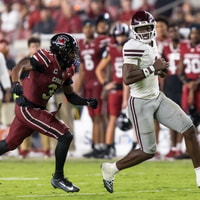 Maroon and White Football
Standout Stats: Mississippi State 41-34 South Carolina
Maroon and White Football
Standout Stats: Mississippi State 41-34 South Carolina
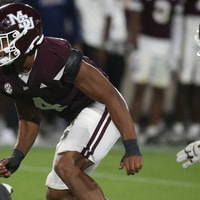 Maroon and White Football
Amaree Williams' breakout impact in Mississippi State's win at South Carolina
Maroon and White Football
Amaree Williams' breakout impact in Mississippi State's win at South Carolina
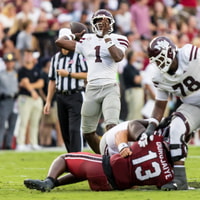 Maroon and White Football
"Be a Brotherhood": Mississippi State holds fast in comeback win at South Carolina
Maroon and White Football
"Be a Brotherhood": Mississippi State holds fast in comeback win at South Carolina
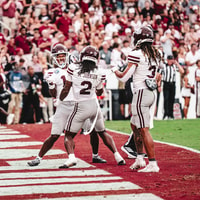 Maroon and White
Rapid Recap: Mississippi State 41-34 South Carolina
Maroon and White
Rapid Recap: Mississippi State 41-34 South Carolina
 Maroon and White Football
Inside the Numbers: Mississippi State-South Carolina first half stats
Maroon and White Football
Inside the Numbers: Mississippi State-South Carolina first half stats


