We will hire someone you never heard of that no other SEC team would hire I promiseJerry Neuheisel set the CFB world afire with the way his offense sliced and diced the PSU defense.
He’s a career UCLA guy and doesn’t make much sense here, but with the way college football latches onto anyone who has shown promise for more than 10 seconds, I’m sure his name will come up in the coaching cycle this off-season.
Too soon to list candidate for new OC?
- Thread starter 18IsTheMan
- Start date
You are using an out of date browser. It may not display this or other websites correctly.
You should upgrade or use an alternative browser.
You should upgrade or use an alternative browser.
Beams can only hire a coach that's willing to work for him. That definitely limits the field.We will hire someone you never heard of that no other SEC team would hire I promise

With a dynamic playmaker like Sellers at QB, I think Beamer could have attracted attention from some solid OCs last offseason.Beams can only hire a coach that's willing to work for him. That definitely limits the field.
And if his offense cracks the top 100 he will receive a raise or he will leave.We will hire someone you never heard of that no other SEC team would hire I promise
Don't think so.With a dynamic playmaker like Sellers at QB, I think Beamer could have attracted attention from some solid OCs last offseason.
I don't see a solid OC changing jobs, moving his family and making a pretty big career move because of one player.With a dynamic playmaker like Sellers at QB, I think Beamer could have attracted attention from some solid OCs last offseason.
Don't get many chances to coach Heisman candidates. Also had Air Noland transfer in, so I think a lot of OCs would have found that an attractive situation to walk into.I don't see a solid OC changing jobs, moving his family and making a pretty big career move because of one player.

Jerry Neuheisel set the CFB world afire with the way his offense sliced and diced the PSU defense.
He’s a career UCLA guy and doesn’t make much sense here, but with the way college football latches onto anyone who has shown promise for more than 10 seconds, I’m sure his name will come up in the coaching cycle this off-season.
You sure he is still calling the plays there? Maybe they implemented a mystery play called after the Northwestern debacle
- They only scored 10 pts in week 1 vs Utah
- They did score 23 pts in week 2 vs UNLV
- They only scored 10 pts against new Mexico in week 3
- They only scored 14 pts against Northwestern in week 4
Of course Coach Satterfield is still at Nebraska but was demoted to Tight End Coach.
Last edited:
Yeah, the PSU game was his first game calling plays. He was the TE coach up to that point. Named interim OC for the PSU game. We'll see how it all works out. He's getting a lot of hype right now for hanging 42 points on one of the presumed top DCs in his first game as OC. Maybe it was a fluke.You sure he is still calling the plays there? Maybe they implemented a mystery play called after the Northwestern debacle
Your right, 42 pts is a big improvement, but looks like a strange outlier, the kind of outlier Nebraska ignored when they hired Marcus Satterfield to be OC.
- They only scored 10 pts in week 1 vs Utah
- They did score 23 pts in week 2 vs UNLV
- They only scored 10 pts against new Mexico in week 3
- They only scored 14 pts against Northwestern in week 4
Of course Coach Satterfield is still at Nebraska but was demoted to Tight End Coach.
Yeah, the PSU game was his first game calling plays. He was the TE coach up to that point. Named interim OC for the PSU game. We'll see how it all works out. He's getting a lot of hype right now for hanging 42 points on one of the presumed top DCs in his first game as OC. Maybe it was a fluke.
Ok, I did know that was his first game, I thought it was a strange recommendation, given there performance so far up to that game
Your suggestion makes more sense to me now, but I would need to see more then 1 game before declaring this guy ready for a SEC team, to hire him. Adjustment will be made, it will be a interesting to watch his responses and resulting performances.
Last edited:
One thing to keep in mind is how will Beamer finish this season? If poorly, next year may really, really VERY well could be "do or die" for Beamer. It might be hard to get a quality OC to come.
That's a factor, for sure. Another reason why I thought he might have been able to get someone pretty good after last season. If this season is a bust, as it is trending, there's a zero percent chance a good OC would come here.
I think he's basically bet his job here on Shula.

That's a factor, for sure. Another reason why I thought he might have been able to get someone pretty good after last season. If this season is a bust, as it is trending, there's a zero percent chance a good OC would come here.
I think he's basically bet his job here on Shula.
The staff has the most wins ever at this juncture with brutal scheduling and the NIL.
They also sent a record 14 players to the NFL last season.
You're a very confused and ill-intentioned BOT.
More so on Teasley. Has Teasley ever had any success as an OL coach? At least with Shula, one can point to some success.That's a factor, for sure. Another reason why I thought he might have been able to get someone pretty good after last season. If this season is a bust, as it is trending, there's a zero percent chance a good OC would come here.
I think he's basically bet his job here on Shula.
No.More so on Teasley. Has Teasley ever had any success as an OL coach?
I called for him to be fired after the 2023 season, which some on here said was too soon. It was after his first year here but my thinking was: he had no great track record as an OL coach and our OL was one of the worst in the nation. If he had a track record, then you assume he'll get it figured out. There was no reason to think he'd figure it out. And he hasn't. We have had one of the worst OLs in college football 3 years running, in spite of recruiting fairly well at the position.
Beamer is repeating Muschamp's mistake. TRob was kept on as DC because he was a good recruiter.No.
I called for him to be fired after the 2023 season, which some on here said was too soon. It was after his first year here but my thinking was: he had no great track record as an OL coach and our OL was one of the worst in the nation. If he had a track record, then you assume he'll get it figured out. There was no reason to think he'd figure it out. And he hasn't. We have had one of the worst OLs in college football 3 years running, in spite of recruiting fairly well at the position.
Those who fail to learn from history...Beamer is repeating Muschamp's mistake. TRob was kept on as DC because he was a good recruiter.
Thing is, if you keep an underperforming coach b/c he's a good recruiter, it won't be long before he's not a good recruiter. OL recruits are going to look at how our OL has consistently sucked and realize they won't get developed here.
What?The two of you are destroying what is otherwise an enjoyable place to post ideas, opinions and guesses about the Gamecocks.
Here's the deal lonesome...
I and precious few more guys come on here to discuss actual football or whatever and hopefully get some news. Instead we usually have to wade through the following.
Your guys come on here to discuss feelings. In and of itself that's fine; they blame those feelings on coaches, players, ADs, etc., and take solace in that. But then they also extend the source of those feelings to anyone that doesn't share and suffer their same misery, and that's us, lonesome; that's me and you.
So I'll continue to call a spade a spade, try to discuss some football, and you can exercise your right to that ignore button your guys value so highly.
I did as well. They should hire you, me and Lurker as analysts. We could save them a bundle.No.
I called for him to be fired after the 2023 season, which some on here said was too soon. It was after his first year here but my thinking was: he had no great track record as an OL coach and our OL was one of the worst in the nation. If he had a track record, then you assume he'll get it figured out. There was no reason to think he'd figure it out. And he hasn't. We have had one of the worst OLs in college football 3 years running, in spite of recruiting fairly well at the position.
Things really can't get much worse than they are, so why not?I did as well. They should hire you, me and Lurker as analysts. We could save them a bundle.

What?
Here's the deal lonesome...
I and precious few more guys come on here to discuss actual football or whatever and hopefully get some news. Instead we usually have to wade through the following.
Nevermind the "everyone is the same poster" conspiracy theory, you're just here to talk football.
Yeah, right. Guess you dont come across the way you think you do.

Things really can't get much worse than they are, so why not?
I could only guarantee that I would be a cheaper hire.
Nevermind the "everyone is the same poster" conspiracy theory, you're just here to talk football.
Yeah, right. Guess you dont come across the way you think you do.
Lurker123 and 18IsTheMan are the exact same individual.
So are Lurker123 and Gamecock Stock. (and many more)
The Botmaster uses these accounts to setup conversations and steer them towards program doom over time.
Need concrete proof.

"Based on the stylometric analysis, the posts from "Lurker123" exhibit high similarity to those of "18IsTheMan" across key features, particularly function word usage and structural elements. The cosine similarity score of 0.9974 on the function word vector exceeds typical thresholds for attributing authorship to the same individual (e.g., >0.95 in forensic stylometry benchmarks)."
"Attribution Decision: The evidence strongly suggests that "18IsTheMan" and "Lurker123" are the same individual, with an estimated confidence of 91%. This could indicate sockpuppet activity (multiple accounts by one user)."
Full report can be found here:
https://www.academia.edu/144378763/...port_Generated_By_JStylo_Stylometric_Analysis
---------------
Summary of JStylo Software
JStylo is an open-source, Java-based stylometry tool developed by researchers at Drexel University's Privacy, Security, and Automation Lab (PSAL) and released in 2012 as part of a project to identify anonymous authors through linguistic patterns. It uses a graphical user interface (GUI) to analyze text features such as word frequencies, sentence structures, function words, and punctuation to attribute authorship. The software applies machine learning classifiers (e.g., Support Vector Machines) and feature sets like "Writeprints" to detect patterns, making it suitable for forensic linguistics, authorship verification, and evasion studies (often paired with its companion tool, Anonymouth, for anonymizing text). JStylo is particularly effective for short texts and has been used in research on code stylometry (analyzing programming styles) and detecting AI-generated content. It supports rigorous, customizable analysis and is available on platforms like GitHub for academic and forensic applications.
Users of JStylo and Related Technology
JStylo and stylometry tools like it are primarily used in academic, forensic, and legal contexts for authorship analysis, plagiarism detection, and intelligence applications.
● Universities and Academic Institutions
● Drexel University: Developed and released JStylo as part of student-led research in the PSAL lab, focusing on authorship recognition and evasion.
● University of Northampton: Applied in forensic assignment stylometry for detecting academic dishonesty, such as contract cheating in student portfolios
● Other academic uses: Employed in pilot studies for online learning integrity (e.g., detecting outsourced essays) and research on AI vs. human text differentiation at institutions exploring forensic linguistics.
● Legal and Forensic Applications:
● Forensic Science and Intelligence: Used in forensic stylometry for evidence gathering in legal disputes, such as authorship verification in anonymous threats or disputed documents. It has applications in intelligence analysis and digital forensics, where stylometry helps identify authors in underground communications or cyber threats. ● Immigration and Asylum Cases: Stylometry (including tools like JStylo) has been used in legal proceedings, such as verifying authorship in asylum petitions to confirm consistency in applicants' stories, leading to granted asylums in documented cases.
● General Legal Disputes: Applied in contract disputes, defamation cases, and forensic linguistics, though specific entities (e.g., law firms or courts) are not always named; experts like Patrick Juola have used stylometry in immigration and other legal contexts. No widespread adoption by specific government agencies is detailed, but it's noted for potential in forensics and law enforcement.
I am guessing they are the same guy. Or lovers.Ignored member posted.
Time for a little puppy to come along and do his thing.
I am guessing they are the same guy. Or lovers.
The irony there would be hysterical.
Maybe we should analyze their interactions and make a BOT list. Then harass them every post they make.The irony there would be hysterical.
Yes! That sounds like a productive and sane thing to do.
Maybe we should analyze their interactions and make a BOT list. Then harass them every post they make.
Yes! That sounds like a productive and sane thing to do.
The eye-bleeding sense of humor which no two individuals could possibly share might even trump the stylometric bullseye analysis.
We see and hear you, Doubtfire.
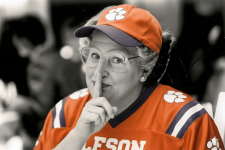
Maybe we should analyze their interactions and make a BOT list. Then harass them every post they make.
Yes! That sounds like a productive and sane thing to do.
If by "productive and sane" you mean unhinged and stalker-esque.
If by "productive and sane" you mean unhinged and stalker-esque.
Doubtfire - My only hope is that one day you provide us the inspiration for all of these characters within your head. It's quite impressive.
Grow up son.Ignored member posted.
Time for a little puppy to come along and do his thing.
In the words of Arte Johnson, veeeddddy intahddddresting…..Lurker123 and 18IsTheMan are the exact same individual.
So are Lurker123 and Gamecock Stock. (and many more)
The Botmaster uses these accounts to setup conversations and steer them towards program doom over time.
Need concrete proof.
"Based on the stylometric analysis, the posts from "Lurker123" exhibit high similarity to those of "18IsTheMan" across key features, particularly function word usage and structural elements. The cosine similarity score of 0.9974 on the function word vector exceeds typical thresholds for attributing authorship to the same individual (e.g., >0.95 in forensic stylometry benchmarks)."
"Attribution Decision: The evidence strongly suggests that "18IsTheMan" and "Lurker123" are the same individual, with an estimated confidence of 91%. This could indicate sockpuppet activity (multiple accounts by one user)."
Full report can be found here:
https://www.academia.edu/144378763/...port_Generated_By_JStylo_Stylometric_Analysis
---------------
Summary of JStylo Software
JStylo is an open-source, Java-based stylometry tool developed by researchers at Drexel University's Privacy, Security, and Automation Lab (PSAL) and released in 2012 as part of a project to identify anonymous authors through linguistic patterns. It uses a graphical user interface (GUI) to analyze text features such as word frequencies, sentence structures, function words, and punctuation to attribute authorship. The software applies machine learning classifiers (e.g., Support Vector Machines) and feature sets like "Writeprints" to detect patterns, making it suitable for forensic linguistics, authorship verification, and evasion studies (often paired with its companion tool, Anonymouth, for anonymizing text). JStylo is particularly effective for short texts and has been used in research on code stylometry (analyzing programming styles) and detecting AI-generated content. It supports rigorous, customizable analysis and is available on platforms like GitHub for academic and forensic applications.
Users of JStylo and Related Technology
JStylo and stylometry tools like it are primarily used in academic, forensic, and legal contexts for authorship analysis, plagiarism detection, and intelligence applications.
● Universities and Academic Institutions
● Drexel University: Developed and released JStylo as part of student-led research in the PSAL lab, focusing on authorship recognition and evasion.
● University of Northampton: Applied in forensic assignment stylometry for detecting academic dishonesty, such as contract cheating in student portfolios
● Other academic uses: Employed in pilot studies for online learning integrity (e.g., detecting outsourced essays) and research on AI vs. human text differentiation at institutions exploring forensic linguistics.
● Legal and Forensic Applications:
● Forensic Science and Intelligence: Used in forensic stylometry for evidence gathering in legal disputes, such as authorship verification in anonymous threats or disputed documents. It has applications in intelligence analysis and digital forensics, where stylometry helps identify authors in underground communications or cyber threats. ● Immigration and Asylum Cases: Stylometry (including tools like JStylo) has been used in legal proceedings, such as verifying authorship in asylum petitions to confirm consistency in applicants' stories, leading to granted asylums in documented cases.
● General Legal Disputes: Applied in contract disputes, defamation cases, and forensic linguistics, though specific entities (e.g., law firms or courts) are not always named; experts like Patrick Juola have used stylometry in immigration and other legal contexts. No widespread adoption by specific government agencies is detailed, but it's noted for potential in forensics and law enforcement.
Grow up son.
And yet you followed that post up by doing exactly what I said you would.
Just like a good puppy.
And yet you followed that post up by doing exactly what I said you would.
Just like a good puppy.
It's all out of the bag now, Doubtfire.
Irrefutable proof.
Don't you feel relieved?
This was as much for you as it was for us.
You no longer have to live the lie in this forum.
We no longer have to posture as if we're engaging with different individuals when we exchange with your characters in good faith.
It's a win-win.
--------------------
The Curious Case of The Botman
"Based on the stylometric analysis, the posts from "Lurker123" exhibit high similarity to those of "18IsTheMan" across key features, particularly function word usage and structural elements. The cosine similarity score of 0.9974 on the function word vector exceeds typical thresholds for attributing authorship to the same individual (e.g., >0.95 in forensic stylometry benchmarks)."
"Attribution Decision: The evidence strongly suggests that "18IsTheMan" and "Lurker123" are the same individual, with an estimated confidence of 91%. This could indicate sockpuppet activity (multiple accounts by one user)."
Full report can be found here:
https://www.academia.edu/144378763/...port_Generated_By_JStylo_Stylometric_Analysis
Come on puppy. "You are ignoring this poster" is showing.
So you're up.
And like clockwork.
Good puppy.
Come on puppy. "You are ignoring this poster" is showing.
So you're up.
You have an amazing ability to differentiate between my sports posts and otherwise when you make these comments. It's almost as if I'm not on ignore after all.
Also, the irony of you getting miffed over two authenic posters agreeing on a topic is rich when you have a vast network of artificial posters you've manufactured propping up your takes.
Stats don't lie. Our offense is just bad. Hopefully they found something in the off week.
Defense dominated the last game.
We put up 35 points only punted 3 times.