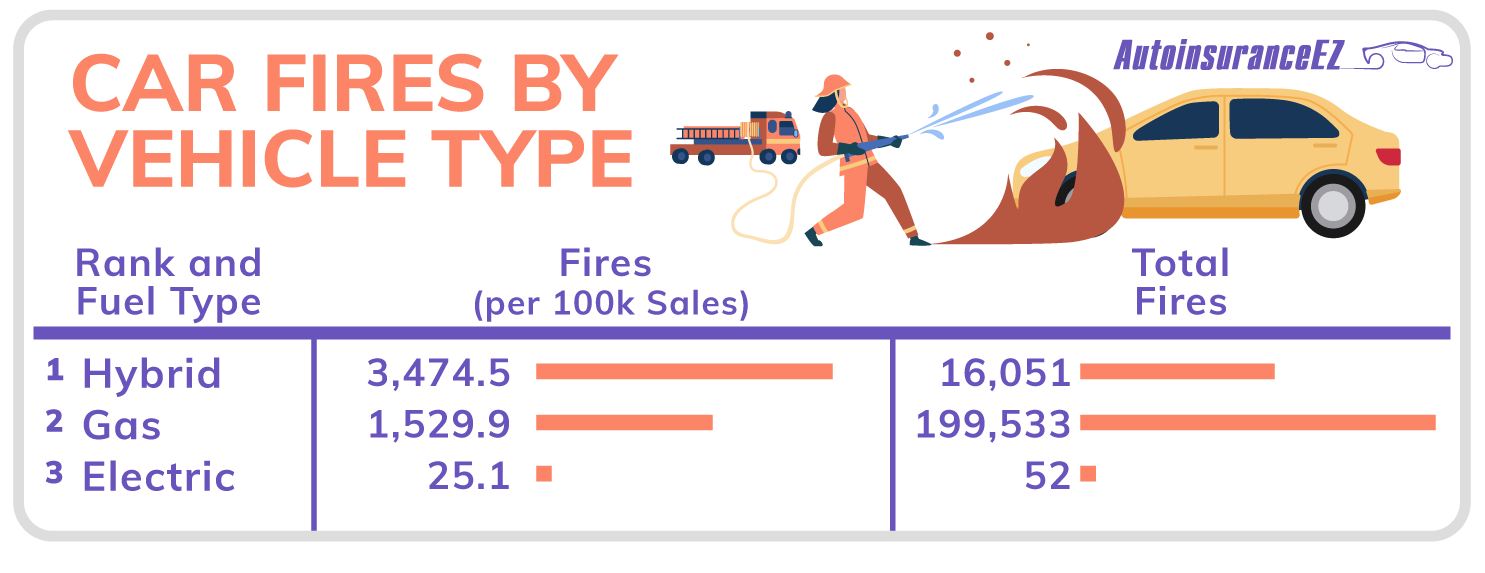
Many cars with safety recalls catch fire because of
common vehicle defects, such as faulty manufacturing or a design flaw.
Not every car with a fault will burst into flames, but you are at a higher risk while driving a defective vehicle.
There are
several reasons any car can catch fire, including:
- Severe engine oil leaks that cause the engine to lose so much oil, it no longer has a safe amount and overheats.
- Forgetting flammable materials under the hood, like rags or paper towels used for cleaning, is a serious danger.
- Overheated brakes can cause tires and brake pads to catch fire.
- Lack of maintenance can cause rubber hoses and seals to wear out and leak flammable liquids.
- Modifications can be dangerous. Cheap parts or careless labor can result in disaster.
Kias and Hyundais are some of the most at-risk vehicles for catching on fire. Kia and Hyundai are grouped together, as their vehicles share many of the same parts — especially the ones at risk of catching on fire.
Since 2015, these two car brands have
recalled 2.3 million vehicles for engine fire risks. In late 2019, they reached a $760 million settlement for non-crash-related car fires.
In 2018,
the Highway Loss Data Institute investigated non-crash fire insurance claims for midsize Hyundai and Kia vehicles.
Why do Kias and Hyundais have such a high risk of catching on fire? There are many reasons these vehicles are more prone to catching on fire. Issues range from an oil pan leak that causes the engine to overheat and catch fire to faulty rod bearings.
In December 2022,
Subaru announced a safety recall for over 270,000
2019-2022 Ascent vehicles due to a defect that increases the risk of a fire.
The issue stems from the
improper installation of a ground bolt during the production of the vehicles. This bolt secures the ground terminal of the Positive Temperature Coefficient heater. When this bolt is too loose, it increases the chance of that ground terminal melting and starting a fire.
In January 2023,
Mercedes-Benz recalled almost 28,000 vehicles at risk of catching on fire due to a wiring harness issue.
This defect allows water from external sources to get into the electrical connections of the wiring harness. Water on electric components can cause short circuits, leading to an increased fire risk if the ignition is turned off for long periods of time.
Hey dimwit, in that video above, that looks to be a very new Mercedes Benz