OT: Math Question
- Thread starter Mikemarc
- Start date
You are using an out of date browser. It may not display this or other websites correctly.
You should upgrade or use an alternative browser.
You should upgrade or use an alternative browser.
30,720... 32x31x30
... I think? I used to kick *** in math but it's been about 10 years since I've used anything other than day to day to stuff like addition/multiplication
... I think? I used to kick *** in math but it's been about 10 years since I've used anything other than day to day to stuff like addition/multiplication

30,720... 32x31x30
I thought at first it was that easy..but then second guessed myself. Thanks.
I think that is correct.
This is wrong because it treats {Eagles, Cowboys, Giants} as a separate list from {Cowboys, Giants, Eagles} even though they are identical, just different order.I thought at first it was that easy..but then second guessed myself. Thanks.
I think that is correct.
This is a n choose k problem, so formula is (n!) / (n-k)!(k)! (where n = 32, k = 3). Solution is 4960.
This is wrong because it treats {Eagles, Cowboys, Giants} as a separate list from {Cowboys, Giants, Eagles} even though they are identical, just different order.I thought at first it was that easy..but then second guessed myself. Thanks.
I think that is correct.
This is a n choose k problem, so formula is (n!) / (n-k)!(k)! (where n = 32, k = 3). Solution is 4960.
What is exclamation point function?
Factorial. n! = n*(n-1)*(n-2)*....(1)What is exclamation point function?
Factorial. n! = n*(n-1)*(n-2)*....(1)What is exclamation point function?
Gotcha. Thanks.
What is exclamation point function?
"What is the exclamation point function?" says the guy asking statistics 101 questions
Just noticed your avatar. I started at Tech in 1982 (M.E.), then xfered to RU in winter 1984 (C.S.).This is wrong because it treats {Eagles, Cowboys, Giants} as a separate list from {Cowboys, Giants, Eagles} even though they are identical, just different order.
This is a n choose k problem, so formula is (n!) / (n-k)!(k)! (where n = 32, k = 3). Solution is 4960.
I'd normally agree, but I don't think the order matters?This is wrong because it treats {Eagles, Cowboys, Giants} as a separate list from {Cowboys, Giants, Eagles} even though they are identical, just different order.
This is a n choose k problem, so formula is (n!) / (n-k)!(k)! (where n = 32, k = 3). Solution is 4960.

32x31x30 is not the right answer to the question..I don't think. Multiplying those numbers gives you a number which includes duplicates of the three teams but in different orders. Dumbing it down, if you have only three teams, multiplying 3x2x1 gives you six possible combinations of the three numbers..in different orders. BUT answering the question of the OP, there is only one possible group of these three teams.
See above for the probable correct answer of 4960.
See above for the probable correct answer of 4960.
Last edited by a moderator:
I'd normally agree, but I don't think the order matters?This is wrong because it treats {Eagles, Cowboys, Giants} as a separate list from {Cowboys, Giants, Eagles} even though they are identical, just different order.
This is a n choose k problem, so formula is (n!) / (n-k)!(k)! (where n = 32, k = 3). Solution is 4960.
Order doesn't matter
Your answer includes the list Giants, Eagles and Cowboys as well as the list Eagles, Giants and Cowboys.
Teams are same..order different. RUGT is correct, I think

Great, now I'm going to have those walking in to a final and never been to class nightmare. I did not particularly like my probability and statistics class. Was exhilirated to walk away with a B- in the class.Factorial. n! = n*(n-1)*(n-2)*....(1)
Without knowing the exact formula shown above with k, I figured it logically as follows:
n!/(n-3)! = 32*31*30 = 29760 so there are 29760 combos
3 teams selected and since order does not matter, there are 3*2*1 of the same 3 teams = 6 dups of same three (i.e., ABC, ACB, BAC, BCA, etc)
29760/6 = 4960
Answer matches above and actually makes sense to me.
n!/(n-3)! = 32*31*30 = 29760 so there are 29760 combos
3 teams selected and since order does not matter, there are 3*2*1 of the same 3 teams = 6 dups of same three (i.e., ABC, ACB, BAC, BCA, etc)
29760/6 = 4960
Answer matches above and actually makes sense to me.
Exhibit A on why getting old sucksSo sad.. I knew this stuff cold in school and for at least a decade later.. and actually used such things occasionally in my work.. now.. all but gone.
Exhibit B: why is calculus a requirement when I haven't used it at all since well my final freshman yearExhibit A on why getting old sucks


So people who teach calculus have jobs?Exhibit B: why is calculus a requirement when I haven't used it at all since well my final freshman year
If we have 32 teams, and we want 3 team groupings, and order doesn't matter, then the formula is n!/r!(n-r)!. The answer is 4960. Veiox has a nice explanation.
It's always easier (in my mind) to simplify the problem to understand the formula. Imagine there were 6 teams and you wanted to find all possible pairs of teams taken from that. So this is 6 teams taken 2 at a time. Start with team A. It has 5 possible other teams it could be paired with. Now team A is done and we have 5 unique pairs. So go to team B. It can be paired with 4 unique teams since it's already been paired with team A. Add in 4 more teams. Now team C. Been paired with A and B, so add 3 more in. Then 2 with D, and 1 more with E. When you get to F, all the pairings have been done.
So that is 5 + 4 + 3 + 2 + 1 = 15. Now, that is the same number we get if we do 6!/4!2! This is (6x5x4x3x2x1)/(4x3x2x1)(2x1). It works.
But it doesn't really tell us why the formula works. Need a bit of thinking cap for that. The numerator (6x5x4x3x2x1) gives us all possible orderings of all six teams. Any of the 6 could be first, but once that has been determined, only 5 can be second, etc., so 6x5x4x3x2x1.
But, we don't want all six possible orderings, we only want two. So instead of multiplying 6x5x4x3x2x1, we only want to multiply 6x5. That is, if we were taking two teams, then 6 could be first. Once we had a first, only 5 teams remain to be second. In terms of our formula, that is why we divide by (n-r)!. We want to get rid of the 4x3x2x1 because they aren't in our pairings. That's one part of the denominator. BUT, if we do that, we will have 30 possibilities, not 15. Why? That is because we are counting A/B and B/A as two different pairs. We are taking order into account. But we don't want to take order into account. So we have to ask how many orderings are there? Well, for each pair, there are two orderings (obviously). That is why we also put r! (which would be 2! here) into the denominator. Thus, we can solve the problem using 6!/4!2!
Moving back to the original question, we have 32 teams taken 3 at a time. We start with
32! in the numerator to give us all possible orderings. Then, in the numerator, we back out the ones we don't want by dividing by 29! We just want 32x31x30. But that still leaves what order they are in as part of answer, which we don't want. So we have to divide out the number of possible orderings of each set of three teams. How many of those are there? Six (think: ABC, ACB, BAC, BCA, CAB, CBA). Six also happens to nicely be 3!. Hence the formula is 32!/29!3! = 4960.
And here is your interesting twist on this. With 32 teams, how many different leagues could you develop (again, ordering doesn't matter). You can try this yourself. I'll put the answer in the next paragraph.
yada yada yada yada yada yada yada yada yada yada yada yada yada yada yada yada
The answer is 32 teams taken 16 at a time, or 32!/16!16! = 601,080,390. That's right. 600 million different leagues. And my Browns wouldn't be champions in any one of them.
It's always easier (in my mind) to simplify the problem to understand the formula. Imagine there were 6 teams and you wanted to find all possible pairs of teams taken from that. So this is 6 teams taken 2 at a time. Start with team A. It has 5 possible other teams it could be paired with. Now team A is done and we have 5 unique pairs. So go to team B. It can be paired with 4 unique teams since it's already been paired with team A. Add in 4 more teams. Now team C. Been paired with A and B, so add 3 more in. Then 2 with D, and 1 more with E. When you get to F, all the pairings have been done.
So that is 5 + 4 + 3 + 2 + 1 = 15. Now, that is the same number we get if we do 6!/4!2! This is (6x5x4x3x2x1)/(4x3x2x1)(2x1). It works.
But it doesn't really tell us why the formula works. Need a bit of thinking cap for that. The numerator (6x5x4x3x2x1) gives us all possible orderings of all six teams. Any of the 6 could be first, but once that has been determined, only 5 can be second, etc., so 6x5x4x3x2x1.
But, we don't want all six possible orderings, we only want two. So instead of multiplying 6x5x4x3x2x1, we only want to multiply 6x5. That is, if we were taking two teams, then 6 could be first. Once we had a first, only 5 teams remain to be second. In terms of our formula, that is why we divide by (n-r)!. We want to get rid of the 4x3x2x1 because they aren't in our pairings. That's one part of the denominator. BUT, if we do that, we will have 30 possibilities, not 15. Why? That is because we are counting A/B and B/A as two different pairs. We are taking order into account. But we don't want to take order into account. So we have to ask how many orderings are there? Well, for each pair, there are two orderings (obviously). That is why we also put r! (which would be 2! here) into the denominator. Thus, we can solve the problem using 6!/4!2!
Moving back to the original question, we have 32 teams taken 3 at a time. We start with
32! in the numerator to give us all possible orderings. Then, in the numerator, we back out the ones we don't want by dividing by 29! We just want 32x31x30. But that still leaves what order they are in as part of answer, which we don't want. So we have to divide out the number of possible orderings of each set of three teams. How many of those are there? Six (think: ABC, ACB, BAC, BCA, CAB, CBA). Six also happens to nicely be 3!. Hence the formula is 32!/29!3! = 4960.
And here is your interesting twist on this. With 32 teams, how many different leagues could you develop (again, ordering doesn't matter). You can try this yourself. I'll put the answer in the next paragraph.
yada yada yada yada yada yada yada yada yada yada yada yada yada yada yada yada
The answer is 32 teams taken 16 at a time, or 32!/16!16! = 601,080,390. That's right. 600 million different leagues. And my Browns wouldn't be champions in any one of them.
SkilletHead, you lost me at "Imagine..."If we have 32 teams, and we want 3 team groupings, and order doesn't matter, then the formula is n!/r!(n-r)!. The answer is 4960. Veiox has a nice explanation.
It's always easier (in my mind) to simplify the problem to understand the formula. Imagine there were 6 teams and you wanted to find all possible pairs of teams taken from that. So this is 6 teams taken 2 at a time. Start with team A. It has 5 possible other teams it could be paired with. Now team A is done and we have 5 unique pairs. So go to team B. It can be paired with 4 unique teams since it's already been paired with team A. Add in 4 more teams. Now team C. Been paired with A and B, so add 3 more in. Then 2 with D, and 1 more with E. When you get to F, all the pairings have been done.
So that is 5 + 4 + 3 + 2 + 1 = 15. Now, that is the same number we get if we do 6!/4!2! This is (6x5x4x3x2x1)/(4x3x2x1)(2x1). It works.
But it doesn't really tell us why the formula works. Need a bit of thinking cap for that. The numerator (6x5x4x3x2x1) gives us all possible orderings of all six teams. Any of the 6 could be first, but once that has been determined, only 5 can be second, etc., so 6x5x4x3x2x1.
But, we don't want all six possible orderings, we only want two. So instead of multiplying 6x5x4x3x2x1, we only want to multiply 6x5. That is, if we were taking two teams, then 6 could be first. Once we had a first, only 5 teams remain to be second. In terms of our formula, that is why we divide by (n-r)!. We want to get rid of the 4x3x2x1 because they aren't in our pairings. That's one part of the denominator. BUT, if we do that, we will have 30 possibilities, not 15. Why? That is because we are counting A/B and B/A as two different pairs. We are taking order into account. But we don't want to take order into account. So we have to ask how many orderings are there? Well, for each pair, there are two orderings (obviously). That is why we also put r! (which would be 2! here) into the denominator. Thus, we can solve the problem using 6!/4!2!
Moving back to the original question, we have 32 teams taken 3 at a time. We start with
32! in the numerator to give us all possible orderings. Then, in the numerator, we back out the ones we don't want by dividing by 29! We just want 32x31x30. But that still leaves what order they are in as part of answer, which we don't want. So we have to divide out the number of possible orderings of each set of three teams. How many of those are there? Six (think: ABC, ACB, BAC, BCA, CAB, CBA). Six also happens to nicely be 3!. Hence the formula is 32!/29!3! = 4960.
And here is your interesting twist on this. With 32 teams, how many different leagues could you develop (again, ordering doesn't matter). You can try this yourself. I'll put the answer in the next paragraph.
yada yada yada yada yada yada yada yada yada yada yada yada yada yada yada yada
The answer is 32 teams taken 16 at a time, or 32!/16!16! = 601,080,390. That's right. 600 million different leagues. And my Browns wouldn't be champions in any one of them.
Getting old does suck. First my pencil stopped working, then my brain.
Exhibit A on why getting old sucks
Yes, but later on you wont remember you knew how to do it so everything will be okay.
Someone needs a new calculator!
30,720... 32x31x30
... I think? I used to kick *** in math but it's been about 10 years since I've used anything other than day to day to stuff like addition/multiplication
You could be younger than me. I don't know if my pencil is working or not because I can't find it. But I'm still pretty good at math.SkilletHead, you lost me at "Imagine..."
Getting old does suck. First my pencil stopped working, then my brain.
If we have 32 teams, and we want 3 team groupings, and order doesn't matter, then the formula is n!/r!(n-r)!. The answer is 4960. Veiox has a nice explanation.
It's always easier (in my mind) to simplify the problem to understand the formula. Imagine there were 6 teams and you wanted to find all possible pairs of teams taken from that. So this is 6 teams taken 2 at a time. Start with team A. It has 5 possible other teams it could be paired with. Now team A is done and we have 5 unique pairs. So go to team B. It can be paired with 4 unique teams since it's already been paired with team A. Add in 4 more teams. Now team C. Been paired with A and B, so add 3 more in. Then 2 with D, and 1 more with E. When you get to F, all the pairings have been done.
So that is 5 + 4 + 3 + 2 + 1 = 15. Now, that is the same number we get if we do 6!/4!2! This is (6x5x4x3x2x1)/(4x3x2x1)(2x1). It works.
But it doesn't really tell us why the formula works. Need a bit of thinking cap for that. The numerator (6x5x4x3x2x1) gives us all possible orderings of all six teams. Any of the 6 could be first, but once that has been determined, only 5 can be second, etc., so 6x5x4x3x2x1.
But, we don't want all six possible orderings, we only want two. So instead of multiplying 6x5x4x3x2x1, we only want to multiply 6x5. That is, if we were taking two teams, then 6 could be first. Once we had a first, only 5 teams remain to be second. In terms of our formula, that is why we divide by (n-r)!. We want to get rid of the 4x3x2x1 because they aren't in our pairings. That's one part of the denominator. BUT, if we do that, we will have 30 possibilities, not 15. Why? That is because we are counting A/B and B/A as two different pairs. We are taking order into account. But we don't want to take order into account. So we have to ask how many orderings are there? Well, for each pair, there are two orderings (obviously). That is why we also put r! (which would be 2! here) into the denominator. Thus, we can solve the problem using 6!/4!2!
Moving back to the original question, we have 32 teams taken 3 at a time. We start with
32! in the numerator to give us all possible orderings. Then, in the numerator, we back out the ones we don't want by dividing by 29! We just want 32x31x30. But that still leaves what order they are in as part of answer, which we don't want. So we have to divide out the number of possible orderings of each set of three teams. How many of those are there? Six (think: ABC, ACB, BAC, BCA, CAB, CBA). Six also happens to nicely be 3!. Hence the formula is 32!/29!3! = 4960.
And here is your interesting twist on this. With 32 teams, how many different leagues could you develop (again, ordering doesn't matter). You can try this yourself. I'll put the answer in the next paragraph.
yada yada yada yada yada yada yada yada yada yada yada yada yada yada yada yada
The answer is 32 teams taken 16 at a time, or 32!/16!16! = 601,080,390. That's right. 600 million different leagues. And my Browns wouldn't be champions in any one of them.
Good stuff. Nowadays I probably use stats more in poker than anything else. In Hold-em, where you get 2 cards, there are 52!/(50!x2!) possible 2-card hands (52 cards, taken two at a time) or 1326 hands.
The interesting thing, though, in poker, is no one suit is better than any other suit, so which suit one gets doesn't matter (before the flop), although suited vs. non-suited does. So there are actually 169 non-redundant 2-card starting hands: 13 pairs, 78 non-suited non-pairs and 78 suited non-pairs.
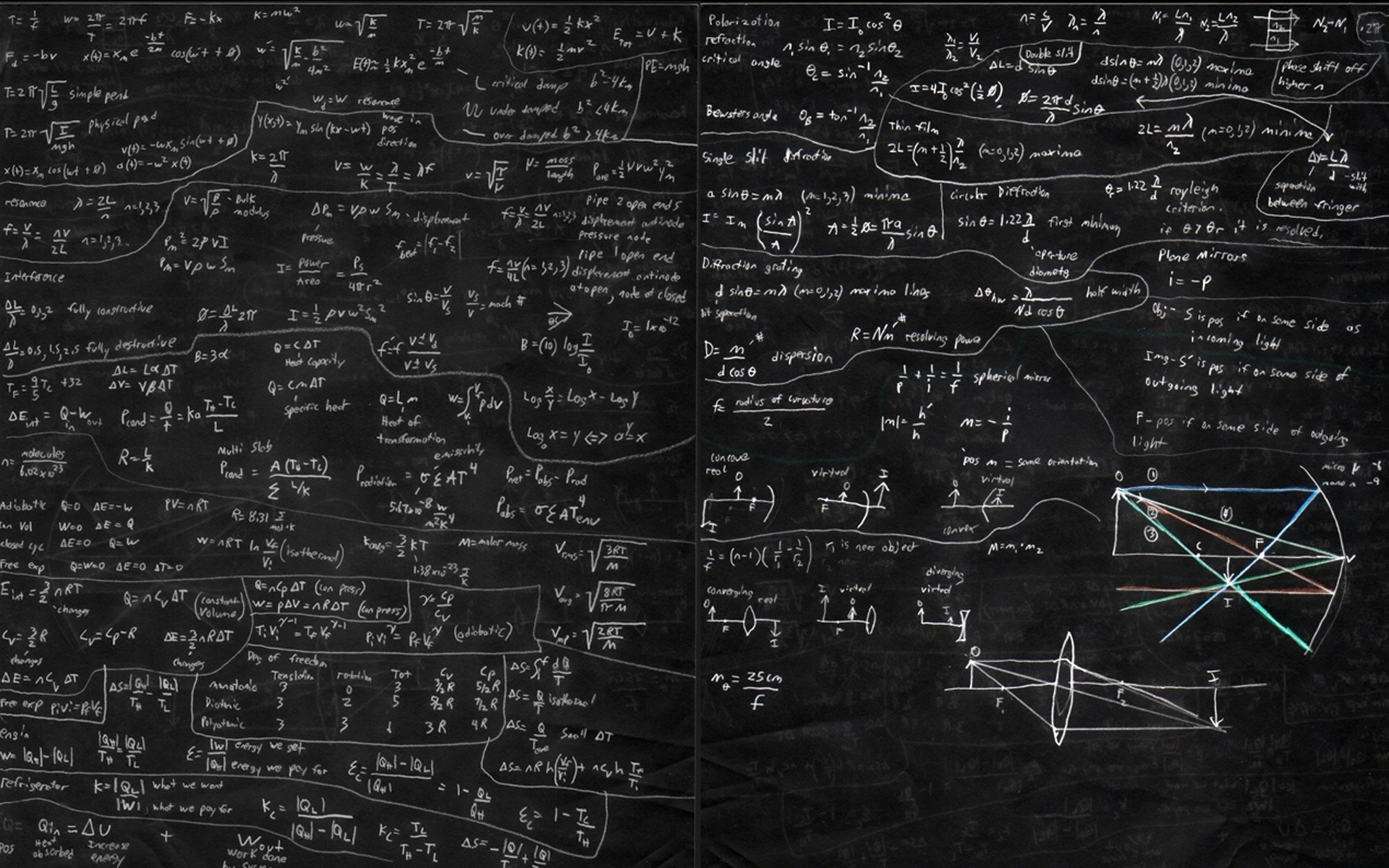
You are all wrong. It is not 4960 but 4961. How can you be so foolish. The proof is below (and so obvious)
Latest
-
01
 The Knight Report
Everyone’s Best Day: Inside the Big Ten’s Worst Defense, the Sequel
The Knight Report
Everyone’s Best Day: Inside the Big Ten’s Worst Defense, the Sequel
-
02
 The Knight Report
Join The Knight Report TODAY and get it for 60% off!
The Knight Report
Join The Knight Report TODAY and get it for 60% off!
-
03
 The Knight Report Football
ESPN FPI projects Rutgers Football's 2026 schedule - Week Nine
The Knight Report Football
ESPN FPI projects Rutgers Football's 2026 schedule - Week Nine
-
04
 The Knight Report
Rutgers Women's Basketball 2026-27 Season Preview: The Schedule
The Knight Report
Rutgers Women's Basketball 2026-27 Season Preview: The Schedule
-
05
 The Knight Report Football
Every throw from Rutgers Football Quarterbacks versus Northwestern
The Knight Report Football
Every throw from Rutgers Football Quarterbacks versus Northwestern