Arizona continues rivalry dominance as ASU fades in second half

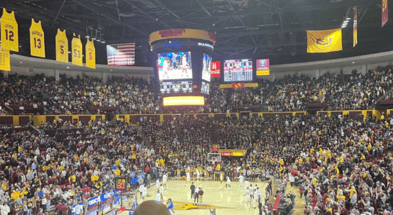
If there is one game when Desert Financial Arena can still feel like it once did, when memory fills the empty spaces before the ball even goes up, it is the Arizona vs Arizona State matchup.
The building filled from the bottom up, red and blue clashing in the stands with maroon and gold, the kind of crowd that shows up early and stays loud. One by one, familiar faces lit up the video board. Kenny Dillingham drew a roar. Cam Skattebo followed. Jordyn Tyson after that. Then James Harden appeared, back in Tempe for the debut of ASU’s Harden-inspired jerseys. Each reveal sent a ripple through the arena, small surges of energy hinting at something bigger, something this place had been waiting to feel again.
That anticipation is what keeps the Duel in the Desert alive. It is Arizona’s defining rivalry, loud, old, and personal, now one of the Big 12’s marquee matchups. In football and baseball, the power has always swung. Arizona holds a narrow edge on the gridiron. ASU has dominated the diamond for much of the last two decades. Those shifts are the heartbeat of a rivalry.
Basketball has been different.
On the hardwood, the balance has steadily eroded. Since 2010, ASU is just 8–27 against Arizona, and 4–19 under Bobby Hurley. Strip away one half-court miracle, and the series has lost its suspense, trading tension for inevitability.
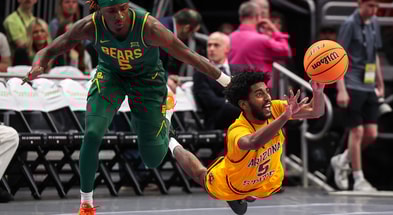
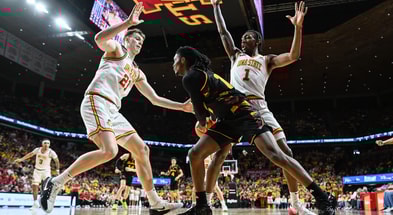
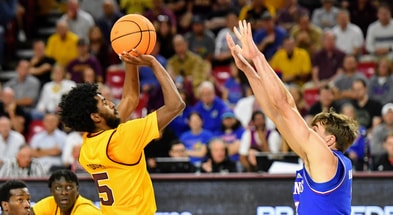
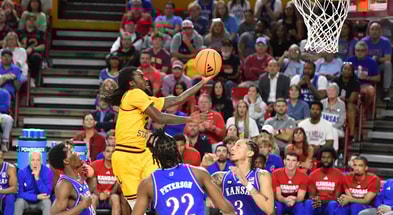
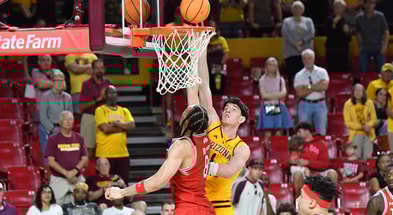
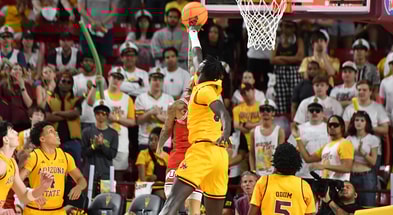
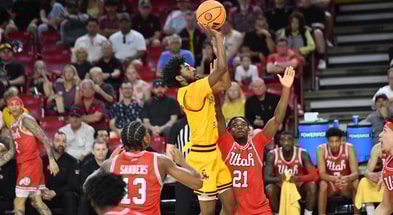
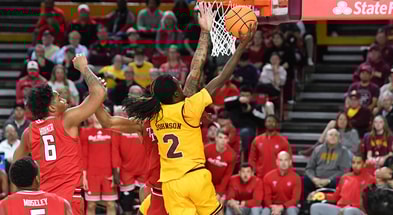
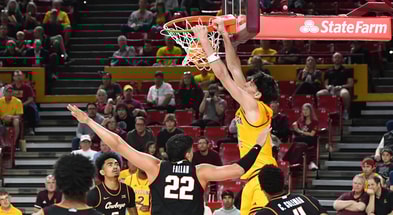
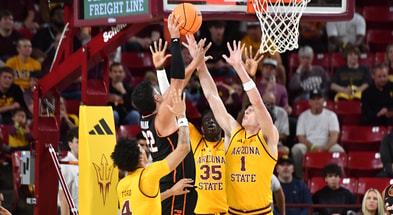
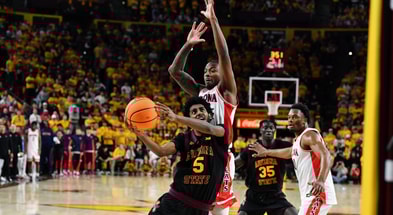
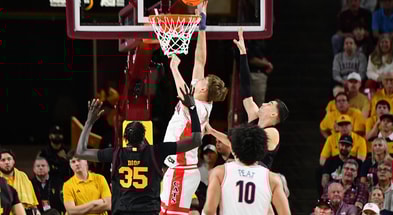
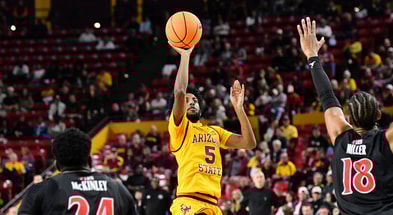
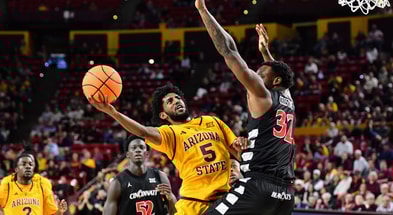
For a half on Saturday, ASU (11-11, 2-7 Big12) matched No. 1 Arizona (22-0, 9-0) possession for possession, but even in the moment, it was hard to imagine the long-running script bending. Then senior guard Moe Odum picked up his fourth foul early in the second half, and the night turned. Arizona attacked the paint relentlessly, scoring 50 points inside, grabbing 47 rebounds, including 16 on the offensive glass, and converting 16 second-chance points, while ASU’s offense struggled without its floor leader. What began with noise and belief ended with inevitability. Arizona pulled away for an 87–74 win.
Even the crowd reflected the shift. Hurley heard more “U of A” chants than support from his own side as the final minutes slipped away, Arizona fans growing louder while maroon and gold streamed toward the exits.
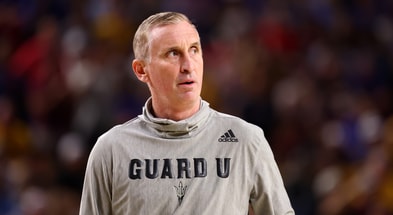
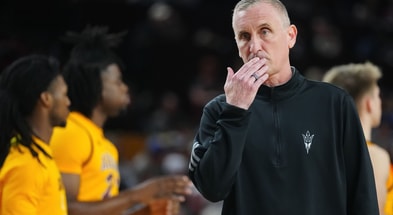
“There were too many red shirts in the arena,” Hurley said. “It was not a home game. It was like a crowd, 50-50, 60-40, either way. When they got it going, it was loud. We had a little spurt that got loud.”
Those spurts have become the pattern. ASU shows flashes early, moments that invite hope, then struggles to hold the line. The Sun Devils led by one at halftime earlier this season against Arizona and by eight and one in their two meetings last year. Saturday followed the same arc.
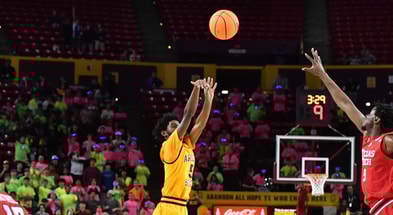
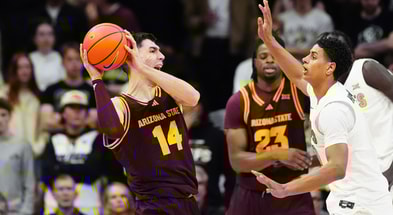
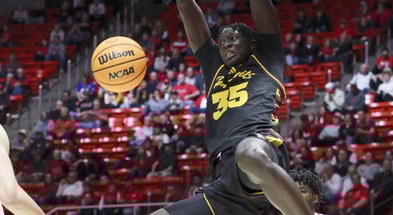
ASU was tied at the break behind early bursts from Odum and freshman center Massamba Diop, who combined for 18 first-half points, 28 overall. A handful of three-pointers, including a sophomore guard Noah Meeusen triple to end the half, gave ASU just enough space to offset Arizona’s steady diet of interior scoring.
For 20 minutes, ASU played the kind of loose, fearless basketball required to stand toe-to-toe with the nation’s top team. That has not been the problem. The problem has been sustaining it. Against Arizona, and throughout the season for that matter, ASU has usually played a solid 20-minute game in a rivalry that demands 40.
The pattern is familiar. Just one game earlier against UCF, ASU led by 12 with six minutes left, only to watch control dissolve as the Knights closed on a decisive 21–6 run. Saturday followed the same arc, only faster.
“In the first half, we matched up with them, physicality,” Odum said. “When the second half comes, our intensity goes down. Energy goes down. That’s just been a problem for a while now.”
The hinge moment came when Odum picked up his third and fourth fouls within a minute of each other, yanking the Sun Devils’ engine out of the game. He missed more than nine minutes in the heart of the second half. By the time he returned with 4:24 remaining, the momentum had already hardened into an outcome.
“That was really bad for us,” Hurley said. “Not having him on the floor for eight or nine minutes in the middle of the second half was tough. We had been doing well with high ball screens in the first half with Moe, and without him, it was definitely hard on that end.”
Arizona wasted no time pressing the advantage. The Wildcats poured in 49 second-half points, flipping the game on its head. After being kept quiet from deep early, Arizona shot 4 of 6 from three after the break and 18 of 30 overall, a 60 percent clip. Without Odum to steady the pace, ASU had no answer for the Wildcats’ constant pressure and physicality.
“This game felt very similar to our last game in Tucson,” Hurley said. “Really good first half, but they’re just too big and physical. They wear you down, and eventually, we couldn’t stand up to the challenge on the interior. We still had our chances, but didn’t shoot free throws well, and even open threes went 4 for 15. Against a team as good as Arizona, you can’t afford mistakes like that.”
Freshman phenom Koa Peat set the tone, scoring 21 points with 15 coming during the second-half surge, as all five Arizona starters reached double figures. Sixteen offensive rebounds cleaned up the rest, erasing nearly every miss. ASU’s biggest bodies, Diop and senior forward Allen Mukeba, combined for just seven rebounds, another battle lost quietly but decisively.
“Today we probably played as well as we were capable,” Hurley said. “We should shoot free throws better and grab a few more rebounds, but overall, we came close to our ceiling.”
Still, the box score told a harsher story. The Sun Devils missed eight of 20 free throws, turned the ball over 12 times, and watched their reliable scoring options fade. Senior guard Anthony Johnson finished with seven points, missing all four free throws. Junior forward Andrija Grbovic could not find a rhythm from deep, and Odum managed just three points in the second half.
ASU went 4 of 17 on layups, repeatedly attacking a lane that never opened.
Arizona, once again, proved too strong and too relentless, wearing down the Sun Devils and the crowd inside Desert Financial Arena, tightening its grip on a rivalry that feels less like a contest and more like a reminder.
As the scoreboard reflected the inevitability, Odum summed up the recurring pattern:
“They picked their (intensity) up, we let ours down,” Odum said. “That’s been the story all season—good first halves, bad second halves. Until we fix it, it’s going to be the same outcome every time.”