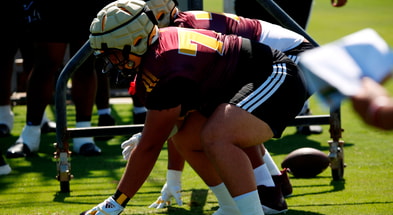
Dillingham wants ASU to be positioned well in college football's arms race

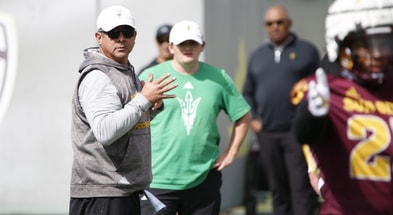
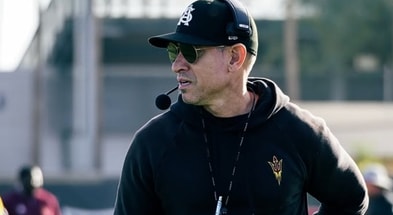
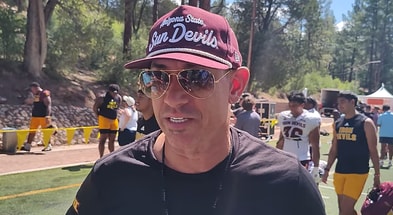
When Kenny Dillingham spoke on Saturday about choosing Arizona State amid speculation and outside interest, the message was emotional, personal, and definitive. He framed Tempe as home, not a stepping stone, and grounded his decision in family, roots, and belief in what the program had become.
It seemed like a new extension to quiet all talk was all but done, yet just three days later, doubts began to creep in. The story now shifts from why Dillingham is staying to what it will take to make the job sustainable.
With On3 reporting that contract extension talks between ASU and Dillingham have been ongoing for months and no deal has yet been finalized, his recent comments reveal less about loyalty and more about infrastructure, leverage, and the realities of leading a program in an era of rapid change.
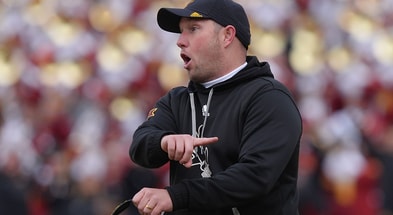
“This profession is absolutely wild,” Dillingham noted. “It’s just a wild industry right now.”
That volatility extends beyond wins and losses. Coaches must manage roster turnover, rising operational costs, NIL negotiations, and staff retention, all while keeping a competitive program afloat. Dillingham has previously noted that his role makes him a general manager, head coach, playcaller, and recruiter all in one, and that the job carries immense responsibility.
Extension discussions, he suggested, are part of a larger strategy: ensuring the program can retain staff, protect players, and remain structurally sound amid constant disruption.
“One thing for stability is your assistant staff,” Dillingham emphasized. “The support for them, the support for your players.”
Staffing at this level does not come cheap. Coaches like four-time Pro Bowler and wide receivers coach Hines Ward, offensive coordinator Marcus Arroyo, fresh off a UNLV head coaching job, defensive coordinator Brian Ward, who could lead a program elsewhere, and Super Bowl-winning defensive line coach Diron Reynolds carry significant value. Any potential future upgrades are likely to be just as costly.
While Dillingham has framed Tempe as home, he has also acknowledged the realities of the job market. He declined to dwell on Michigan or other programs, but the subtext of his comments was clear: he understands the leverage his track record affords and is using it to maximize resources and security for his staff and program.
“This is such a new era of college football,” Dillingham noted. “It’s changed in the last 36 to 24 months… In the last 12 months, it’s probably had its biggest jump in change.”
That rapid evolution has forced coaches to adapt almost in real time. Dillingham has seen how quickly programs can be transformed with the right support, and now the pressure is on for coaches like him to keep pace, balancing on-field duties with advocating for community and institutional backing.
“This nature of the arms race,” Dillingham explained, “you got to get the arms right to be competitive or even field a team to retain a team.”
He likened the current climate to the tech boom, a world where massive investments carry enormous stakes, and yesterday’s advantage can vanish overnight.
“You could be here today, and you could be at the bottom tomorrow overnight,” Dillingham noted. “You’ve got to be able to protect yourself from that. Not just for yourself but for your staff, for your players.”
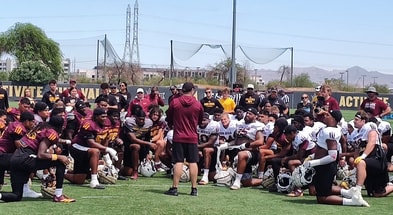
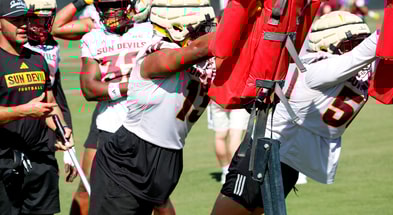
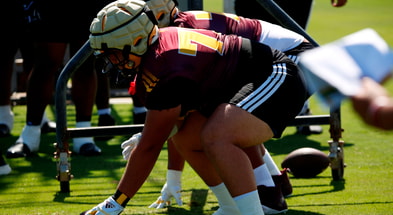
For those inside the program, Dillingham emphasized consistency: practice hard, develop talent, and adapt to circumstances. Changes in roster management, transfers, and NIL opportunities require flexibility, but one grounded in the fundamentals of coaching and leadership.
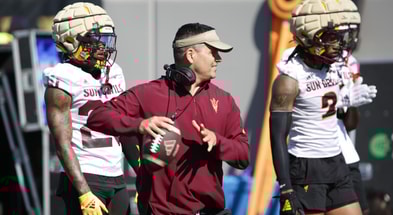
“The guys that are out here, we’re just going to fly around, practice hard, and coach them,” Dillingham noted.
Asked directly about the cost of competing at the highest level, Dillingham declined to provide specifics, underscoring the scale of resources required to run a modern Power Five program.
“I don’t want to get into numbers,” Dillingham emphasized. “But a crap ton.”
The scale becomes clearer when comparing programs across the College Football Playoff landscape. The Athletic reported that Alabama led all schools in total football expenses for 2023-24 at $112.2 million, a difference of over $99 million from Tulane, which spent just $13 million.
Other powerhouses like Ohio State and Miami each spent roughly $78 million, while Texas Tech came in at $34.4 million, though that figure predates outside investors helping fund a $28 million roster through NIL deals.
The theme running through Dillingham’s comments is unmistakable: he is aware of the leverage he holds and is using it to ensure ASU has the stability, staffing, and infrastructure to compete at the top while shielding his team from constant upheaval.
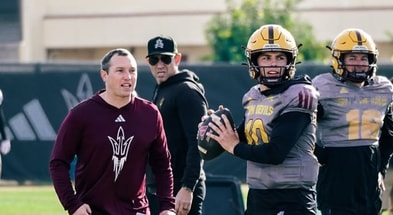
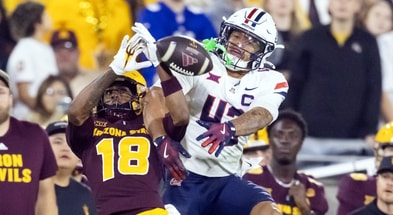
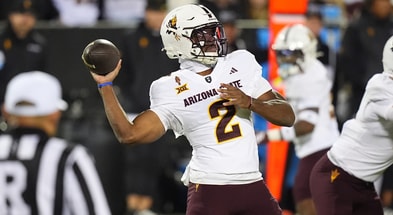
The next move now falls to President Michael Crow and Athletic Director Graham Rossini to meet the demands Dillingham is seeking for the entire football program. The youthful superstar coach has proven he can do more with less, finding sophomore quarterback Sam Leavitt and junior wide receiver Jordyn Tyson for relatively little and developing them into stars.
Players of that caliber are rare, and without the resources to consistently find talent, replicating that success year after year becomes much more difficult.
Whether he would truly act on Michigan’s interest if a deal cannot be done remains uncertain, though both sides would likely prefer to avoid that scenario.
“My job is to try to do whatever I can for the people that are with me,” Dillingham noted. “The people who are in the foxhole.”
Michigan fans may interpret his avoidance of yes-or-no answers as uncertainty, but his repeated emphasis on resources versus what he still needs makes clear why he is deliberately stalling a concrete commitment to being head coach next season.
While rumors and speculation swirl, the underlying story is about control, influence, and positioning. The extension may not be finalized, but Dillingham’s strategy is clear: he is leveraging outside interest, including the Michigan job, to maximize what Arizona State can offer in return.
“I love it here,” Dillingham emphasized. “That’s absolutely never changing.”
/">