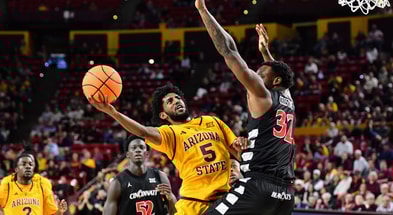
Five takeaways from ASU's 79-76 defeat to UCF

ASU was just five quality minutes away from its best win of the season. A 15–4 UCF team was on the ropes on its home floor, and the Sun Devils had a real chance to put themselves back on track after an emotional few weeks filled with conference losses. They needed a confidence boost against a stronger opponent, and for much of the night, it looked like they had it.
But ASU could not put together 40 complete minutes of basketball.
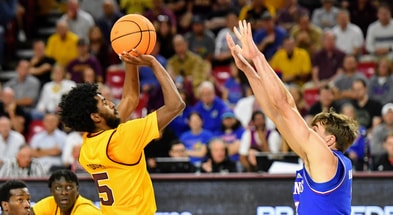
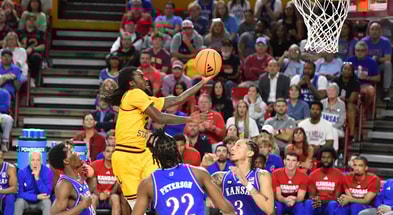
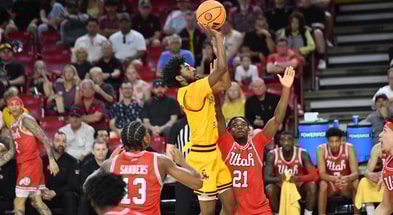
UCF caught fire late, closing the game on a 21–6 run as the Sun Devils buckled under pressure. ASU struggled to guard the perimeter and went cold offensively, unable to find a timely basket during the decisive stretch. Despite foul trouble and poor shooting for most of the night, the Knights (16-4, 5-3 Big 12) found a way to finish, while ASU’s (11-10, 2-6 Big 12) ten made three-pointers were not enough in a 79–76 loss.
Here are five takeaways from the defeat.
Opponents continue to rain threes on the Sun Devils
ASU entered Tuesday night having allowed the second-most three-point field goals in the Big 12, with opponents shooting 35.6 percent from beyond the arc. Perimeter defense has consistently sunk the Sun Devils against better competition, and in games where the three-point shot has not been there, or when junior guard Bryce Ford has been out, ASU has struggled to keep pace with high-volume shooting teams.
For most of Tuesday, it looked like the script might finally flip.
Before a UCF three-pointer with 5:52 remaining, the Knights had made just two all night, one in each half. ASU, meanwhile, had drilled 10 of 19 from deep, a scorching performance that fueled a commanding lead. But when the Knights made their final push, everything unraveled. UCF hit five of its seven total threes during the closing stretch, including three straight offensive possessions that featured nearly wide-open looks, whether off second-chance opportunities, in transition, or on spot-up attempts.
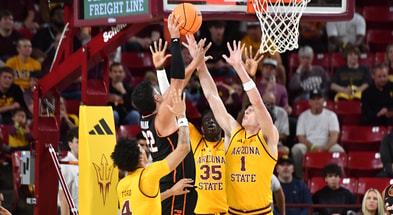
ASU knew the only way UCF could climb out of the hole was from long range, yet it could not protect the perimeter. Those threes chipped away at the deficit, including one that gave the Knights their first lead since the six-minute mark of the first half. After ASU briefly reclaimed the lead, another UCF three swung it back for good, sealing a collapse that felt all too familiar.
UCF’s foul trouble went to waste for ASU
ASU played physical, targeted key players, and attacked the basket all night, drawing fouls in bunches. The whistle often seemed to favor the Sun Devils, and by the midpoint of the second half, the stat sheet reflected the pressure. Four UCF players had three or more fouls, three had four fouls, including senior guard Riley Kugel and senior forward Jamichael Stillwell.
Stillwell finished with 14 points, and Kugel had 17, carrying a plus-minus of 17, the only Knight in plus-minus double digits. Both played the closing stretch on the edge. Kugel picked up his fourth foul with eight minutes remainin,g and Stillwell with ten. Both subbed out briefly but returned with 7 minutes and 36 seconds left, presenting ASU with prime opportunities to attack, force switches, and exploit them in transition.
But it never came. ASU failed to take advantage of the opportunity to punish UCF for leaving its top players in the danger zone. In the decisive stretch, Stillwell scored five points and Kugel added four, including an offensive rebound that led directly to a three-pointer. Those were the plays that powered UCF’s comeback, and ASU left the openings unexploited.
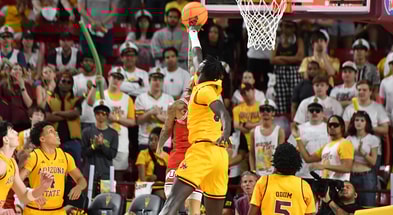
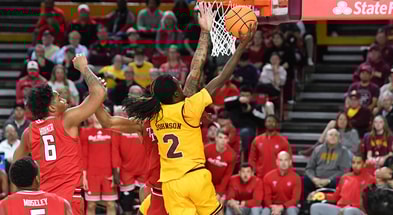
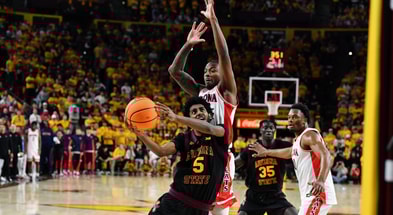
Instead, UCF forced Odum into foul trouble and eventually fouled him out. When a missed free throw gave ASU a final chance with six seconds remaining and down three, Ford took the last shot instead of Odum, the player who had carried them all night. Opportunity was squandered, execution fell short, and the late collapse was complete.
Role players contributed, but consistency is needed
If there’s one positive to take away, it’s the individual contributions from players who have struggled to produce in recent games. Senior forward Allen Mukeba had scored just ten points total over the past four contests, despite early-season signs that he could be a key force inside, blocking shots, crashing the boards, and providing the muscle on a team lacking a true veteran enforcer.
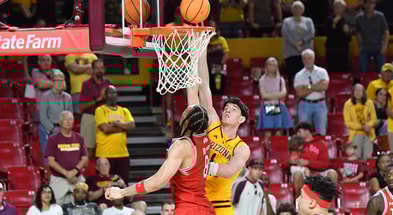
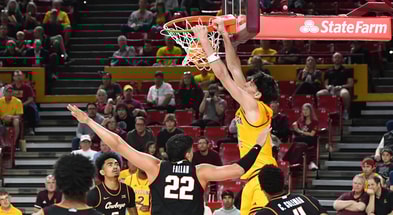
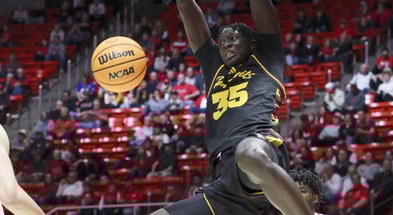
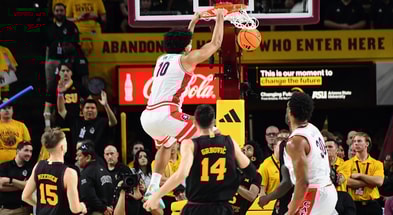
Foul trouble and offensive inconsistencies have limited his minutes, but on Tuesday, Mukeba scored nine first-half points, including an and-one hammer dunk, and posted a team-best plus-nine. That performance offers hope that he is finding his rhythm again.
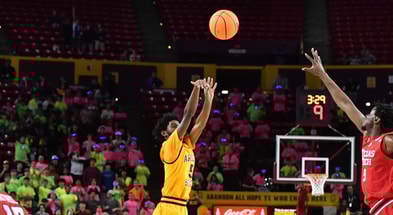
Elsewhere, Bryce Ford delivered a much-needed lift. He had gone just 3-for-13 with eight points over the previous two games. Early in the season, a 20-point outing against Hawaii and an 18-point effort versus Washington State suggested ASU might have a reliable scoring guard alongside Odum, or at least a consistent three-point threat.
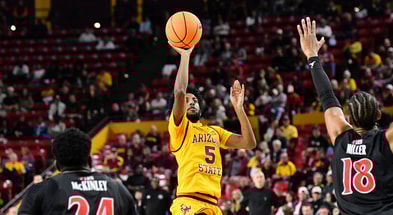
At times, though, Ford has been underutilized in the offense, and with limited rebounding, defense, or passing, simply sitting in the corner is not enough. On Tuesday, Odum found ways to get Ford involved, and he responded with 11 points on 4-of-10 shooting and 3-of-6 from deep. Two of his second-half threes were key in helping ASU stretch the lead to 12. A consistent three-point threat like Ford could be a major boost to ASU’s offense moving forward.
Massamba Diop cannot go uninvolved
What you get from ASU on any given night is unpredictable. Who the ball goes to and when can be a complete question mark. Take the Kansas State win, for example, when the Sun Devils dominated inside. The freshman center had 21 points, nine rebounds, and five blocks, showcasing a talent that seems too rare to ignore. Compare that to the Arizona loss, where he had 14 points, five rebounds, and two blocks, most of them coming from midrange buckets at the elbow.
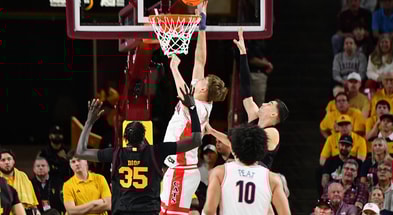
He has had 20-point games in a three-game stretch, yet on nights like Tuesday, when ASU’s offense goes ice cold, and they keep chipping away with threes, the team misses the chance to use a dominant big man. With UCF in foul trouble, having an ultra-talented interior presence who can draw fouls and finish around the rim could have swung the momentum.
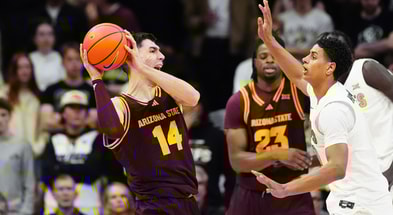
Diop is likely a future NBA talent. His defense has improved, and his jump shot is developing, yet after seven straight games scoring 15 or more, he has gone under ten points in three of the last four games, with only one win in that span, a game in which Odum carried the team with 33 points. ASU does not have the depth or talent to compete with much of the Big 12. As head coach Bobby Hurley has said, the team must maximize the talent they do have and find a way to make their best players, like Diop, the consistent focal point on both ends.
Bobby Hurley’s future at ASU faces increasing pressure
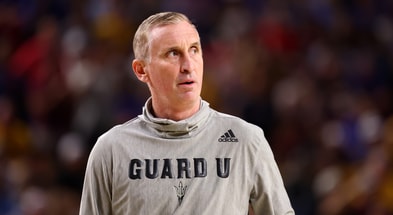
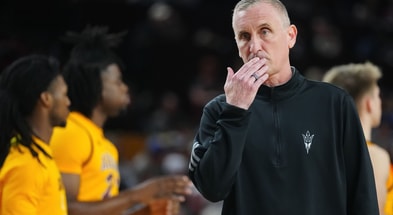
Speculation has more than swirled that with just one year left on his contract, this could be Hurley’s final season. Now in his 11th year as the Sun Devils’ head coach, the program shows signs of stagnation. It has been three seasons since ASU’s last tournament appearance, and recent results suggest the team is sliding rather than improving.
After the loss to West Virginia, Hurley admitted he could not see the light at the end of the tunnel, that he was failing, and that he could no longer reach his players. Comments like these in a program already on the decline are likely to shift the dynamic in the locker room. Losses like Tuesday’s, surrendering a 12-point lead with five minutes remaining, are not only demoralizing, they offer little reason for optimism.
Games against UCF and West Virginia are among the more winnable contests on ASU’s schedule. Failing in these matchups magnifies the program’s challenges and exposes cracks that cannot be ignored. Contests like this serve as warnings, glimpses of the uphill battle the Sun Devils face, and a reminder that without immediate adjustments, Hurley’s final season could be defined more by missed opportunities than progress.