Big-time regular season non-conference games may be a thing of the past
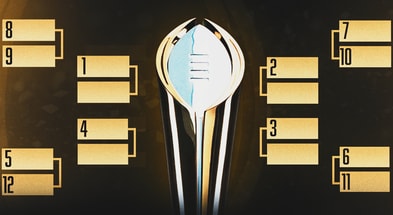
This isn’t just a Texas issue, this is a college football issue. Based on the recent rankings produced by the College Football Playoff selection committee, teams will be heavily incentivized to seek wins and as a result lower the level of difficulty of their non-conference games. Right now the committee is sending a message: record is what will get you a seat at the CFP table.
[Sign up for Inside Texas for just $1!]
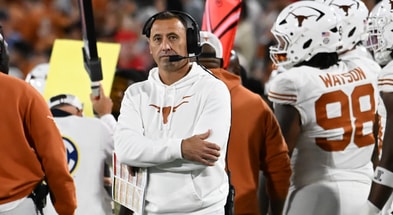
“At the end of the day, they looked at the record, and said, ‘what is your record?’ And so my point is that that’s fine, but just tell us that that’s what it is,” Steve Sarkisian said Wednesday. “I just don’t like contradicting yourself. You tell me it’s about strength of schedule, and you tell me about head-to-head, but yet, then you make a decision predicated on what our record is.”
Texas was ahead of 10-2 Vanderbilt but that can be attributed to the Longhorns’ 34-31 win over the Commodores. The inconsistency in messaging is seen there a couple of spots away, too. Miami is 10-2 with a win over Notre Dame, yet is ranked No. 12 while the Fighting Irish are No. 10 with an identical record.
So while people try to make sense of the committee’s nonsense, it’s worth unpacking if scheduling priorities will change.
There is a thought process that SEC teams will replace premier games with the likes of Ball State and Delaware. “Rice” has been a word thrown around by Longhorns when talking about Texas’ future football schedules, and not the food. That thought process is flawed, however.
From the SEC 2026-2029 opponents release: “Schools must annually schedule at least one additional high-quality non-conference game from the Atlantic Coast, Big Ten or Big 12 conferences or Notre Dame.”
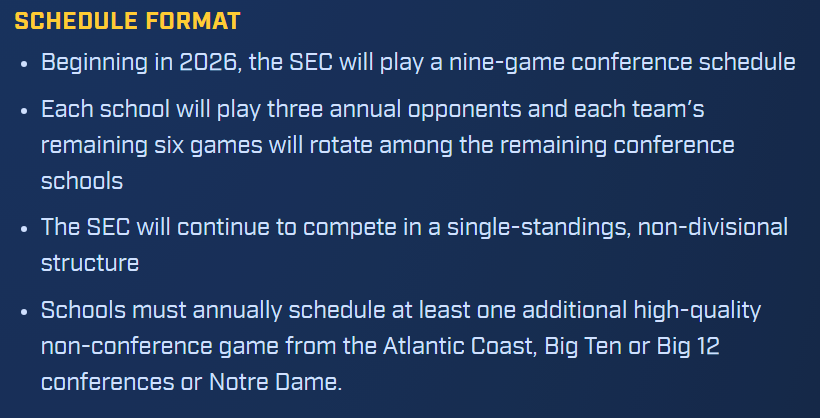
That doesn’t prevent schools from scheduling “high-quality” matchups versus Boston College, Rutgers, or Purdue. There are ways around it, but Texas cannot drop Ohio State and replace them with Sam Houston if the Buckeyes are the only Power Conference team in the non-conference slate.
All that said, it won’t make sense for a team in either the Big 10 or the SEC that believes it can contend for a national championship to face another real contender in non-conference play. It could hurt either team. It makes zero sense for a contending team to face an unnecessary risk in a world where strength of schedule is listed as criteria, but record seems to be what gets you in.
Top 10
- 1Breaking
Billy Napier
Close to new head coach job
- 2New
Florida lands OC
Jon Sumrall scores big
- 3
Alex Mortensen
UAB hires as head coach
- 4Hot
Kalen DeBoer
Addresses Penn State rumors
- 5Trending
Game Picks
Championship Week best bets
Get the Daily On3 Newsletter in your inbox every morning
By clicking "Subscribe to Newsletter", I agree to On3's Privacy Notice, Terms, and use of my personal information described therein.
In previous years it made sense for ACC and Big 12 teams to swing big in non-conference games so they could boost their resume in hopes of cracking the top four. Texas likely was the No. 3 seed in the 2023 College Football Playoff because of its win over Alabama. If Texas beat the Pac-12’s Washington State instead of Alabama and had the exact same regular season, then the Longhorns would have been sweating profusely instead of having a good idea they were the No. 3 seed in 2023.
With the Longhorns in the SEC and the onset of the 12-team Playoff, it doesn’t make much sense to play high-profile out-of-conference opponents when the quality of the conference schedule is plenty good. You might as well do everything you can to get the automatic bid by winning the league to leave as little to chance as possible.
| Conference | Losses Allowed |
| SEC | 2 |
| Big Ten | 2 |
| Big XII | 1 |
| ACC | 1 |
Looking at the recent top 10 with the names removed, it is clear and obvious that the record you have weighs more than strength of schedule and other metrics.
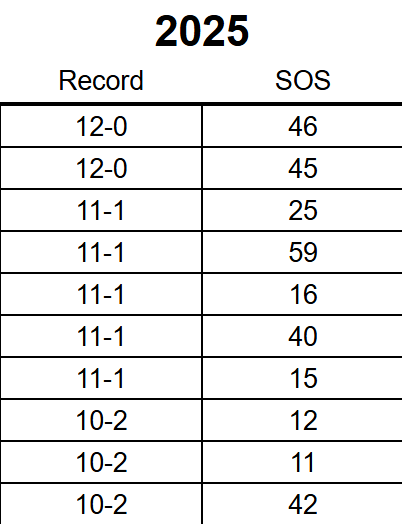
We live in a college football world where the old phrase “you are what your record says you are” is treated like gospel. That phrase was said about the NFL, which is hardly comparable. Until loss column bias is turned into less of a factor, marquee non-conference games may only take place at the end of the year in postseason play rather than in September.