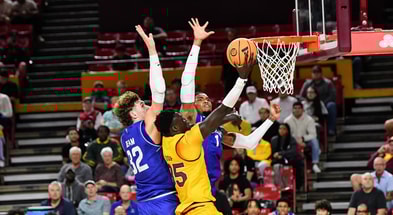
Sun Devils' bench key in convincing win over the Sooners
For weeks, ASU’s offense lived on the shoulders of its core four. Senior guards Moe Odum and Anthony Johnson, freshman center Massamba Diop, and junior guard Bryce Ford carried nearly 70% of the load in the Maui Invitational, while the rest of the rotation flickered with promise but never broke through. Hurley kept searching for a spark strong enough to wake up his depth.
He just didn’t expect it to strike in the game’s opening minutes.
Clank. Oklahoma’s second shot rattles out, and before ASU can react, senior forward Tae Davis streaks in for the Sooners’ second offensive rebound and an easy 3–0 start. It looked like the USC loss on repeat, 12 second-chance boards, same early cracks, same sinking feeling.
Hurley didn’t let the deja vu linger.
Ninety seconds in, he benched all five starters and sent in the entire second unit. It wasn’t punishment; it was proving a point.
“We talked all week about rebounding,” Hurley stressed. “If I don’t act after two offensive rebounds right away, then what I’ve been saying is meaningless.”
What he couldn’t know then was that the group he’d just turned to would seize the game.
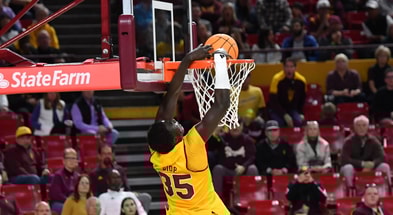
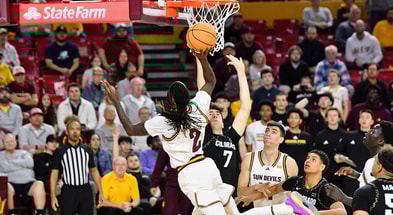
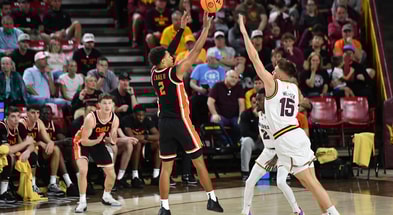
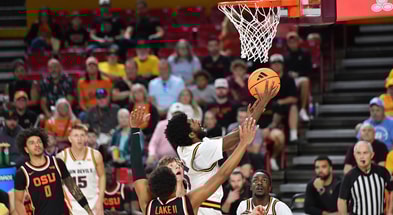
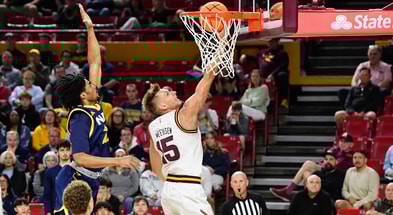
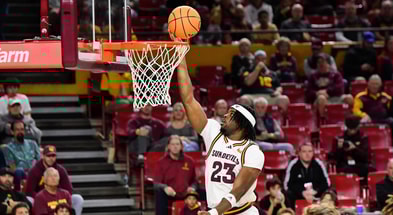
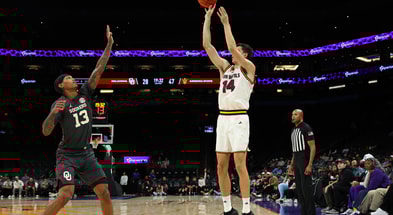
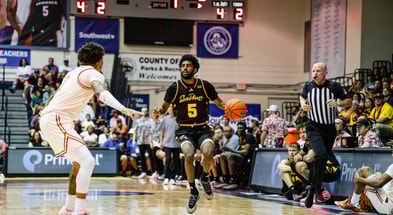
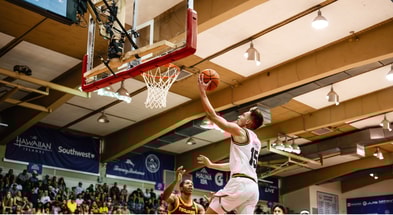
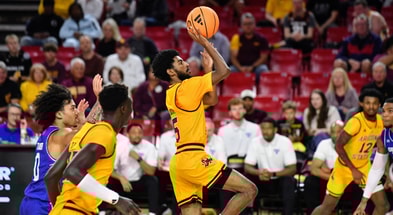
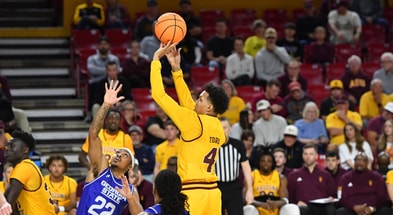
ASU flipped into a blur of energy, the kind they’d been missing. Oklahoma couldn’t buy a bucket, and the Sun Devils’ second unit pounced with stops at the rim, bursts in transition, crisp passes, and clean looks. Possession after possession, they played like the starters Hurley had been waiting for. An 18–0 jolt grew into a 27–2 run, and suddenly the story wasn’t who carried ASU, but who finally arrived. The bench poured in 43 points, with eight players scoring at least five. Sophomore guard Noah Meeusen handed out a season-high eight assists, and Marcus Adams Jr. added 11 points and three triples as ASU rolled past Oklahoma 86–70.
Hurley’s early overhaul was meant only to address rebounding. Instead, it revealed a second unit fully capable of changing a game, the kind of depth ASU believed it had but hadn’t yet seen all at once.
And the message clearly landed. The intensity on the defensive end that went missing in Maui roared back: Oklahoma shot just 28.1% in the first half, committed six turnovers, and had five of its attempts sent away by ASU. Meanwhile, ball movement and confidence flowed freely, with the Sun Devils shooting 70% from deep before halftime.
From the moment Hurley made the switch, ASU rattled off an 18–0 run before four of the original starters even logged another minute.
“It just feels that it validates trust that you have in the whole group,” Hurley explained. “The guys that I took out, I think, were excited that the guys who went in were having a positive impact on what was happening out on the floor. Sometimes you go with your gut instinct, and you’re right, and you’re wrong sometimes. That time it worked… and I just like how the unit that came in responded, and the guys on the bench. The next time they came in, they jumped right back in.”
One of the catalysts in that early surge was Meeusen, the pass-first guard Hurley had been eager to get back from injury. He delivered seven assists in the first half alone, after entering the night with a season-high of two, directing the offense with a calmness and clarity ASU had been missing.
His two made threes reminded everyone he can still score when needed, but Meeusen’s growth showed in the way he elevated everyone around him.
“Think the first couple of minutes, defensively, we got stops, then we could run, and then just find open guys, and then they make shots.” Meeusen explained. “I can trust everybody, but what the strengths are of different players. Like Piggy is incredible in transition, so get the ball over there. Marcus today, pick-and-pop was working very well. So, just working to our strengths, I think it’s made it easy for us.”
Among the biggest beneficiaries was Adams Jr., who has spent the summer and fall clawing back from a foot injury, extra conditioning, extra reps, and long hours in the facility. Odum and Hurley both pointed to the work behind the scenes as the reason his breakthrough felt inevitable.
“He missed so much time that it’s not surprising that it took some time,” Hurley noted. “Getting him back to the mainland and getting him in practice, and even our own players, not only the coaches, our players, encouraging him to practice harder, to get some extra conditioning in.”
“He ran 17s every day this week,” Odum recalled. “And then ran again for two minutes doing another drill, and then he shot after, then I made him shoot every day this week. And then on off days, I made him come in the morning.”
Adams Jr. looked like the contributor ASU has been waiting on: 11 points, a season high, three pick-and-pop threes, a block, and the mobility he’s fought to reclaim.
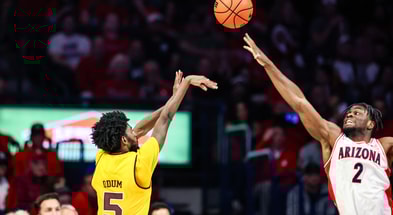
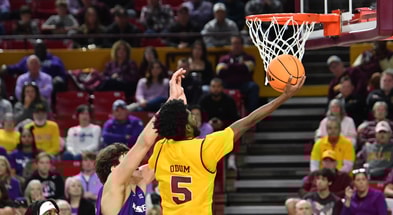
ASU piled up a season-best 47 first-half points, with senior forward Allen Mukeba adding eight of his nine before the break. In the second half, the scoring spread even wider: senior forward Andrija Grbovic knocked down three threes on his way to a season-high 11, Johnson extended his seven-game double-digit streak with 16, and Odum quietly steered everything with 17 points on seven shots, adding three threes and six assists.
“We specifically brought in a number of guys to play and to have a deeper team than we had last year and have more options in this group,” Hurley outlined. “I always thought it would get better because of how late guys got to campus and how little time, and we had injuries as well. So just getting them all on the same page was something that’s pretty cool.”
Meeusen and Odum combined for 14 of ASU’s 17 assists as the Sun Devils shot 47.2% from the field and 54.2% from deep with 13 made threes, shot after shot dropping from every corner.
Hurley entered the night demanding better rebounding and a renewed defensive edge. ASU delivered both: plus eight on the glass, seven blocks, 13 forced turnovers, and a sub-35% shooting night from Oklahoma.
But the twist was who gave it to him, a bench unit that wasn’t supposed to be the spark but became the very thing that changed the game.
“We had very specific things that we worked on defensively that needed to change, and we needed to get back to getting stops, protecting the rim and rebound,” Hurley stressed. “And we won the paint. We held them to a very low number relative to their ability… I’m very pleased with how the guys responded to points of emphasis and practice defensively and rebounding, and then seeing a carryover effect into the game.”