Express Thoughts: Purdue's consistency issues, Oscar Cluff and more

Analysis of Purdue football, Boilermaker men’s basketball, recruiting, or whatever else comes to mind. Note: This was written before the Feb. 10 game versus Nebraska

ON PURDUE AND CONSISTENCY
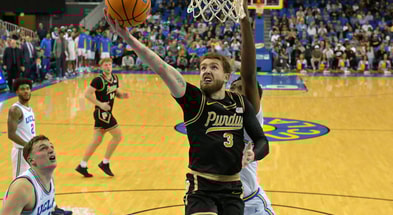
As Purdue heads into the most important stretch of its season, the most urgent need is something no one ever expected to be debating at this stage: consistency.
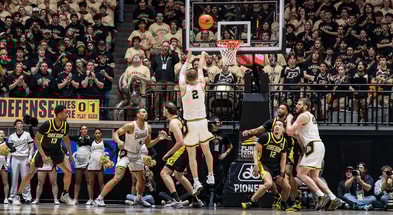
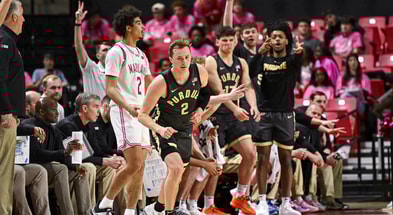
Purdue simply should not be this turbulent. In fact, this season has felt like the opposite of what a team with this much experience and this kind of résumé should be. Teams like this are supposed to look the same every game, every week, every possession. No college basketball team is perfectly consistent that’s not how the sport works — but Purdue should be more consistent than it has been. Why it isn’t remains something of a mystery.
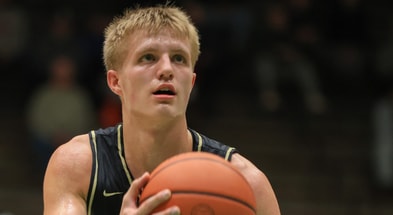
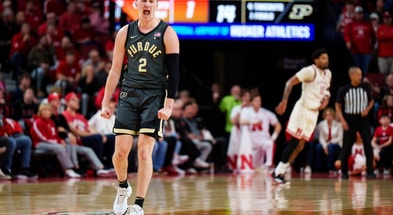
Ultimately, Purdue needs its warhorses to be steadier. That starts with Braden Smith, whose job is to keep everyone together and moving in the same direction while carrying the burden of being both a great player and a leader. It means Fletcher Loyer keeping positive and being steady and vocal, as he has been. It means Trey Kaufman-Renn keeping his composure when games get physical and the whistle isn’t going his way.
The rest of the roster can’t be worried about minutes or shot totals — the kind of approach that has traditionally defined Purdue basketball during this run of successful seasons. That’s easier said than done. Teams that truly master that mindset are outliers more than the norm. Still, that responsibility also falls on the seniors to keep everyone aligned.
At the end of the day, though, the greatest responsibility lies with Braden Smith. Heavy lies the crown, and as he goes, so goes Purdue. His legacy will be tied to winning more than anything else. It’s a strange era to be a college basketball star, balancing celebrity with responsibility, but when you’re the point guard and one of the best players in the country, keeping everyone together and pointed in the same direction is paramount.
Defensive energy can’t come and go. Bad turnovers can’t continue. And so on and so forth. That’s simply the standard greatness is held to — and Smith is a great player. We all know that. Now Purdue needs it most.
Subscribe to GoldandBlack.com’s YouTube page.
ON PURDUE AND OSCAR CLUFF
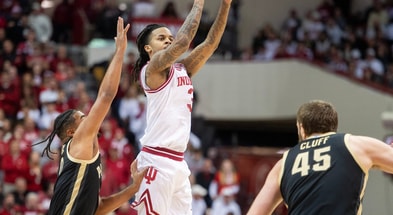
So this week, the door may or may not open for Oscar Cluff to return to Purdue next season—if he wants to, and if Purdue wants him to. Personally, I wouldn’t hold my breath. A lot has to fall into place for this to even be possible, not the least of which is Cluff himself deciding he wants to come back rather than pursuing professional basketball opportunities, returning home to Australia, or simply deciding he doesn’t want to be a 25- or 26-year-old college basketball player. At some point, we all have to move on with our lives.
Cluff has been good for Purdue, and from a pure basketball perspective, his return would make a lot of sense. But in the bigger picture, it’s hard to argue that college coaches — or college sports in general —should want eligibility standards to keep expanding like this. At some point, this has to start making sense. Right now, it’s completely out of control, and it’s warping what the college game is supposed to be.
Purdue wouldn’t be the bad guy for bringing Cluff back, and Cluff wouldn’t be the bad guy for returning. But eventually, you reach a point where nobody really wants to see college basketball become a sport dominated by grown men playing what is, at its core, supposed to be a young person’s game.
There are fundamental issues in college sports that are finally coming to a head. As long as athletics are tethered to higher education, it becomes incredibly difficult to tell people when they can go to college, where they can go, or how long they can stay — and that tension is starting to show in ways that are increasingly problematic.
ON DREW BREES
One of the fun parts of my job — and one of the main reasons I love college sports — is that you get to watch kids grow up, unfiltered. It’s a rare window into humanity, and a pretty special one.
Top 10
- 1Breaking
Caleb Wilson injury
UNC star has broken bone
- 2New
Trinidad Chambliss waiver
NCAA makes second ruling
- 3
South Carolina arrest
Gamecock player removed
- 4Trending
Bracketology
New No. 1 overall, big shakeup
- 5
Miami court storm
Hurricanes fined by ACC
Get the Daily On3 Newsletter in your inbox every morning
By clicking "Subscribe to Newsletter", I agree to On3's Privacy Notice, Terms, and use of my personal information described therein.
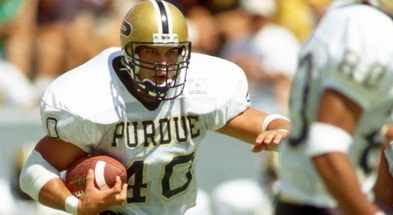
That’s what comes to mind when I think about covering Drew Brees as a high school recruit and then as a freshman at Purdue many years ago. Back then, I was a student at The Exponent, and I remember a kid who was painfully scrawny, to the point that if not for his shoulder pads, he’d probably find himself standing in his jersey, not wearing it.
Those were different times. Getting an interview with a college football player wasn’t akin to sneaking into the Pentagon as it is today. You just looked them up in the university directory, called their dorm room and hoped they called you back.
I remember when Purdue was recruiting Texas hard under Joe Tiller. I did a story about it and called Brees when he was probably 18 years old, living in a dorm room. I got his answering machine, which featured a message enthusiastically cheering on how much the football team hated its 6 a.m. winter workouts. It was a small, funny bit of humanity from a kid who’d go on to become a corporation.
The conversation that followed stuck with me even more. It was clear Brees could already hold his own with adults conversationally — not that I was much of an adult at the time. We talked at length, largely because he wanted to, about why Texas kids seemed more prepared for college football than others. At some point, we drifted into a purely social discussion about Friday Night Lights, which was a seminal work of sports journalism long before it became a movie or a TV show.
Back then, it wasn’t yet apparent that Drew Brees was going to become a college football superstar, much less an NFL Hall of Famer — which he officially became this week.
Looking back now, one thing that stands out most is his loyalty to Purdue. After his sophomore year, he easily could have transferred to Texas or Texas A&M, used his redshirt year, and played where he had always wanted to play. I can only imagine what his recruitment — and his entire career — would have looked like in today’s college football landscape.
But Brees stayed at Purdue. And even long after Purdue, he stayed loyal to Purdue — right to the very end — during times when Purdue needed him far more than he ever needed Purdue.