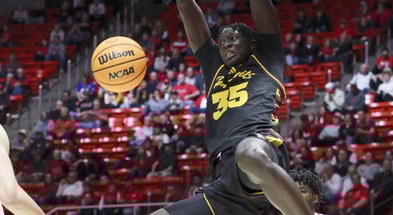
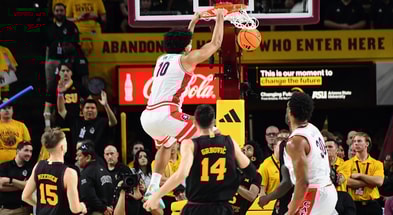
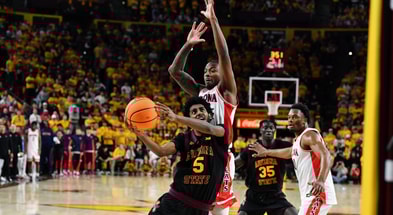
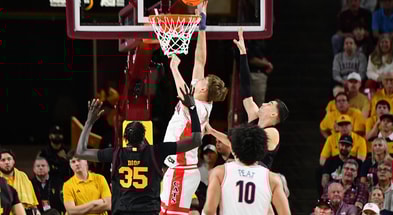
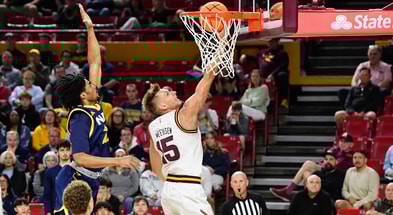
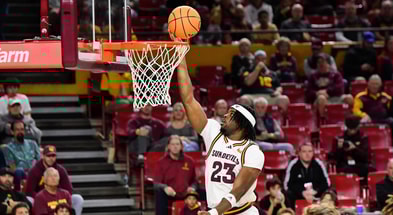
Five takeaways from ASU's 78-70 loss to Colorado

One step forward, one step back, and sometimes a few steps in reverse. That’s been the story of Arizona State’s Big 12 grind, and it followed the Sun Devils all the way to Boulder once again in a 78-70 loss.
ASU opened conference play with a loss to Colorado on January 3rd. Saturday’s rematch offered a chance at momentum, or at least progress. Instead, it looked painfully familiar.
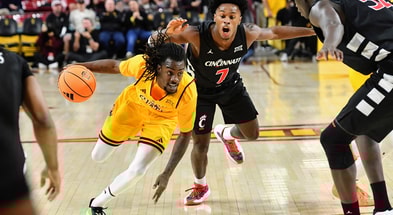
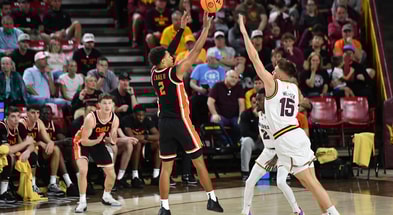
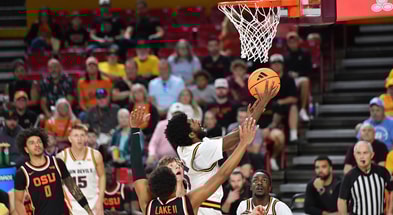
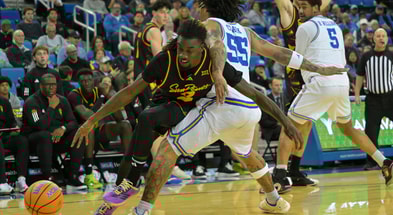
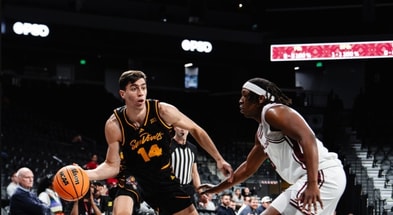
The offense never found a rhythm. A sluggish start buried ASU early, as the Sun Devils shot just 32.3 percent in the first half and finished the night at 40.4 percent overall. Nearly all the scoring load fell on three players, senior guards Moe Odum and Anthony Johnson and freshman center Massamba Diop, who combined for 56 of ASU’s 70 points.
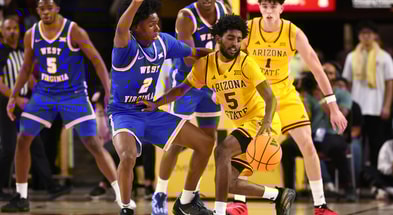
Colorado, meanwhile, dictated the game where ASU couldn’t respond. The Buffaloes dominated the paint with 42 points inside, punished ASU (12-12, 3-8 Big 12) on the glass with 13 offensive rebounds, and turned those into 17 second-chance points. Shooting 55.2 percent in the second half, Colorado (14-10, 4-7 Big 12) led for 34 minutes and steadily pulled away in a 78–70 win that never truly felt in doubt.
Here are five takeaways from ASU’s loss in Boulder.
Teams can score against ASU in just about any way they choose.
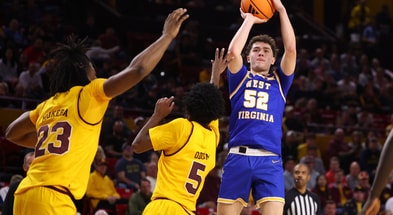
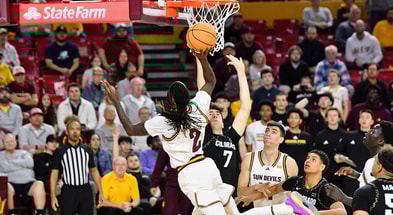
Colorado shot 50.8 percent from the field and then heated up to 55.2 percent in the second half to pull further away. Junior guard Barrington Hargress led the long-range attack, hitting 10 of 15 mostly long mid-range shots for a team-high 23 points. Freshman guard Isaiah Johnson and junior forward Bangot Dak combined for 28 points, powering Colorado’s inside game with layups and dunks that contributed to 42 points in the paint.
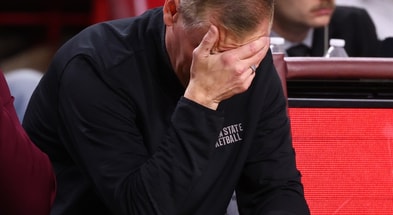
“Look, we stink on defense,” Hurley said. “Man or zone, we were bad at both, so it was pick your poison.”
The Buffaloes could score from anywhere on Saturday and did so with remarkable efficiency. It was not that ASU had no answers; it was that they could not make Colorado work for their points. The Sun Devils struggled to contest shots, force tough looks, or apply enough physical pressure to disrupt an offense that could turn on and off at will.
Colorado was not perfect from long range, making just six of 22 three-point attempts, but it was enough. ASU made only eight threes, and Colorado’s dominance inside made the margin irrelevant. The Buffaloes shot 25 of 39, or 64 percent, on two-point attempts, a mark that puts you in a significant deficit unless you can match that efficiency, which ASU did not.
In the game’s biggest moments, when the Sun Devils needed stops and points, they could not deliver. Colorado finished 5 of their last 7 attempts, a snapshot of the game as a whole and the gap ASU struggled to close.
ASU does not have the depth to contend in the Big 12.
The Sun Devils tried shaking things up, inserting senior forward Allen Mukeba into the starting lineup in place of sophomore Santiago Trouet. The hope was to add some physicality up front, but the change did little to shift the game’s momentum. Mukeba contributed just four points and two rebounds, while Trouet recorded his first scoreless outing of the season in 20 minutes.
Where Colorado found contributions from all over the floor, ASU struggled for consistency beyond its stars. Role players again fell short, a recurring theme in losses that on another night might have gone the other way.
Junior guard Bryce Ford, who had an early-season stretch with 20- and 18-point nights, scored just two points on Saturday, six over the last two games. He played only 13 minutes as Johnson logged most of the time, with Johnson’s scoring inside, fast-break production, and hustle making him the clear option. Sophomore guard Noah Meeusen, who had been building momentum with back-to-back games of 16 and nine points and seven total assists, also went scoreless in 26 minutes.
Odum, Diop, and Johnson were effective enough to cover the gaps, but ASU’s cold stretches, early and late, magnified the team’s reliance on a few players. The Sun Devils’ highs can be electrifying, but the lows are equally stark, and against teams like Colorado, inconsistency from the supporting cast becomes a liability too costly to overcome.
Opponents are given far too many second-chance opportunities.
ASU sits at the bottom of the Big 12 in total rebounds and rebounds per game, with the worst rebounding margin and more than 12 offensive boards allowed per contest. Defensive rebounds can be misleading, influenced by who is hitting shots and which team is controlling the game.
Offensive rebounds, however, are pure effort, and ASU has consistently come up short. On Saturday, that shortcoming was costly. The Sun Devils allowed 13 offensive rebounds that turned into 17 second-chance points, giving Colorado extra opportunities and momentum at every critical stretch.
“We got seven games left, so if we can’t rebound now, then chances are we’re not going to be able to rebound,” Hurley remarked.
Whether it’s players caught flat-footed at the shot or younger players unfamiliar with positioning and box-outs, ASU has too often been outworked on 50/50 rebounds. In the gauntlet of the Big 12, teams are quick to punish those lapses, and giving extra chances to opponents is a mistake few programs can afford.
It is not a legnth issue. ASU has regularly played lineups with what could be considered a center and two power forwards, including Diop, Trouet, and junior forward Andrija Grbovic, all over 6’10. Saturday’s lineup, featuring Mukeba, still boasted a 6’8 and a 247-pound frame. Whatever adjustments are necessary, ASU must prioritize boxing out and securing defensive rebounds, even if it means sacrificing some fastbreak opportunities. Controlling the boards has to be the team’s first priority for the next game.
Team success will likely overshadow what have been standout seasons for Odum and Diop.
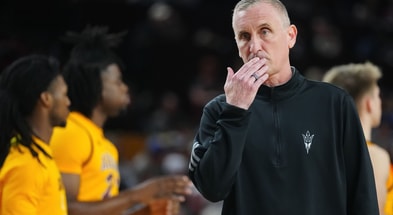
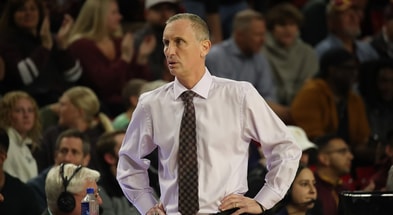
Most ASU fans have grown disinterested in a Sun Devil team showing little fight in the Big 12, but those still paying attention are likely to see this season as what could become head coach Bobby Hurley’s last and a low point for the program.
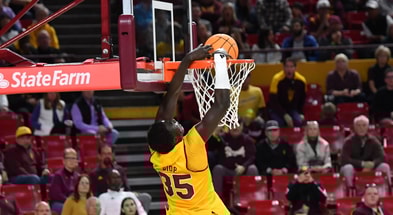
It is a shame the conversation cannot focus on the highs. Diop has shown he could be a future NBA player, with growth on the boards and defensive effort complementing a polished offensive game. He can hit elbow jumpers, finish with posterizing dunks, and display smooth footwork on hook shots, averaging 13.6 points, 5.8 rebounds, and 2.1 blocks per game.
Odum has been equally impressive, averaging 17 points per game, the most by an ASU player in a non-COVID season since 2019-2020, along with 6.2 assists, the highest mark for a Sun Devil since 1994-1995, and 1.7 steals per game. Those numbers, reminiscent of a James Harden-level performance, highlight why ASU once honored a program legend with a branded jersey.
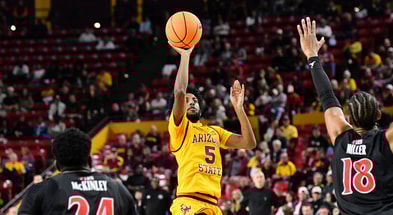
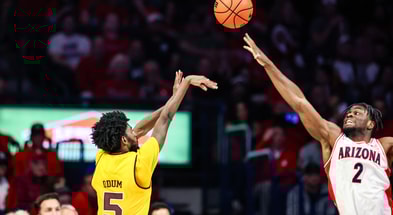
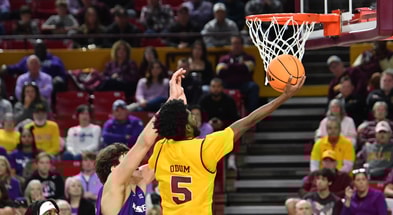
Odum added 23 points on Saturday in Boulder, including four three-pointers and five assists, marking his eighth game of the season with 20 or more points. His play has been remarkably consistent, and even with defenses focused on him, he continues to create opportunities with off-dribble, catch-and-shoot, and fadeaway threes while distributing the ball across the floor.
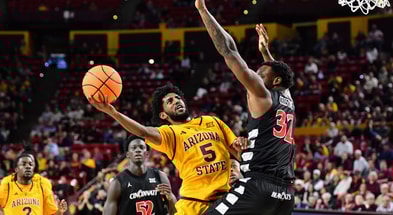
Diop, who had 19 points and seven rebounds against Colorado, continues to grow and alert the country to his potential despite the losses. His scoring variety and increased block totals highlight his expanded defensive focus and his development into a two-way force.
Despite a roster built with a “good vibe,” ASU could still finish worse than last season.
Hurley made it clear in the opening weeks that this team was different from last year’s. Not necessarily more talented, he admitted the roster likely was not, nor did it have a higher ceiling. What set this group apart, he said, was coachability and a locker room that actually got along. The hope was that even without top-tier prospects, stronger chemistry would lead to better results.
With seven games remaining, including three against ranked top-25 opponents and six against teams ahead of ASU in the Big 12 standings, it is becoming clear that this season might end up looking a lot like last year. ASU won just 13 games last season and is currently at 12.
Opportunities against Colorado were as good as they get for conference progress. The Buffaloes had just two conference wins outside of ASU and sit only one spot ahead in the Big 12 standings, yet ASU lost convincingly in both matchups.
There is still a game against Utah, the 1-9 Big 12 Utes, whom ASU beat just before losing to Colorado. That matchup gives them a chance to at least tie last year’s record, but matching last season is hardly something to celebrate, given the dismissals and a roster stretched thin by injuries.