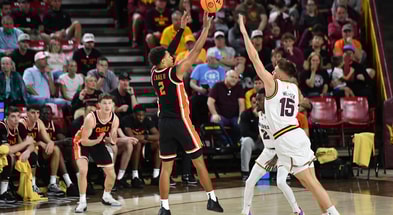
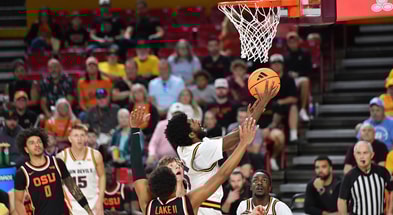
Wildcats' dominance on the interior outmatched ASU’s outside shooting

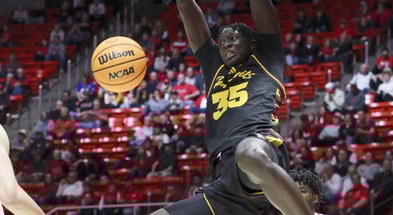
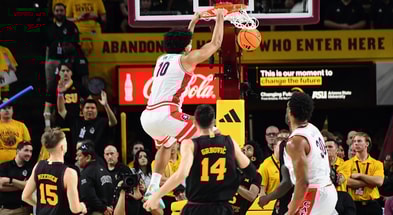
As the midday mantee reached its conclusion, senior guard Jaden Bradley pitched a pass ahead to a freshman phenom, Koa Peat. The 6-foot-8, 235-pound forward rocked the rim with a transition dunk and stared down the Sun Devils student section as the Wildcat fans roared. Arizona’s lead grew to 14 points with just 3 minutes to play, while Peat’s dunk had given the most dominant team in college basketball its 50th point in the paint.
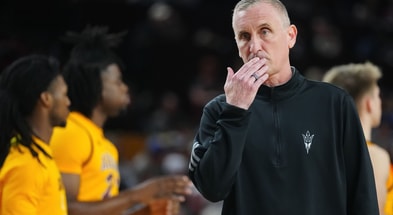
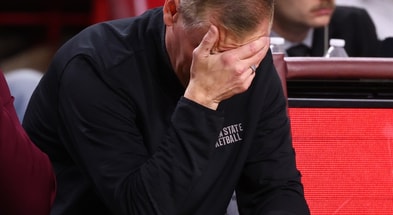
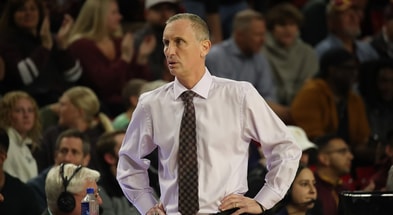
“We had our chances,” ASU head coach Bobby Hurley said following his team’s 87-74 defeat against No.1 Arizona. “We could not deal with their strength, their size, their ability to do things physically. Our roster could not stay.”
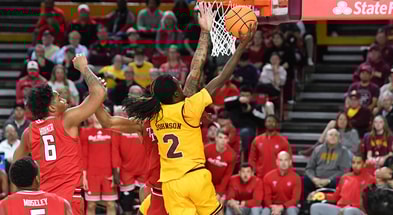
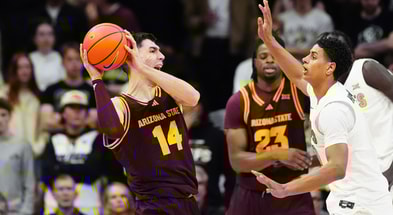
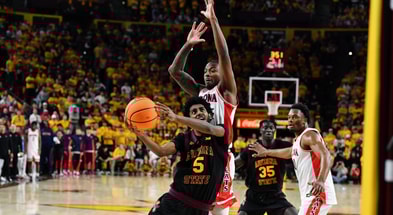
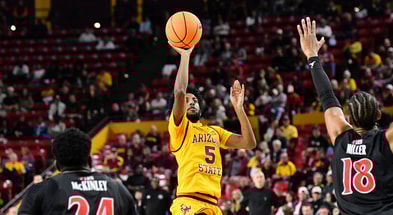
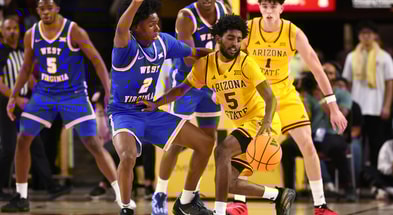
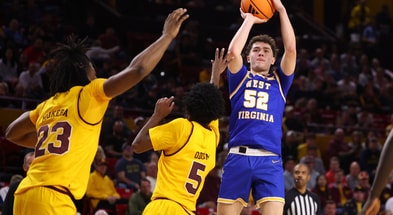
Arizona (22-0, 9-0 Big 12) controlled proceedings through its interior presence, scoring 50 points in the paint compared to just 20 from ASU (11-11, 2-7), which created a margin that became impossible for the host to match.
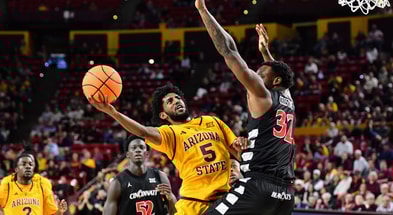
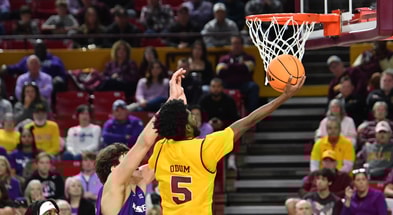
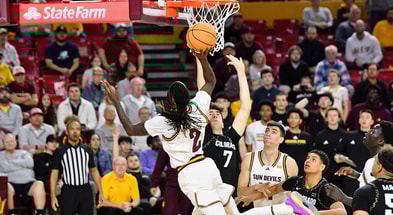
The Sun Devils shot a mere 4-of-17 on layups, and their lack of strength compared to the visitors forced late shot-clock heaves and a lot of midrange jumpshots.
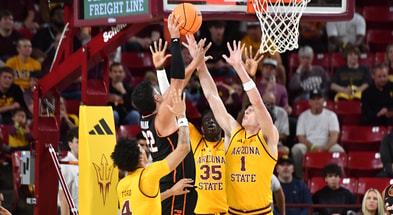
The rebounding margin was heavily in favor of the Wildcats as well. The visitors collected 47 boards, including 16 on the offensive end, compared to just 32 from the Maroon and Gold, and a script of sovereignty in the paint is not new for 2026 Territorial Cup showdowns.
“This game felt like a mirror of our last game in Tucson,” Hurley said. “We just weren’t able to stand up to the challenge on the interior, whether that meant stopping their drives or getting a big defensive rebound when we needed to.”
The previous matchup between the 48th state’s premier universities took place on Jan. 14 at the McKale Center in Tucson. Last time out, Arizona led the rebounding battle by 11 and scored 46 points in the paint while holding the Sun Devils to just 22 points on the interior.
In both matchups, the Wilcats showed physical superiority in the second half. On Saturday, the rebound margin was just two at halftime, when the game was all square, while in the second half, a 24-10 advantage on the glass changed the contest. Points in the paint became few and far between for ASU, as it scored just four points on the inside in the final 20 minutes.
A similar script was written in Tucson 17 days prior. The Sun Devils led by one point at halftime, but in the second half, allowed Arizona to outscore them in the paint 26-to-12, a margin that grew a mountain too far to climb back from.
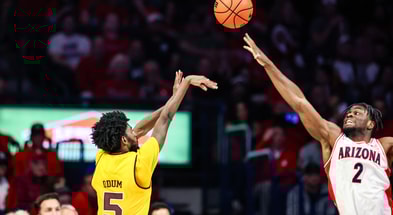
“In the first half, we matched up with them, physically,” Senior guard Moe Odum said. “We met him at the rim. We contested shots. We were being physical. We made maybe two, three hard fouls, so he was matching physicality. Like I said, when the second half comes, our intensity goes down. Energy goes down.”
ASU’s abilities on the inside don’t reflect why this margin is so favorable toward the Wildcats. The sole undefeated program remaining in power conference basketball has structured its roster to physically outmatch every team it faces.
“They got great inside play,” Hurley said. “It just depends on the perimeter shooting. They could really stabilize that. And that’s something, and they’re going to have a chance to go the distance.”
When taking a look at the numbers, Arizona head coach Tommy Lloyd has created an eye-opening style of play. The Wildcats lead the Big 12 in points per game (89.5), field goal percentage (51.6%), and rebounds per game (43.4).
A lone shaky metric for Arizona is its outside scoring prowess; it averages just six made 3-pointers per game, which is the fewest in the conference. The players don’t take very many as the team has the fewest attempted 3-pointers in the Big 12 as well, despite shooting an above average 36.3% from beyond the arc.
Lloyd’s team has monopolized the interior. Its starting five consists of five players who are listed at 200 pounds or heavier, including 7-foot-2, 260-pound center, junior, Motiejus Krivas. In the frontcourt, Krivas and Peat ran the show, combining for 36 points.
Arizona’s depth creates a game-changing advantage that exerts the same levels of physicality on the inside. Senior forward Tobe Awaka, listed at 6-foot-8 and 255 pounds, scored seven points and grabbed 13 rebounds in 20 minutes on Saturday.
Awaka has been a constant thorn in Hurley’s side, having scored a game-high 25 points on 8-of-11 shooting against ASUin the previous fixture.
“I think it’s cumulative in a way,” Hurley noted. “There’s a lot of physicality. They duck in really hard. And, you have more energy earlier in a game to keep fighting through that stuff.”
Awaka, Krivas, and Peat also opened up driving lanes through what basketball minds call a ‘duck-in’. The move is similar to a ‘Gortat screen’ popularized by the former NBA player Marcin Gortat, who played alongside John Wall on the Washington Wizards.
The move is simple: seal your opponent away from a driving lane by fighting for position using ur back and glutes to move them away from the basket. The move opens up angles for guards and forwards to attack hard, and subsequently creates better opportunities for offensive rebounds. Awaka used this move numerous times on Saturday, including Peat’s furious dunk that forced ASU fans to look toward the exits.
“I mean, they’re one of the best teams that I’ve gone against in Duck-ins,” Hurley admitted. “They are great at ducking in. There are teams like Florida, Gonzaga, Arizona, and BYU that just have, have mastered the art of ducking in and taking help defense and eliminating help defense so that someone could go drive to the basket. I mean, they are brilliant at it.”
Hurley looked to match their physicality as much as possible by starting three forwards listed at 6-foot-11 or taller. The Sun Devils’ guard play was active on both ends and withstood the athletic opponents on the other end, keeping ASU in the contest for over 30 minutes.
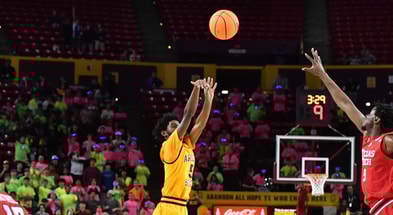
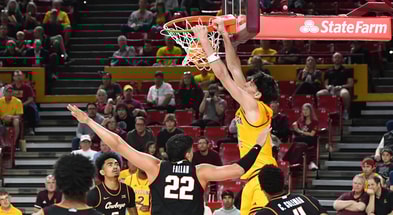
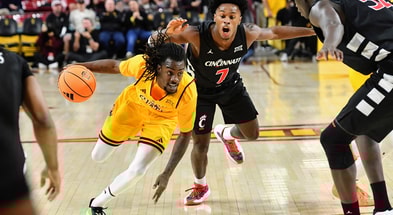
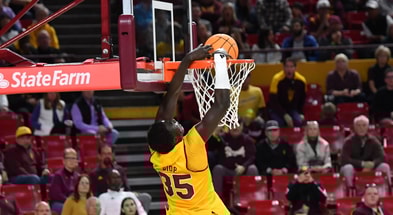
Odum and sophomore guard Noah Meeusen hit three 3-pointers each to keep ASU in the game while Arizona converted just four as a team. Freshman forward Massamba Diop did his best at 7-foot-1 to compete on the inside, scoring 13 points and bringing down four rebounds. However, Diop’s style of play is predicated on afusione among athleticism, length, and finesse rather than brute force, unlike Peat and Krivas at the opposite end.
According to Odum, Arizona’s size and physicality weren’t a factor, but according to the figures after 22 games, the Wildcats’ size and interior dominance are why they’re the best team in college basketball.
“It wasn’t really their presence,” Odum said. “It’s just, we got to make layups. It’s that simple. It’s not hard.”
Hurley’s sentiment rang a different tune.
“We today played as good a basketball as this team was probably capable of,” Hurley admitted.