No. 10 UCF faces blueblood UCLA in NCAA Tournament first-round showdown

UCF is back in the NCAA Tournament for the first time since 2019, and the No. 10 seed Knights drew one of the sport’s true bluebloods in No. 7 seed UCLA. Friday night’s first-round matchup at Xfinity Mobile Arena in Philadelphia marks the first-ever meeting between the programs, with the winner advancing to face either No. 2 UConn or No. 15 Furman in the East Region.
UCF earned its way in with balance, pace and a lot of new faces
Johnny Dawkins’ team enters the tournament at 21-11 after navigating a 9-9 Big 12 season and piling up four Quad 1 wins, including victories over Kansas, Texas Tech, BYU and Cincinnati. UCF is averaging 81.0 points per game, shooting 46.6 percent from the field and 36.2 percent from 3-point range, while also holding a plus-3.7 rebounding margin. The Knights’ profile has been built on more than just scoring, though. They are 18-1 when winning the rebounding battle, 12-1 when recording at least 17 assists and 19-0 when leading with two minutes left.

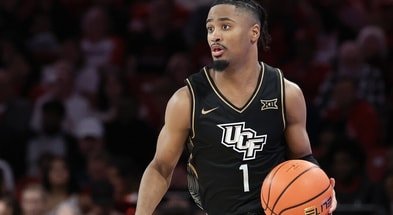
The engine is point guard Themus Fulks, who is averaging 14.1 points and 6.7 assists per game. He has accounted for 37.2 percent of the Knights’ scoring, and he has already broken the program’s single-season assist record. Riley Kugel leads the team in scoring at 14.4 points per game, Jordan Burks adds 13.0, and Jamichael Stillwell gives UCF production on the glass with 11.7 points, 8.0 rebounds and eight double-doubles. Then there is 7-foot-2 center John Bol, who is averaging 6.0 points and 5.5 rebounds while shooting a remarkable 72.7 percent from the floor.
UCLA brings experience, efficiency and one of the nation’s best assist men
UCLA arrives at 23-11 after finishing 13-7 in the Big Ten and reaching the semifinals of the conference tournament. The Bruins have won six of their last eight games and ranked first in the Big Ten in 3-point shooting. On the season, UCLA is averaging 77.7 points while allowing just 71.0, shooting 47.1 percent from the field and 38.2 percent from beyond the arc. Just as importantly, the Bruins take care of the ball at a high level, averaging only 8.9 turnovers per game with a 1.8 assist-to-turnover ratio.

Tyler Bilodeau is UCLA’s top scorer at 17.6 points per game, and he is doing it efficiently, shooting 51.8 percent overall and 46.4 percent from 3-point range. He was listed as “questionable” following an injury in the Big Ten Tournament, but is expected to play.
Donovan Dent, who is considered one of the top point guards in the country, is the playmaker UCF will have to solve. He averages 13.5 points and 7.6 assists per game, has 250 assists on the season and recorded 10 or more assists in 10 games entering the tournament.
Trent Perry adds 12.7 points per game and shoots 41.2 percent from 3, while Skyy Clark averages 11.7 and Eric Dailey Jr. chips in 11.3 points and 5.8 rebounds. In all, five Bruins average at least 11 points per game.
Dent’s recent stretch is especially notable. He has totaled 76 assists against just eight turnovers over the Bruins’ last eight games, and 127 assists against 21 turnovers over the last 15.
UCLA is synonymous with March Madness
UCLA is making its 54th NCAA Tournament appearance and owns one of the richest postseason histories in the sport: 11 national championships, 19 Final Fours, 38 Sweet 16 trips and an all-time NCAA Tournament record of 116-46. Since the bracket expanded to 64 teams in 1985, the Bruins are 41-11 on opening weekend. Under Mick Cronin, UCLA has gone 10-4 in NCAA Tournament games at the school, including a Final Four run in 2021.
UCF’s history is obviously much shorter. The Knights are in the tournament for the first time since the 2018-19 team earned a No. 9 seed, beat VCU for the program’s first NCAA Tournament win and then came within inches of knocking off top overall seed Duke in the second round. This year marks UCF’s second at-large bid in program history, and Friday offers a chance to earn just the second NCAA Tournament victory the program has ever had.
Cronin is 10-2 all-time against UCF from his Cincinnati days, although this will be the first actual game between UCF and UCLA.
Matchups to watch
On paper, this looks like a clash between UCF’s rebounding and scoring punch against UCLA’s efficiency and shot-making. UCF has the better rebounding numbers and a bigger frontline presence, and the Knights controlling the glass is a major part of their formula. UCLA, meanwhile, shoots it better from 3, protects the ball better and has a true table-setter in Dent.
For UCF, it likely starts with Fulks keeping the offense organized, Kugel being efficient and Burks getting back to making perimeter shots while Stillwell and Bol helping the Knights win second-chance opportunities.
For UCLA, the key is whether Dent can control tempo and create the kind of clean looks Bilodeau, Perry and Clark have converted all season. UCF has shown it can beat high-level teams when it shares the ball and wins the glass. UCLA has shown it can make opponents pay when it gets a game played on its terms.