Softball America's 2026 Week Two Composite Rankings
Introduction to the Composite Rankings and Statistics
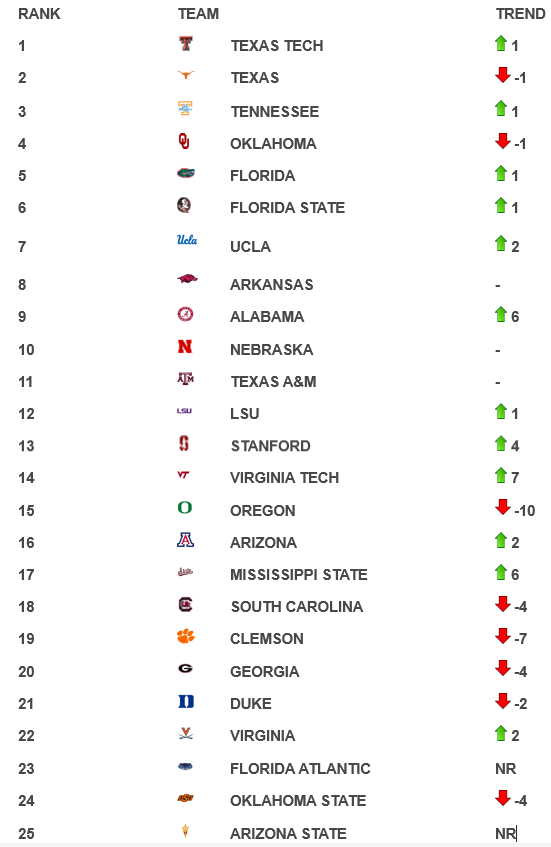
The rankings presented below are independent of the Softball America Top 25. Instead, they combine all major college softball polls into a single average list. As the season progresses, RPI and KPI data will also be added to this composite.
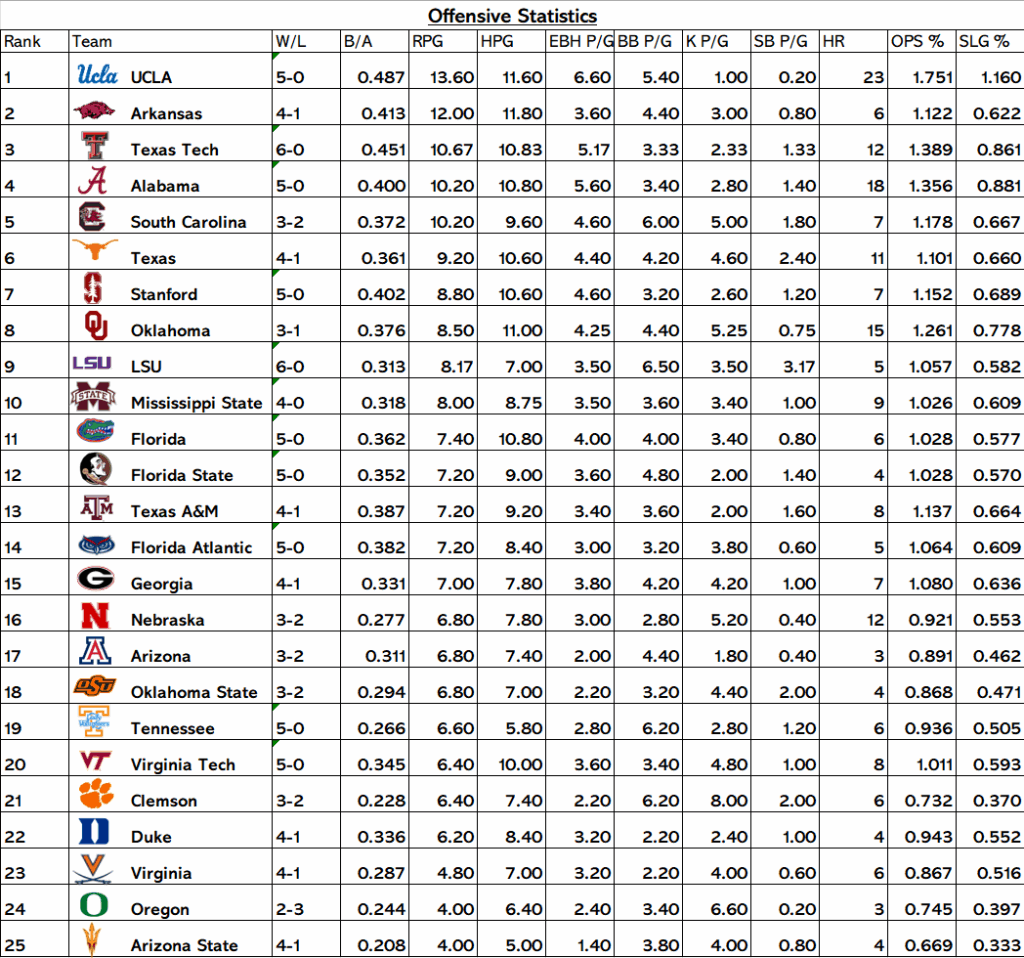
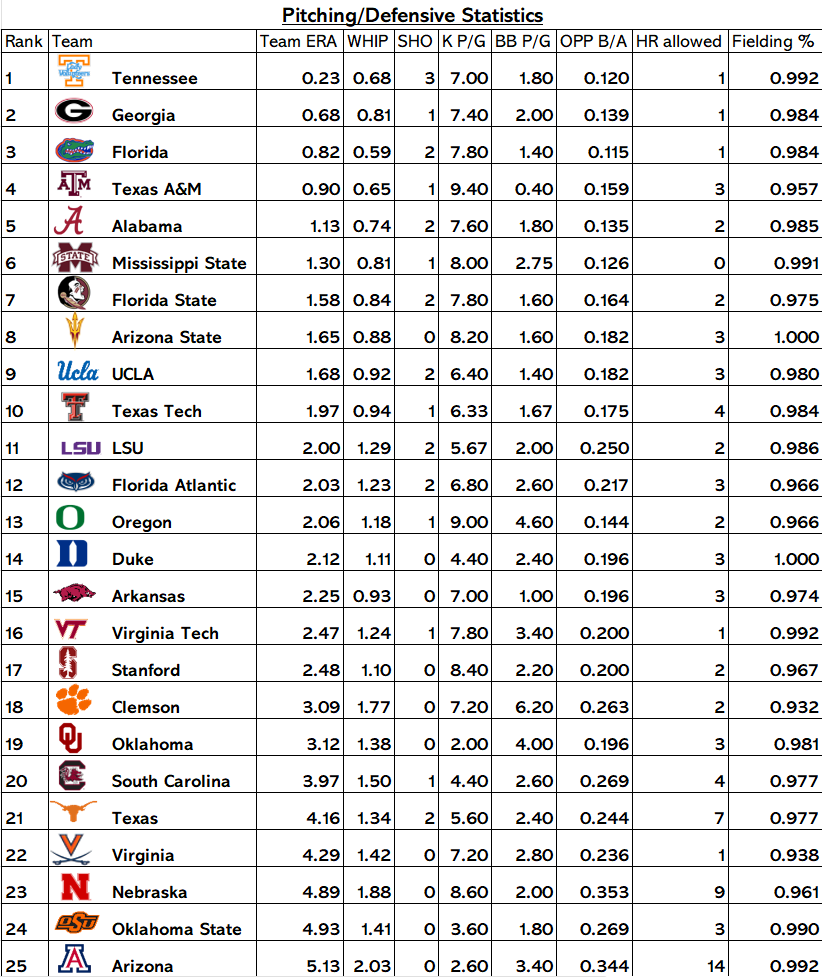
In addition, the offensive and pitching/defensive analyses highlight the key metrics that most often predict success. These sections help show how each team performs in the areas that matter most
Week Two Composite Rankings
Although two members of the sport’s modern “Big Three” showed vulnerability on opening weekend, with Texas falling to Nebraska and Oklahoma dropping a matchup to Arizona, there was no shortage of programs that immediately asserted themselves as early‑season contenders. Meanwhile, Texas Tech delivered exactly the level of dominance many projected, reinforcing its preseason reputation as one of the nation’s most complete and explosive squads.
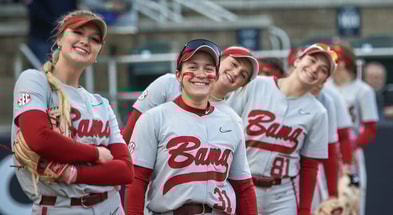
Additionally, several high‑profile programs made strong statements to open the year. Tennessee, UCLA, Alabama, Stanford, Virginia Tech, and Mississippi State each demonstrated impressive play, showcasing depth, power, and composure that should carry meaningful implications as the season progresses. Their collective performances not only elevated early expectations but also helped shape the competitive landscape heading into week two.
With these early storylines in mind, we present our Week Two Composite Rankings, reflecting a balanced evaluation of results, performance quality, and overall momentum.
Offensive Analysis
UCLA Sets the Early Standard for Complete Offensive Dominance
UCLA’s offensive unit opened the season operating at a level unmatched by any other program on the board. Leading the nation with a .487 team batting average, the Bruins paired elite contact with overwhelming production per inning. Their 13.60 runs per game reflect the most potent combination of power and consistency across all statistical categories. Equally important, their 1.751 OPS and staggering 1.160 slugging percentage demonstrate not only their ability to reach base, but their propensity to do damage consistently.
With 23 home runs in just five games, UCLA’s offense is functioning with rare efficiency, generating power without elevating strikeout rates and maintaining constant pressure from top to bottom of the lineup. Jordan Woolery and Megan Grant each hit 5 home runs to lead in power production.
Arkansas and Texas Tech Showcase Top‑Tier Power and Run Creation
The Razorbacks and the Red Raiders also positioned themselves as elite offensive forces. Arkansas blended strong gap‑to‑gap contact (12.00 hits per game) with meaningful extra‑base production. Their 1.622 OPS is second only to UCLA, indicating the Razorbacks can score in multiple ways rather than relying exclusively on home runs. Specifically, Ella McDowell supplied both power and run creation in setting the tone for the Razorbacks’ high-output weekend.
Texas Tech’s numbers reinforce their reputation as one of the most dangerous lineups in the country. Their slugging output (.861) and efficiency scoring runs (9.33 RPG) confirm an offense capable of breaking open games early and often. Mia Williams, the transfer from Florida, had a standout performance in going 11-for-16 at the plate with three home runs and 13 runs batted in.
Pitching/Defense Analysis
Tennessee Sets the Early Bar for National Pitching and Defensive Dominance
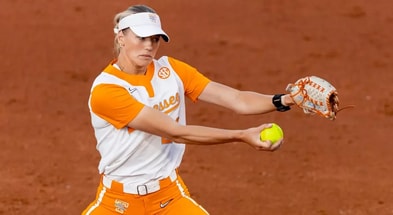
No staff in the country approached the level of precision and suffocation Tennessee showcased in Week One. Posting a staggering 0.23 ERA and 0.68 WHIP, the Lady Vols allowed almost no meaningful traffic on the bases. Their opponents managed just a .120 batting average, the second‑lowest figure in the top 25. Combined with allowing only one home run and fielding at a crisp .992, Tennessee’s run prevention was the most complete in the nation.
The most notable trait of Tennessee’s opening‑week profile is efficiency without overreliance on strikeouts. The staff averaged 7.0 K/G, strong but not gaudy; instead, Week One dominance was built on soft contact, elite zone command, and exceptional defensive support. Karlyn Pickens continued to show true ace-level swing and miss stuff with 22 strikeouts in wins over Oregon and Liberty. Meanwhile, Sophomore Erin Nuwer started the season just as she did a year ago with a no-hitter against BYU.
Top 10
- 1Breaking
Charlie Woods
Tiger Woods' son commits to FSU
- 2New
Charles Bediako
Nate Oats doubles down on ruling
- 3Hot
Top QB Battles
Quarterback races to watch
- 4
Kansas
Upsets undefeated Arizona
- 5Trending
Sleeper QBs for 2026
Kirk Herbstreit makes picks
Get the Daily On3 Newsletter in your inbox every morning
By clicking "Subscribe to Newsletter", I agree to On3's Privacy Notice, Terms, and use of my personal information described therein.
Emerging Contenders: Mississippi State, Florida State, Arizona State
Mississippi State
The Bulldogs posted strong Week One numbers with a 1.30 ERA while holding their opponents to a team batting average of .126. This profile mirrors some of the characteristics that carried the Bulldogs late last season: limited barrels, efficient inning‑management, and the ability to avoid crooked numbers. Peja Goold’s opening-night gem set the weekend’s tone, and the competitiveness underscored staff depth and reliability early in the season.
Florida State
With a 1.58 ERA and 7.8 K/G, Florida State combined high‑quality zone work with above‑average power pitching. Their .164 OPP BA shows they consistently controlled contact even when not striking out. Jazzy Francik and Ashtyn Danley showed why they are widely considered one of the best 1-2 punchers in the country. Francik threw a no-hitter against Samford in the season opener. Meanwhile, Danley was dominant in just three scoreless innings against Iowa, facing the minimum while allowing just one hit and striking out four.
Arizona State
The Sun Devils’ 1.65 ERA and 0.88 WHIP reflect outstanding early‑season composure. Only 2 HR allowed, combined with a solid .981 fielding percentage, signals a clean, efficient defensive environment behind their pitchers. Kenzie Brown was dominant this weekend in the circle for the Sun Devils. She allowed just two earned runs in 13 innings of work, helping Arizona State to a 4-1 start.
This Week’s Schedule Analysis
The centerpiece: Clearwater’s four‑day, 40‑game showcase
Thursday (Feb. 12) opens with a few huge matchups as Nebraska takes on LSU (10:00 a.m. ET, ESPN2), Oklahoma State battles Georgia (11:00 a.m., SECN), and the marquee game, Florida State–Texas Tech (1:00 p.m., ESPN2), a 2025 Super Regional rematch
Friday (Feb. 13) is must-see television. Tennessee takes on Nebraska (Noon, ESPN2) in another Super Regional rematch. Oklahoma State and Texas A&M (10:00 a.m., ESPN2) reprise one of the best games from Clearwater last year. Finally, Duke–LSU (4:30 p.m., ESPN+) adds ACC-SEC intrigue.
Saturday (Feb. 14) features two stiff challenges for UCLA as they face: Tennessee (4:00 p.m., ESPNU) and Florida State (7:00 p.m., ESPN+). This looks to be the deepest slate of ranked‑on‑ranked tests outside Oklahoma City.
Sunday (Feb. 15) closes with a two‑game masterpiece with Texas Tech–Nebraska (6:00 p.m., ESPN) as the two preseason Player of the Year top candidates face off. Additionally, Tennessee and Florida State (8:00 p.m., ESPN) will cap off the weekend.
Around Softball America:
Softball America Stock Report: Hokies, Spartans trending up
Wells spoils Brown’s 13 K effort, No. 3 OU downs Arizona State
Alabama’s hot start powered by intent, swagger