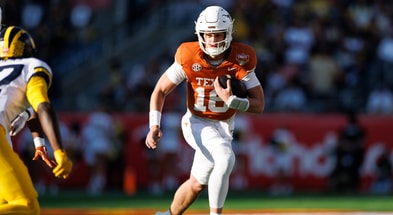
A Line in the Sand: Parker Livingstone transfers to Oklahoma
When I first saw Parker Livingstone was transferring to Oklahoma, I thought about myths.
As a kid growing up in Texas, one of the first stories you learn is William Barrett Travis’ Line in the Sand before the Battle of the Alamo.
The story goes that Travis took his sword and drew a line in the sand, telling the men to cross it if they were willing to stay and fight, almost certainly to die, for the Republic of Texas.
As the legend goes, only one man stayed on the other side of the line: Moses Rose. I remember seeing a metal strip in the pavement during my first visit to what is now a tourist site in San Antonio. “There’s Travis’ line,” my father told me. Though the legend involves men crossing a line, the symbol became synonymous with a metaphor for lines we don’t cross—those in battle, in sports, and in rivalries.
It’s one of the reasons the Red River Shootout is such a special game and rivalry. It’s a holy one, tribal, between “two warring nations.” The states are divided by the river, eponymously named, while the game itself is split between burnt orange and crimson. Both sides mythologize the divide and the famous players who chose one side over the other. The line between the teams is always looming, and fans wouldn’t dream of crossing it.
When you get older, you learn that the story of the line in the sand is most likely just that—a folktale. A myth. The metal strip on the ground at today’s Alamo? A prop. You realize that Darrell K Royal, the legendary coach of the Longhorns and namesake of Texas’ stadium, was once an Oklahoma Sooner.
But coaches aren’t players, right? Because players are like the fans, defined by their allegiances and the battle lines that are drawn.
Not anymore. Not in today’s college football.
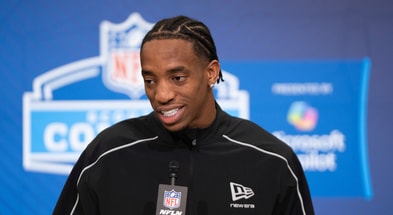
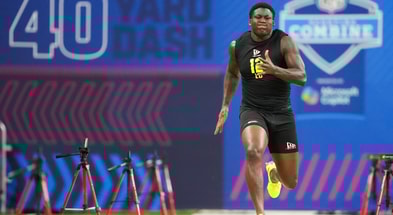
Livingstone became one of just a handful of players to ever cross the line, trading uniforms between teams vying for the Golden Hat in the Cotton Bowl. Like Brenen Thompson going to Norman in the Spring of 2023, he’s a Longhorn transferring from the winning side of the rivalry to the losing one. But Thompson was fighting for playing time then; Livingstone is the first proven contributor to cross the rivalry divide.
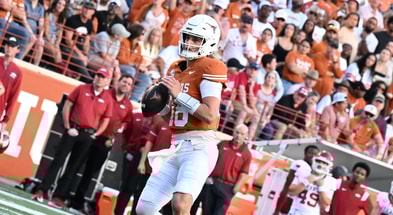
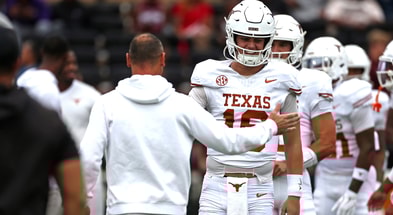
Not only was he Arch Manning’s roommate, he was a key member of the Longhorns’ 2025 offense, hauling in six touchdown passes and 516 yards. He felt like a Texas kid through and through. His pairing with Manning reminded those prone to nostalgia of a previous roommate duo: Colt McCoy and Jordan Shipley.
Top 10
- 1New
Nate Ament
Tennessee star injured
- 2Trending
NFL Combine
RBs show off electric speed
- 3Hot
Jayden Quaintance
Father snaps at Kentucky fans
- 4
Transfer Portal Winners
Outside of Power 4
- 5
NCAA
Tampering to bring penalties
Get the Daily On3 Newsletter in your inbox every morning
By clicking "Subscribe to Newsletter", I agree to On3's Privacy Notice, Terms, and use of my personal information described therein.
In Livingstone’s farewell post, he said he transferred due to circumstances “outside of his control.” He called himself burnt orange through and through. And though the new realities of college football aren’t lost on fans—who understand that dealmaking and contract negotiations are now part of the deal—his statement will ring hollow when fans see where he ended up.
Because fans are the ones still keeping the myth alive. We’re the ones left believing in lines you shouldn’t cross.
It’s what the loss of Livingstone represents more than anything else: a breaking of a divide that once seemed impenetrable. A college football world where fan favorites no longer stick around. When a player like Livingstone transfers from Texas to Oklahoma, you know he won’t be the last to make the move.
At some point, the Longhorns will pull a Sooner south of the Red River. And OU fans trying to dunk on Texas faithful today would do well to remember that. Oh, and there’s the fact that the Golden Hat still resides in Austin. Livingstone can’t take that with him.
Sidenote: In all seriousness, congratulations to Brent Venables and Oklahoma on adding a talented player. Maybe the Sooners will finally manage to score a touchdown in Red River this October. Maybe.